

"Deus meus et omnia" ("My God and my All!") was St. Francis of Assisi's favourite prayer. According to early Franciscan accounts, most notably recorded by Brother Bernard of Quintavalle, Francis's first follower, the phrase originated during an all-night prayer vigil. Shortly after Francis abandoned his wealth as a merchant's son, Bernard invited him to sleep at his home so he could observe his faith in secret. During the night, thinking Bernard was asleep, Francis knelt in deep contemplation, weeping and repeatedly praying a single phrase until morning: "Deus meus et omnia."
The personal pronoun "My" (Deus Meus) highlights the deep, affectionate, and individual connection Francis felt with God, moving away from distant or rigid theology. For Francis, if God is "All," then every creature—sun, moon, wind, water, animals, and human beings—is intimately linked as family under one Father: Brother Sun, Sister Moon.
St. Bonaventure described Francis as a man who "always carried Jesus in his heart, Jesus on his lips, Jesus in his ears, Jesus in his eyes, Jesus in his hands." While travelling to join a military campaign as a knight in Spoleto, Francis heard a voice in a dream ask, "Francis, would you rather serve the master or the servant?" This encounter was an eye-opener and led him to develop a deep, personal relationship with God. For Francis, God was the Master above all, the absolute reality, echoing St. Paul's words: "Whether we live or whether we die, we are the Lord's" (Romans 14:8).
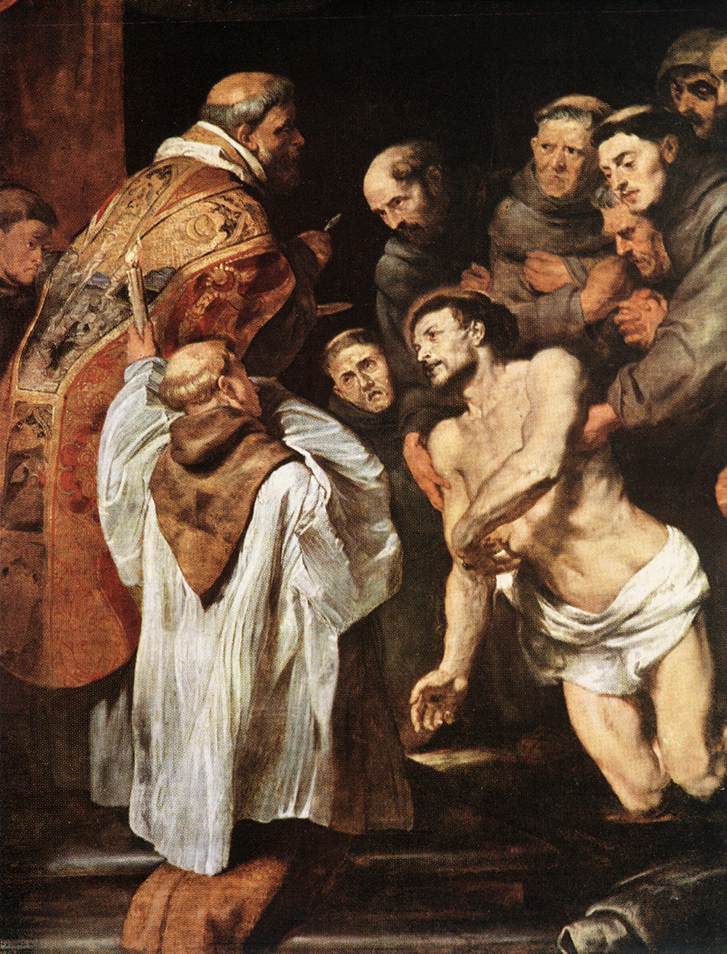
As we commemorate the Octocentennial Jubilee of the Transitus of St. Francis, we recall his dramatic renunciation before Bishop Guido in Assisi. Demanded to return his inheritance, Francis stripped off his garments and declared: "Hitherto I have called Pietro Bernardone my father; but now I can say without reserve: 'Our Father who art in heaven,' since I have placed all my treasure and hope in Him." (Thomas of Celano, First Life of St. Francis).
For Francis, poverty was not a curse but a gateway to freedom. While the world considered wealth, security, and death the greatest evil, Francis saw poverty as the means to possess God alone, and death as the consummation of union with Him. "Blessed are the poor in spirit, for theirs is the kingdom of heaven" (Matthew 5:3) became his lived reality.
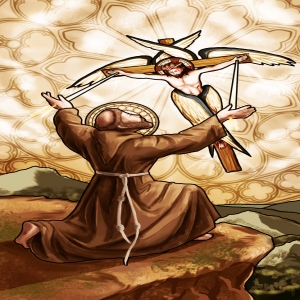
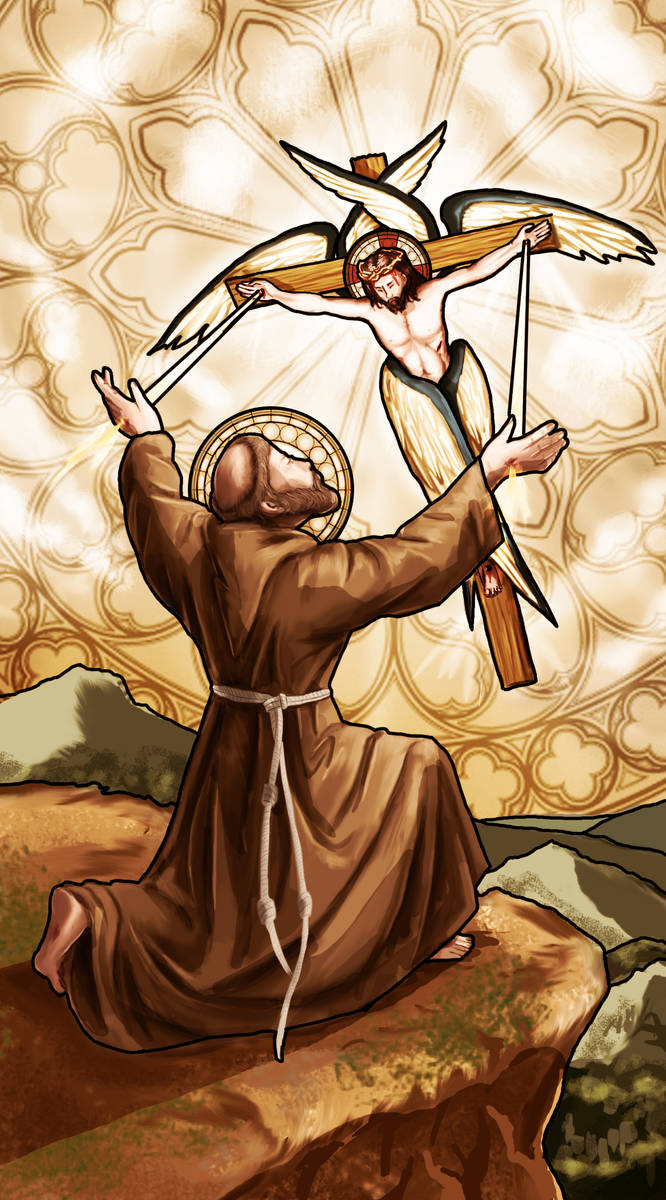
In the cry "My God and My All," Francis distilled the essence of his life: a heart emptied of possessions yet overflowing with divine love. This surrender reached its summit on Mount La Verna, where he received the Stigmata, the wounds of Christ imprinted upon his body. The marks of the Crucified were the visible seal of his hidden prayer, showing that to possess nothing but God is to be conformed to Christ in love and sacrifice. In the Stigmata, Francis became a living Gospel, a joyful witness that true wealth lies not in earthly goods but in union with the Crucified Lord.
Today, in a world absorbed by technology, artificial intelligence, and the pursuit of power, pleasure, and possessions, many ignore the absolute truth of God. Even spiritual leaders can be tempted by ambition rather than service. Nietzsche's cry "God is dead" echoes in modern culture, yet Francis reminds us that God is alive—in every creature, every plant, and even in death itself. As Jesus prayed on the Cross: "Father, into your hands I commend my spirit" (Luke 23:46), Francis too embraced death as a gateway to eternal life.
Pope Francis, in Laudato Si', recalls St. Francis as "the example par excellence of care for the vulnerable and of an integral ecology lived out joyfully and authentically." Pope Benedict XVI likewise affirmed: "Francis was a true lover of Christ. He found in Him the meaning of life, the joy of living, and the reason for hope."
Eight centuries after his passing, St. Francis still calls us to awaken from our slumber and undue attachments, to rediscover the perfect joy of possessing God alone. His prayer resounds across time:
"Deus meus et omnia – My God and my All!"
Let us join him in this cry, making God our only treasure, our only hope, and our eternal joy.
.jpg)
 A. J. Philip
.jpg)
.png) Jacob Peenikaparambil
Jacob Peenikaparambil
.png) Chhotebhai
Chhotebhai
.jpg) P. A. Joseph
P. A. Joseph
.png)
.png) Robert Clements
Robert Clements
.jpeg) A. J. Philip
A. J. Philip
.jpg) Jacob Peenikaparambil
Jacob Peenikaparambil