

 Jacob Peenikaparambil
.jpg)
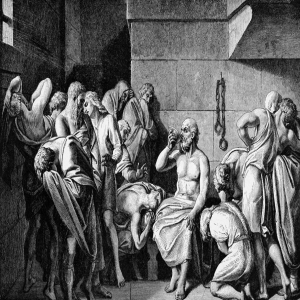
History shows that reformers in religion, society, and politics have faced not only physical attacks and even murder but also character assassination. Socrates, the Greek philosopher, was branded a dangerous subversive and falsely accused of "corrupting the youth" and "impiety," or disrespecting the city's gods. He was sentenced to death by drinking hemlock in 399 BCE.
Jesus was accused by Jewish religious leaders of blasphemy, Sabbath-breaking, demonic possession, gluttony, associating with sinners, subversion, inciting riots, and sedition and treason through his claim to kingship. Relentless accusations by the Pharisees and teachers of the law contributed to the hostile climate that led to his crucifixion.
Joan of Arc faced a politically motivated trial in which she was labelled a witch and a heretic. Accusations concerning her religious beliefs and cross-dressing were used to undermine her spiritual authority. She was eventually executed by burning.
Martin Luther King Jr., a leader of the Civil Rights Movement who followed Gandhian non-violent resistance, was portrayed as a dangerous communist agent. Authorities even sent him an anonymous letter attempting to coerce him into suicide, while sections of the media portrayed him as an instigator of riots.
In India, the right-wing ecosystem has attempted to reduce Mahatma Gandhi's lifelong anti-colonial struggle and complex social philosophy to a series of manufactured historical falsehoods. He was accused of "Muslim appeasement," betraying Hindus, and bearing sole responsibility for the Partition of India. These accusations helped create a hostile climate that sought to legitimise violence against him. Even after his assassination by a Hindu fanatic, sections of the right wing have continued to attack his legacy and character.
In contemporary India, the Bharatiya Janata Party (BJP), with support from sections of the media and social media networks, has frequently used derogatory labels to discredit political opponents. Prime Minister Narendra Modi and his supporters have popularised numerous terms.
1. "Tukde-Tukde Gang": Originally associated with protests at Jawaharlal Nehru University (JNU), this term is used to accuse opponents of sympathising with secessionist elements or seeking to divide the nation.
2. "Urban Naxal" and "Dimagi Naxal": These labels target left-leaning intellectuals, activists, and political opponents, alleging they provide ideological support to far-left insurgencies.
3. "Andolanjeevi" (Professional Protesters): Prime Minister Modi used this term in Parliament to disparage those who frequently participate in or support public protests against government policies, including those harmful to the poor and marginalised.
4. "Khan Market Gang": This ex
5. "Naraz Fufa" (Disgruntled Uncle): This colloquial jibe portrays opposition leaders as habitual complainers who oppose government initiatives regardless of their merits.
Congress leader Rahul Gandhi has been a particular target of personal attacks and character assassination by BJP leaders, including the Prime Minister, and the party's IT Cell.
1. "Pappu": Widely used since the 2014 general election, this derogatory nickname portrays Rahul Gandhi as naive, inexperienced, and lacking political acumen.
2. "Shehzade" (Prince): Modi frequently uses this term at election rallies to highlight Gandhi's family background and portray him as an entitled heir disconnected from the struggles of ordinary citizens.
3. "Failed Product": BJP leaders use this ex
4. "Naamdar vs. Kaamdar": Modi has used this contrast to distinguish those recognised by their family names (Naamdar) from those identified by their work and humble origins (Kaamdar), implicitly portraying Gandhi as a privileged dynast.
5. Finding Conspiracy in Every Private Foreign Visit of Rahul Gandhi: Bharatiya Janata Party (BJP) leaders have accused Congress leader Rahul Gandhi of conspiring during his foreign travels to orchestrate a "regime change" in India by collaborating with hostile foreign organisations and networks during his overseas visits. BJP National Spokesperson Sambit Patra and MP Konda Vishweshwar Reddy alleged that Rahul Gandhi's foreign travel is intended to seek guidance from foreign entities to foment unrest, create anarchy, and overthrow the democratically elected Indian government.
How to Face Character Assassination
Great leaders such as Mahatma Gandhi and Martin Luther King Jr. demonstrate the importance of emotional control, strategic action, and moral courage when facing character assassination. The objectives should be to protect one's well-being, respond effectively to falsehoods, and preserve personal integrity.
1. Master the initial reaction: Avoid responding with immediate anger or public outbursts, which attackers may exploit to portray the victim as unstable or guilty. Pause, process the situation, and distinguish emotions from facts.
2. Document everything: Preserve screenshots, messages, emails, timelines, and details of relevant incidents and witnesses. Such records can provide valuable evidence if formal action becomes necessary.
3. Decide whether to engage or ignore: Assess each situation individually. When attacks come from anonymous internet trolls or habitual provocateurs, withholding attention may prevent further escalation. However, if false rumours spread among colleagues or loved ones, address the matter calmly and directly: "I am aware of these claims. They are false, and here are the verifiable facts."
4. Leverage third-party credibility: Seek support from trusted people, credible witnesses, and impartial mediators who can help establish the truth. One need not fight character assassination alone.
5. Consider legal action: If defamatory claims threaten one's employment, business, reputation, or safety, legal advice and appropriate remedies may be necessary.
6. Remain faithful to core values and ideals: Despite allegations and accusations, have the courage and determination to uphold one's principles. Authenticity and integrity can gradually discredit falsehoods, as truth and consistent conduct often outlast manufactured allegations.
Mahatma Gandhi's commitment to transparency and his effort to align his daily life with Satyagraha, or the force of truth, strengthened public trust in him. Although he faced relentless smear campaigns, his authentic way of life won the confidence of millions. His example shows the power of aligning professed values with personal conduct.
The Example of Rahul Gandhi
Rahul Gandhi has faced a sustained campaign of personal attacks from the BJP-RSS ecosystem. His response has included public outreach, a focus on ideological issues, and resistance through political and legal channels.
1. Mass public outreach: Rather than relying solely on social media and television debates, he undertook initiatives such as the Bharat Jodo Yatra (Unite India March) to communicate directly with citizens and build personal connections.
2. Reframing the narrative: He has sought to shift public attention from personal attacks to structural concerns such as economic inequality, unemployment, and the protection of democratic institutions.
3. Legal and political defiance: He has faced criminal defamation proceedings, including the Surat case that led to his disqualification from Parliament in 2023. The Supreme Court later stayed his conviction, allowing him to return to Parliament. His supporters see his refusal to back down from political confrontation as courage and resistance to pressure. Responding to an FIR filed against him during an INDIA bloc protest, Gandhi reportedly declared: "I already have 45 FIRs against me, and my target is 100. Every FIR is like a medal on my chest."
4. Leading From the Front: To counter allegations of a privileged dynast, Rahul led the protests in Delhi against the Special Intensive Revision (SIR) of electoral rolls and the CEC, Gyanesh Kumar. As opposition workers tried to march directly to the Election Commission headquarters, Gandhi and other top leaders faced intense police pushback. Police detained Gandhi multiple times, along with other high-profile figures like Akhilesh Yadav and Priyanka Gandhi Vadra. Following these confrontations, the leadership staged an eight-to-nine-hour sit-in protest at Akashvani Bhavan before finally being released by police around midnight.
Writing in The Indian Express, columnist Tavleen Singh—traditionally a sharp critic of the Nehru-Gandhi family's dynastic politics—acknowledges Rahul Gandhi's recent emergence as a genuine leader. Yet, she challenges him to define his vision, asking what he would do differently as Prime Minister. Singh suggests that rather than passively waiting for the Modi government to make missteps, Rahul and the Congress party must proactively show voters what they can offer the country that the current administration has failed to deliver.
Jacob Peenikaparambil
.jpg)
 John Dayal
.jpg)
 A. J. Philip
 Monsignor Susai Sebastian
.jpg)
 Joseph Maliakan
.jpg) Dr Mudita Menona Sodder
.png)
 Robert Clements
.jpg) Stanislaus Alla
.jpg)
 Cedric Prakash