

.jpg) Dr Mudita Menona Sodder
Eco-Spirituality challenges us to cultivate Maha Prajna or 'Great Awareness' and Maha Karuna or 'Great Compassion,' the greatest virtues in nearly all religious traditions. These virtues challenge us to suffer with, and feel another's suffering so deeply that we are moved to alleviate it.
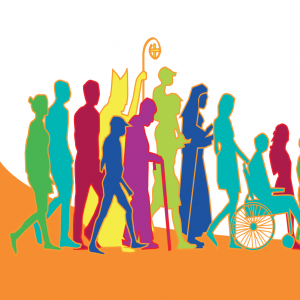
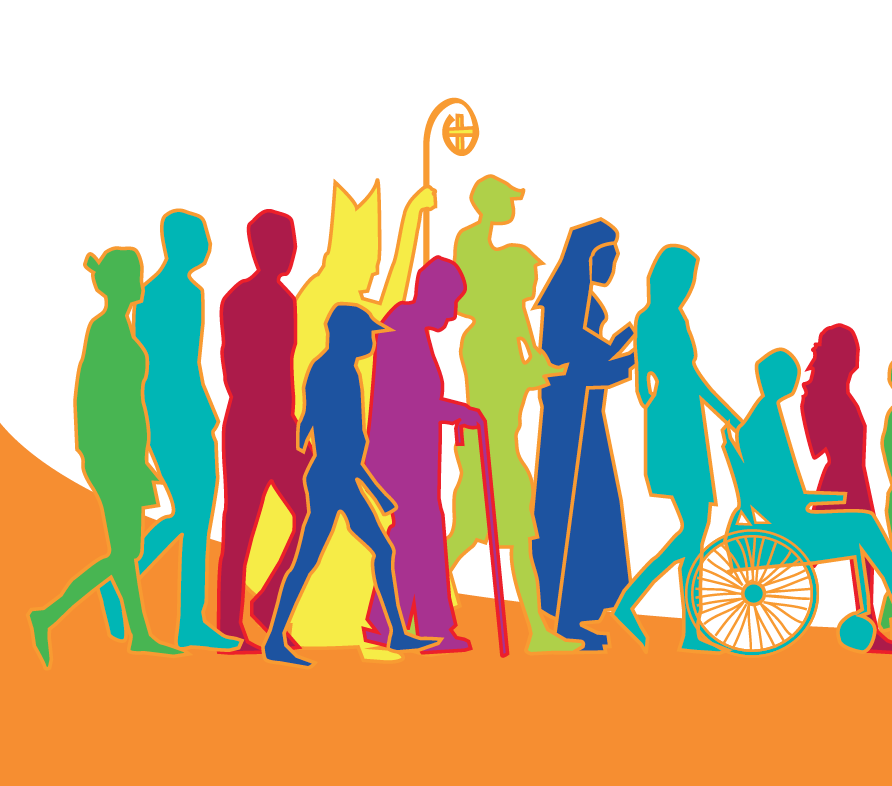
These virtues tie us to humanity, link us with the divine, and make us responsible to and for one another. It implies and expects action. Compassion alone is not enough. We must act! To act, we need to dream big and reinvent ourselves. We are all talking about the Synodal Church and walking together. Let us now look at ourselves, walking together with each other and Holy Mother Church, in today's day and context.
What is a Synodal Church?
A Synodal Church is a Church that journeys together as People of God. It invites us to learn, love and live Synodality. It is a participative and inclusive ecclesial process where all baptised Christians can express themselves freely and be heard, contributing to building up the Body of Christ, the Church (Lumen Gentium, No. 32; Preparatory Document No. 12).
It calls for inclusiveness and openness, where all journey together as a family (Amoris Laetitia) as sisters and brothers (Fratelli Tutti) together with God's creation (Laudato Si'). This means living in communion, participating, and remaining open to mission. It demands discernment of the promptings of the Spirit, evaluation and decision-making, not just with Christians, but with our common home, Mother Earth and all God's creatures (Laudato Si No. 13, Preparatory Document No. 5).
A Synodal Church must be a Proclaiming Church, e.g., Fr Stan Swamy. Unfortunately, today truth has become bitter, dissent intolerable, and justice out of reach. Women religious dissenters are blamed, shamed and even put behind bars, while the male culprits go scot-free, employing money and political clout. This is a dangerous sign for a healthy synodal Church seeking to sojourn together, as the public slowly gets used to it as a daily occurrence and thus finds nothing amiss. At the same time, women religious continue to feel insecure, live in fear, are exploited, harassed and taken for granted.
A Synodal Church must proclaim truth and justice and speak up against injustice and repression. A silent Church is a dead Church, and all worship is meaningless. Similarly, a silent woman religious is an inauthentic religious, and her consecration is a farce/hoax. It is a counter-witness and a disgrace. We women religious are called to be leaders/animators, shepherdesses to lead from the front. We thus are called to be the walking Gospel, from which people can read a page each day.
We, women religious, need to let the Spirit educate us into a truly synodal mentality (Preparatory Document No. 19), which is why awakening women religious consciousness for a Synodal Church is so vital and urgent. We need to know the purpose and phases of the synod and dream big, for to dream small is a sin (Chhota sapna dekna paap hai) according to APJ Abdul Kalam. Prophesy, see visions and allow hope to flourish! We need to inspire trust, bind up wounds, weave together relationships and learn from one another, so that from our treasure trove, we can enlighten minds, warm hearts, and give strength to our hands.
How can Women Religious do this?
The Three-S Formula seems like a good beginning: Sound Spirituality (e.g., Eco-Spirituality), Suffering Society (e.g., the Pandemic, the Russo-Ukrainian war, and other wars), and Serious Studies (e.g., Personal Commitment/Responsibility). What synodal toolkit and pathways best suit us? Ignorance today is no longer bliss. We need to learn from others—Feminist Voices, Sisters in Solidarity (SIS), Catholic Religious of India (CRI) Forum, Lay people, etc.
Discernment, discipline, and decision-making are vital. We women religious are divided on grounds of position, power, money, influence, etc. Isn't this a contradiction and a counter-witness? This is the fundamental call and challenge for a synodal church—not convenience but the common good of all. It is the difference between buying a semi-automatic washing machine instead of a fully automatic one (because of the implications for water, electricity, detergent powder, etc.), and between personal and community choices.
Corruption, maladministration of properties, and abuse of power are rampant today. Laity, and we women religious, must participate and not be mere silent spectators; or worse still, victims. Experience shows that most decisions are taken based on caste, language and other power politics. Administration, too, is done by a few preordained people who keep their positions secure and serve their clan.
Think Hatke—out of the box. Be innovative, creative and dare to dream and do big. Instead of having just one way of praying, move beyond; like seeing God in all things and all things in God (St. Ignatius). Look at other spiritualities, religions, ways of meditating—eco-spirituality, the New Cosmology, Ubuntu, etc. Experience inner peace and tranquillity and let your radiance shine forth to create the ripple effect all around. We need to galvanise the laity to stand for faith that does justice, no matter the consequences, like Fr Bismarque Dias, an environmental activist from Goa.
New Way of Being Church
It refers to the well-being/common good of all God's creatures—deep and respectful listening, participation and co-responsibility of all laity, consecrated and ordained and not just the ordained. The form, lifestyle and the structure of the Church must be Synodal (Preparatory Document No. 2). Fidelity to the Word of God: It enlightens and grounds us in our tradition, forming the synodal path rooted in the concrete life of the people of God (Preparatory Document Nn. 9, 25).
Conclusion
Momentum, intuition and faith are all important. Young women religious need to be protagonists. The Synodal Church needs to better appreciate women and provide spaces for their participation in the Church's mission. And finally, like Zacchaeus, we need to want to encounter God, have our finger on the heartbeat of the last, least, and lost; be courageous; and have parrhesia—integrating freedom, truth, and charity—to keep the Church youthful and alive. Nothing is unachievable if one has the right mindset and a cartload or even just a splash of courage, as our mind controls our body. It's high time we women religious broke social myths and stereotypes and took up challenging ministries.
Like Mary, let us ponder the following: Am I aware that my use of power here disempowers another environment somewhere else? Do I recognise that eating is a moral act and that "How I treat my food is how I treat my home"? How can I repair my relationship with creation? How have I changed, and what changes can I make in my life?
.jpg)
 Jacob Peenikaparambil
.jpg)
 John Dayal
.jpg)
 A. J. Philip
 Monsignor Susai Sebastian
.jpg)
 Joseph Maliakan
 Dr Mudita Menona Sodder
.png)
 Robert Clements
.jpg) Stanislaus Alla
.jpg)
 Cedric Prakash