
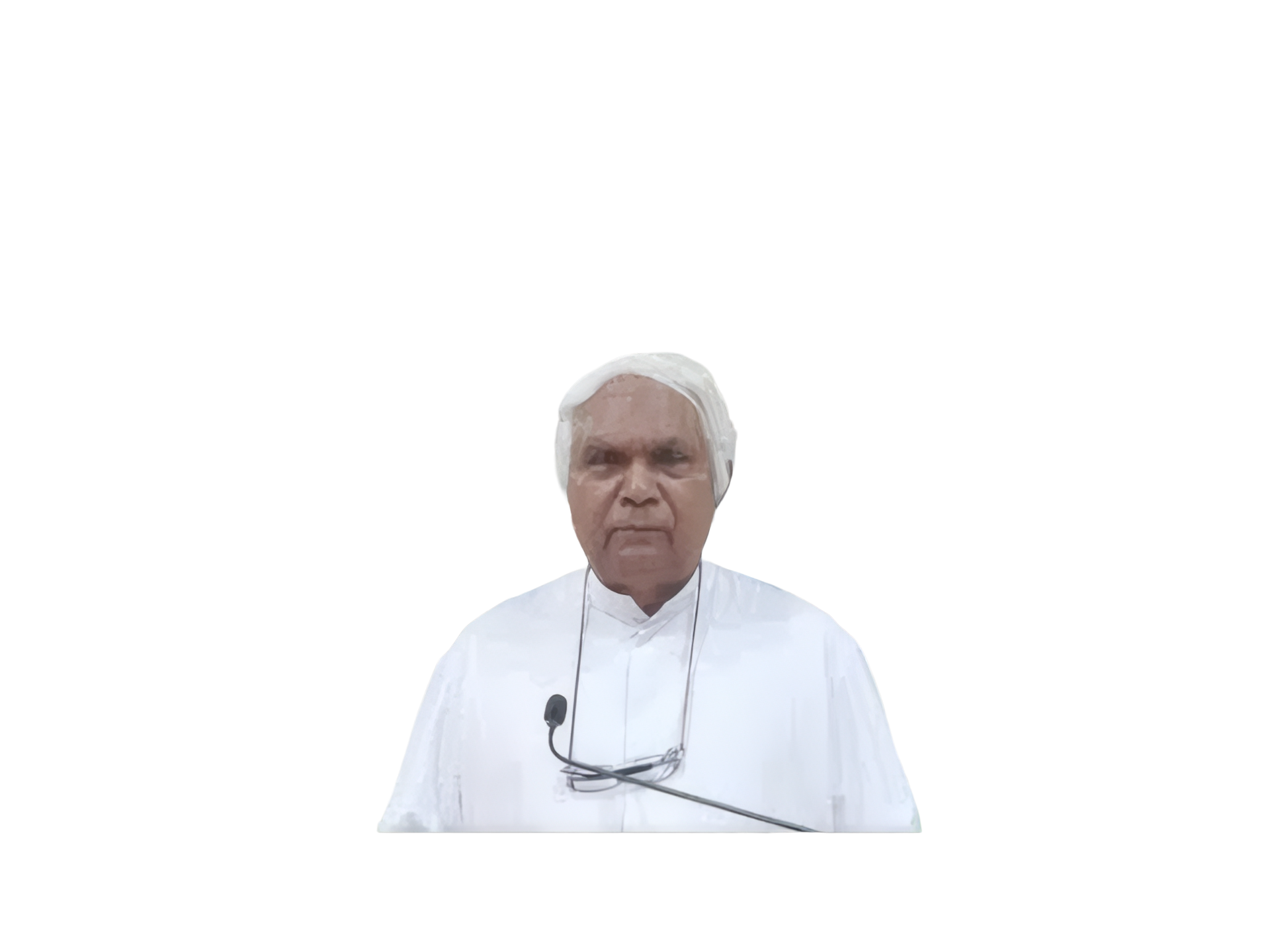
 Monsignor Susai Sebastian
Dear Bishops, Priests, Religious, Pastors and Lay Faithful,
I write these lines as a priest in my eighties, spending my retirement years in Delhi, but continuing to carry in my heart the concerns of the Church and the future of our beloved India. Though advancing age may limit my active participation in public life, it cannot silence the conscience of a priest when the values of the Gospel and the well-being of our nation are at stake.
I am deeply concerned about the situation in our country and, equally, about the response—or the apparent lack of response—of our Christian communities. I write not to promote any political party or ideology, but out of love for the Church, concern for our fellow citizens and a sense of Christian responsibility.
Democracy and the dignity of citizens
Democracy is much more than the periodic exercise of casting a vote. It rests on the dignity of every citizen, the freedom to express one's convictions, the right to question those in authority, and the assurance that every eligible citizen can participate freely and fairly in shaping the country's future.
Today, serious concerns are being raised about the deletion of names from electoral rolls, the suppression of dissenting voices, the freedom of the media and the treatment of peaceful protesters. Reports of large-scale disenfranchisement, particularly affecting poor, marginalised and minority communities, call for transparency, accountability and impartial scrutiny. Every eligible citizen must have the opportunity to exercise the fundamental right to vote.
When public debate is clouded by misinformation, inconvenient questions go unanswered, and the voices of ordinary people are silenced, democracy is weakened. These are not merely political concerns; they touch the foundations of justice, equality and human dignity.
The courage of concerned citizens gives us hope
Amid these anxieties, I am encouraged to see citizens' groups and civil society organisations coming forward to defend democratic rights and constitutional values. I am particularly encouraged when our Hindu brothers and sisters themselves raise their voices against injustice, discrimination and communal division, although they are the least affected religious group.
Their courage reminds us that the defence of justice is not the responsibility of one religion or community. It is a shared duty of all who cherish truth, freedom, fraternity and equal dignity. As Christians, our faith should deepen our commitment to these values and to the common good of our nation.
Why does the Christian response appear so muted?
It is against this background that I feel saddened by what appears to be the lukewarm response of significant sections of our Christian community. I recognise that some individuals and groups are already making efforts, but I cannot help asking whether, as a community, we are doing enough.
As members of a religious minority, we cannot assume that the erosion of democratic safeguards will never affect us. If eligible citizens belonging to other communities can be excluded from electoral participation, we cannot take our own rights for granted. Should we remain silent until the consequences reach our own doorstep?
Christian responsibility cannot begin and end with the question, "Will this affect us?" It must begin with a more fundamental question: "Is this just? Are the dignity and rights of our fellow citizens being respected?" Our faith calls us to stand with those whose rights are threatened, even when their suffering does not directly affect us.
Our faith calls us to respond
Jesus identified himself with the hungry, the stranger, the sick and the imprisoned (Matthew 25:35–40). The parable of the Good Samaritan reminds us that our neighbour is anyone in need of our compassion (Luke 10:25–37). Our Christian responsibility therefore extends beyond our personal lives and charitable activities. When human dignity is threatened, and vulnerable people are denied justice, our conscience must not remain silent.
We need not all respond in the same way. Those who can participate in peaceful demonstrations and lawful civic initiatives may do so. Others can support credible efforts to protect citizens' rights, raise awareness, encourage responsible public discussion, or help those who are vulnerable. And all of us can pray earnestly for our nation. But prayer must not become an excuse for inaction. If we sincerely pray for justice, we must also be willing to work for it.
A special word to our shepherds
I wish to make a respectful but heartfelt appeal to our bishops, priests, religious superiors, pastors and other Church leaders.
In moments of uncertainty, the faithful look to their shepherds for moral clarity and spiritual guidance. They need help to distinguish truth from falsehood, justice from injustice, and genuine concern for the nation from the exclusion of fellow citizens.
Apart from a few individual voices, I have not heard a sufficiently clear and collective response from our Church leadership to the serious concerns confronting our society. I may not be aware of every initiative being taken, but I believe that this is a moment when our shepherds must help the faithful understand what the Gospel demands of them.
Speaking for justice is not the same as taking sides in party politics. Defending the dignity of citizens, calling for free and fair elections, upholding constitutional freedoms and protecting minorities are responsibilities that transcend political affiliations.
The Church need not endorse any political party or dictate political choices. But it must speak clearly when human dignity is threatened and courageously when truth and justice are at stake. The sheep are looking to their shepherds. Will our shepherds rise to the occasion?
What is the Spirit saying to the Churches?
This is a time for each of us to examine our conscience and listen to the voice of the Holy Spirit. Perhaps the Spirit is calling us beyond our comfort zones, our institutional preoccupations, and our concerns for the security of our own community. Perhaps we are being asked to recover the prophetic courage to stand with the vulnerable and speak for those whose voices are not heard.
Let us ask ourselves honestly: Have fear and indifference silenced us? Have we become so preoccupied with protecting our own interests that we have forgotten our responsibility towards others? Are we willing to stand for truth and justice even when doing so is uncomfortable?
An appeal born of love
I write not in anger or accusation, but out of love for my fellow Christians and concern for the future of our country. After a lifetime of priestly ministry, I cannot remain silent when I believe our Christian vocation calls us to greater courage and responsibility.
India belongs to all its people. Its future must be built on justice, mutual respect, constitutional freedoms and the recognition of every person's dignity.
Let us not wait until injustice knocks at our own door before we find the courage to speak. May we be remembered not as a community that remained silent in difficult times, but as Christians who stood for truth, justice and the dignity of every human person.
"Whoever has ears, let them hear what the Spirit says to the Churches." (Revelation 2:7).
The love of Christ urges me to reach out to you through these lines. May the Lord grant us the wisdom to recognise the signs of the times and the courage to respond faithfully.
Yours sincerely in Christ,

 Cedric Prakash
.jpg)
 Mathew John
 Jacob Peenikaparambil
.jpg)
 John Dayal
.jpg)
.jpg) Jessy Kurian
.jpg)
 P. A. Chacko
 Robert Clements
.jpg) Jacob Peenikaparambil