


 Jacob Peenikaparambil
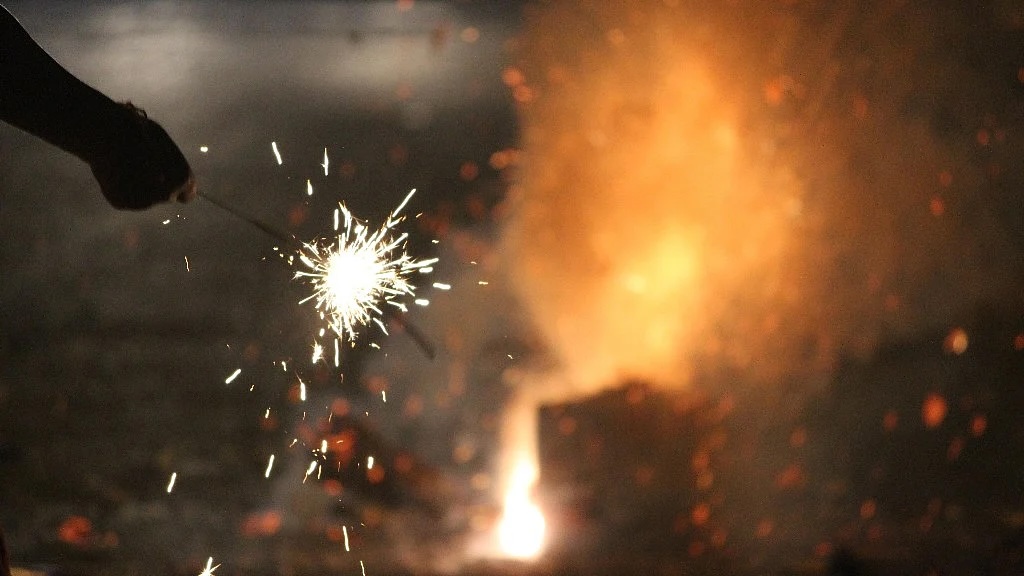
The latest instance of religion becoming toxic is the removal of actor Dia Mirza's cracker-free Diwali video by the Brihanmumbai Municipal Corporation (BMC), following intense political backlash and objections from BJP leaders, who labelled her "anti-Hindu" and questioned her selective environmental activism. The video was part of an official BMC public awareness campaign initiated in response to a Bombay High Court directive to address rising air and noise pollution. Several celebrities had voluntarily recorded appeals for an environmentally friendly celebration of the festival.
Mumbai BJP Chief Ameet Satam posted sharp criticism on X, saying citizens did not need "lessons on how to celebrate Diwali" from Dia Mirza. Within hours, the civic body deleted the video. Mumbai Mayor Ritu Tawde and other BJP leaders called Mirza "anti-Hindu." They questioned why she offered advice on Hindu festivals such as Diwali and Holi while remaining silent or failing to offer similar advice during festivals such as Eid and Bakri Eid.
While Mirza's video was promptly removed under political pressure, similar messages promoting environmentally friendly celebrations, featuring other personalities such as Madhuri Dixit and cricketer Ajinkya Rahane, remained online. The reason for targeting her appears to be that she is a Muslim and had supported the protests against the Special Intensive Revision (SIR) of electoral rolls.
Fortunately, the Bombay High Court intervened on Tuesday, November 3, 2026, expressing its deep concern over the deletion. The High Court criticised the BMC's knee-jerk reaction. The Bench emphasised that environmental protection is a secular issue affecting everyone and declared that public health should neither be given a communal colour nor hijacked by political factionalism. The Court directed the BMC to restore and re-upload Dia Mirza's video.
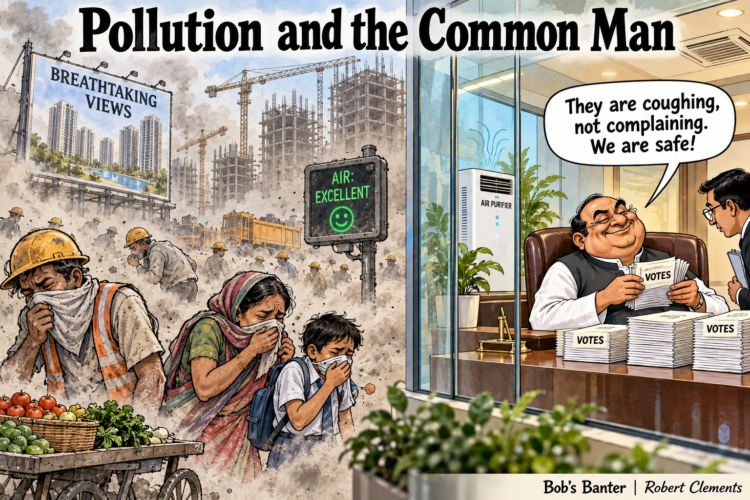
Delhi experiences severe air pollution every winter, particularly in November. Although several factors contribute to worsening air quality, bursting firecrackers during Diwali is a major cause. The BJP objects to any restrictions on the use of firecrackers, arguing that such measures violate the religious sentiments of Hindus. For the BJP, catering to the religious sentiments of Hindus appears to be more important than protecting human lives. The main victims of the large-scale bursting of firecrackers during Diwali are vulnerable sections of the population, such as infants, senior citizens, and people with respiratory problems. Animals, including domestic pets and stray animals, are also severely affected.
Unfortunately, the Supreme Court of India has, to some extent, endorsed the BJP's position. In its order dated November 2, 2026, allowing the use of green firecrackers in Delhi-NCR, the Supreme Court described bursting firecrackers during Deepavali as a "religious practice," aligning with arguments advanced by BJP leaders. Last year, the Supreme Court permitted the sale and bursting of CSIR-NEERI-approved green firecrackers during a specific five-day period. However, the Court's order was poorly implemented, primarily because BJP leaders had politicised the issue of firecrackers.
When religion is politicised, human life loses its value. The politicisation of religion and religious fundamentalism have a symbiotic relationship in which each feeds, reinforces, and accelerates the other. When political actors exploit religious identity to acquire and retain power, they inevitably promote rigid and dogmatic interpretations of religion. Conversely, fundamentalist movements depend on political structures to impose their theological vision on society.
Cow vigilantes, enjoying political support, lynch innocent people under the pretext of protecting cows. Religious terrorists kill people in cold blood in the name of pleasing God. In the past, religious beliefs were used to justify Sati, the practice of a widow immolating herself on her husband's funeral pyre. During the Middle Ages, people who questioned certain Church dogmas were burnt to death.
Throughout history, rulers have sought to exploit their people's religious sentiments to consolidate and expand their power. Religion has long been an integral part of individual and social life, making it a potent instrument of governance and control. Historical records indicate that kings and emperors often spent lavishly on constructing places of worship—churches, temples, mosques, and other religious institutions—to appeal to the devout and secure their allegiance. Even during periods of extreme poverty and suffering, enormous resources were allocated to religious affairs. Despite their hardships, people seldom questioned such expenditure because, metaphorically speaking, they were under religion's influence.
Religion becomes an opiate, or even a destructive force, when it operates in the absence of critical thinking and scientific temper. When religious beliefs are tempered with reason and rationality, they can foster spiritual growth and contribute immensely to human welfare and social progress. On the other hand, blind faith, devoid of intellectual scrutiny, makes people vulnerable to manipulation. Politicians exploit this blind devotion to serve their own interests.
Politicisation of Religion, the Strategy of the BJP
In the Indian context, the BJP's meteoric rise from winning just two seats in the 1984 Lok Sabha elections to securing 301 seats in 2019 largely stems from its ability to mobilise Hindu religious sentiment. The Ayodhya movement, culminating in the demolition of the Babri Masjid in 1992, played a pivotal role in deepening Hindu-Muslim polarisation. The demolition triggered nationwide riots that claimed more than 2,000 lives, most of them Muslims. The subsequent Gujarat riots in 2002 further intensified communal divisions, contributing to the political climate that paved the way for Narendra Modi's resounding victory in the 2014 Lok Sabha elections.
Once in power, the Modi government institutionalised religious nationalism. The inauguration of the new Parliament building, which should have been a secular national event, was transformed into a Hindu religious ceremony. Similarly, the consecration of the Ram Mandir, essentially a spiritual event, was meticulously orchestrated as a state-sponsored political programme, with Prime Minister Modi serving as the principal priest.
To maintain its electoral dominance, the BJP continues to prioritise religious symbolism over pressing socio-economic concerns. While aggressively promoting Hindu festivals and traditions, it neglects critical issues such as rising unemployment, declining standards of education, and inadequate healthcare for the poor. This calculated strategy keeps voters preoccupied with religious narratives, diverting their attention from failures in governance.
When people are systematically indoctrinated with excessive religious fervour, they become subservient and reluctant to question authority. Religious celebrations such as Ram Navami, Ganesh Chaturthi, and the relatively recent Hanuman Jayanti are increasingly being used to incite hostility against minorities and promote communal polarisation. In many instances, law enforcement agencies remain indifferent or even tacitly support Hindutva groups. As a result, the BJP government remains confident it can retain public support despite its failures and acts of negligence.
Promotion of Pluralism Prevents Religion from Becoming Poisonous
The main solution to prevent religion from becoming poisonous is through pluralism—the acceptance, appreciation, and celebration of diversity. The Indian Constitution fosters a culture of unity in diversity by recognising pluralism and promoting harmony among different religions, cultures, and languages. This vision of harmony is also part of the legacy of Mahatma Gandhi and Jesus Christ. Both envisioned a society in which God is regarded as a loving parent and all human beings as equal brothers and sisters. Jesus' commandment, "Love one another as I have loved you," captures this ideal.
Preventing the politicisation of religion requires promoting critical thinking, constitutional values, transparency, and accountability in religious institutions. Above all, religious leaders and followers must reclaim religion's true spirit by promoting pluralism, respecting all faiths, and working for the common good. Religion becomes a blessing to humanity when it unites people in love and solidarity rather than dividing them in the pursuit of power and profit.

 Cedric Prakash
.jpg)
 Mathew John
Jacob Peenikaparambil
.jpg)
 John Dayal
.jpg)
.jpg) Jessy Kurian
.jpg)
 P. A. Chacko
 Robert Clements
.jpg) Jacob Peenikaparambil