

.png) John Dayal
John Dayal
.jpg)
The proposed National Christian Welfare Board, first reported in the media in early April 2026, is described as a quasi-judicial body with state government representation, framed as part of a wider outreach effort to grant 'micro-minority' status to Christians in India.
The same reports said the Board's intended focus includes marriage, funerals, interfaith family matters (including a child's right to choose his or her religion), access to worship, and potentially the management of assets belonging to organisations that lose or fail to renew their licences under the Foreign Contribution (Regulation) Act (FCRA).
Although the government presents this as a welfare initiative designed to address community concerns, it is clear that the proposal carries dangers that extend far beyond administrative convenience.
As lawyer friends point out, this risks reframing a constitutional and rights-based crisis as a manageable 'welfare' or 'community management' issue, thereby enabling greater state oversight, diluting demands for justice, and diverting attention from systemic persecution, legal exclusions and institutional vulnerabilities.
It becomes clearer when put in the broader political context. The first is the sort of groups that have claimed credit for persuading the government to create this Board. Among these groups are those created by the Sangh Parivar itself, such as those initiated by the very senior Indresh Kumar, and others in States by people loyal to these elements for their own ambitions.
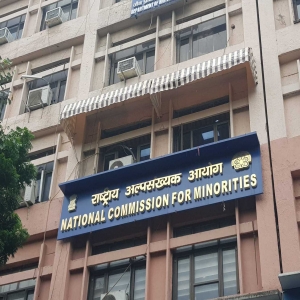
No questions are asked about the failure of existing statutory and administrative structures to address short-term anxieties, wounds, and long-term institutional neglect. These structures include the Ministry of Minority Affairs, the National Commission for Minorities, and the National Commission for Minority Educational Institutions.
The idea of the Board emerged shortly after massive backlash against the FCRA Amendment Bill 2026, which was introduced in late March but deferred amid protests – particularly in election-sensitive Kerala, where Christian voters hold considerable sway.
Christian leaders, including those from the Catholic Bishops' Conference of India (CBCI) and the All India Catholic Union (AICU) raised alarms that the amendments would empower a 'designated authority' to take provisional or permanent control of assets – properties, schools, hospitals, charities – built with foreign contributions, if an organisation's FCRA registration lapsed, was cancelled, or was not renewed.
This is widely perceived as opening the door to indirect state control, or even the 'looting' of church institutions under regulatory pretexts. The welfare board proposal, surfacing in this atmosphere, appears less like genuine empowerment and more like a calibrated response intended to reassure communities while preserving mechanisms for administrative leverage.
This intersects with documented failures by BJP-led state governments to curb persecution of Christians, where state police and civil administration are frequently accused of complicity – through delayed first information reports (FIRs), pressure on victims, or selective enforcement.
Data from 2025, collected by the Evangelical Fellowship of India and the United Christian Forum, exposes the scale and magnitude of the problem.
The UK-based Reuters and the India Hate Lab in New Delhi reported a 13 per cent rise in anti-minority hate speech, with 1,318 documented incidents, a significant portion targeting Christians alongside Muslims, predominantly in BJP-governed states.
The EFI Religious Liberties Commission verified 747 incidents of hostility, intimidation, violence and discrimination against Christians in 2025, following a review of more than 915 reports.
These figures reflect a sustained pattern: disrupted prayer meetings, false conversion allegations, social boycotts, denial of burial rights, and extortion by local vigilante networks. In such a climate, a central welfare board cannot substitute for equal protection under the law or prosecutorial fairness.
The core danger lies in substitution, reframing rights as welfare. India's Christians – numbering around 2.3 per cent of the population according to the last census – do not primarily suffer from an administrative deficit.
Rather, they suffer from a political and legal environment that normalises suspicion and coercion. Anti-conversion laws, often styled as 'Freedom of Religion' statutes, now exist in more than a dozen states and exemplify this reality.
On February 2, 2026, the Supreme Court issued notices to the Centre and to 12 states on a public interest litigation brought by the National Council of Churches in India, challenging these laws for violating Article 25 (freedom of conscience and religion). Similar notices had been issued to various states in response to appeals by CBCI, AICU, and this writer.
Maharashtra passed its own version of the Anti-Conversion law in March 2026, becoming the 13th state to do so. Chhattisgarh enacted an even harsher framework the same month, imposing severe penalties, compulsory prior declarations, public disclosure of conversion applications, verification by authorities, and treating even small groups of two or more persons as 'mass conversion' – an offence warranting up to life imprisonment in extreme cases.
These statutes mostly reverse the burden of proof, criminalise 'allurement' or 'inducement' (interpreted broadly to include charity or healing testimonies), and enable vigilante complaints. The process itself – police visits, arrests, stigma – serves as punishment, even if cases later collapse as investigations by media and human rights groups have repeatedly shown.
"A national welfare board with quasi-judicial overtones would sit alongside this coercive architecture rather than dismantle it, experts say. They fear such a board risks domesticating dissent by creating state-recognised interlocutors who channel grievances into manageable 'welfare' categories – marriage, funerals, interfaith families – while sidelining structural persecution.
Independent churches, Pentecostal fellowships, house churches, Dalit and Adivasi pastors, and itinerant evangelists – often poor and locally vulnerable – stand to lose the most. These groups face everyday coercion in rural and peri-urban areas but lack the institutional clout of historic denominations.
A Delhi-based board with state representatives could privilege elite ecclesiastical hierarchies and 'respectable' bodies, rendering frontline voices ornamental or underrepresented. This selective representation fragments the community, rewarding cooperation and marginalising those who assert raw constitutional rights.
The proposal's linkage, even if tentative, to FCRA-lapsed assets amplifies the threat. The Board could become a vehicle for the supervised incorporation of institutional properties. Schools, hospitals, mission societies and charities built over decades through foreign and domestic contributions would suddenly appear vulnerable to administrative attrition.
Regulatory delays in FCRA reporting, technical lapses, or political disfavour could trigger an asset transfer to the 'designated authority.' This echoes broader concerns over the government's use of FCRA loopholes to exert control over minority institutions, raising parallels with controversies surrounding Waqf reforms, where state interventions have been criticised for threatening institutional religious sovereignty. In both cases, the risk is the erosion of autonomy under the pretext of transparency or welfare.
Particularly insidious is the Board's potential to sabotage mass movements for parity among Dalit Christians, Adivasis and coastal fisherfolk. Dalit Christians have long argued that caste oppression – endogamy, occupational discrimination, segregated spaces, untouchability – persists after conversion, yet the Constitution (Scheduled Castes) Order of 1950 limits Scheduled Caste (SC) benefits to Hindus, Sikhs and Buddhists.
A Supreme Court judgement on March 24, 2026, in Chinthada Anand vs State of Andhra Pradesh reaffirmed this as 'categorical and absolute': conversion to Christianity results in the 'immediate and complete loss' of SC status. The ruling, while interpreting existing law, sharpens the moral and political demand for legislative amendment to recognise lived caste realities.
A welfare board offers symbolic compensation – perhaps scholarships or grievance cells – while leaving the 1950 Order untouched. If the demand for constitutional equality and anti-caste justice is reframed as a sub-issue within 'Christian welfare', it will dilute alliances with the broader Dalit political movement, social justice formations and anti-caste scholarship.
The state could then split 'good' institutional Christians from 'political' ones, or welfare concerns from justice claims. This fragments the struggle, turning an unfinished anti-caste agenda into an administratively containable minority-management problem.
Adivasi Christians face analogous risks, where tribal identity and customary rights intersect with conversion-related scrutiny under anti-conversion laws.
Coastal Christian communities – particularly fisherfolk and boatmen in Tamil Nadu, Kerala and other regions – this is an existential crisis. They face sea erosion (33.6 per cent of India's coastline is historically vulnerable), cyclones, unstable incomes, fishing bans, weak infrastructure, market pressures and maritime conflicts, as between Tamil Nadu and Sri Lanka.
Villages are shrinking; families are being displaced. The Union Budget 2026-27 allocated ?2,761.80 crore to fisheries, including infrastructure and insurance, yet community leaders emphasise that cash aid falls short. They demand sea walls, storm shelters, landing centres and diplomatic resolutions – not token minority representation. Redirecting fisherfolk towards a denominational board risks depoliticising material distress, allowing the state to claim responsiveness while avoiding expensive structural investments.
At a deeper level, the Board threatens constitutional principles. The Indian state is obliged to protect citizens exercising fundamental rights under Articles 14 (equality), 15 (non-discrimination), and 25–28 (religious freedom), not to 'manage' minorities through quasi-judicial paternalism.
In a majoritarian environment as exists now, minority-specific administrative structures can invite deeper scrutiny, selective incorporation and conditionality. Rights become permissions; representation becomes nomination; protection slides into supervision.
Once the Board defines legitimate interlocutors or narrows issues to personal-law matters, it shifts the Christian question from one of conscience and equality to an administratively governable identity.
.jpg)
.png) Cedric Prakash
Cedric Prakash
 ICPA
ICPA
 ICPA
ICPA
 ICPA
ICPA
 ICPA
ICPA
 ICPA
ICPA
 ICPA
ICPA
.jpg)
 A. J. Philip
.jpg)
.png) Jacob Peenikaparambil
Jacob Peenikaparambil
.jpg) John Dayal
John Dayal