

.png) Jacob Peenikaparambil
Jacob Peenikaparambil
.jpg)
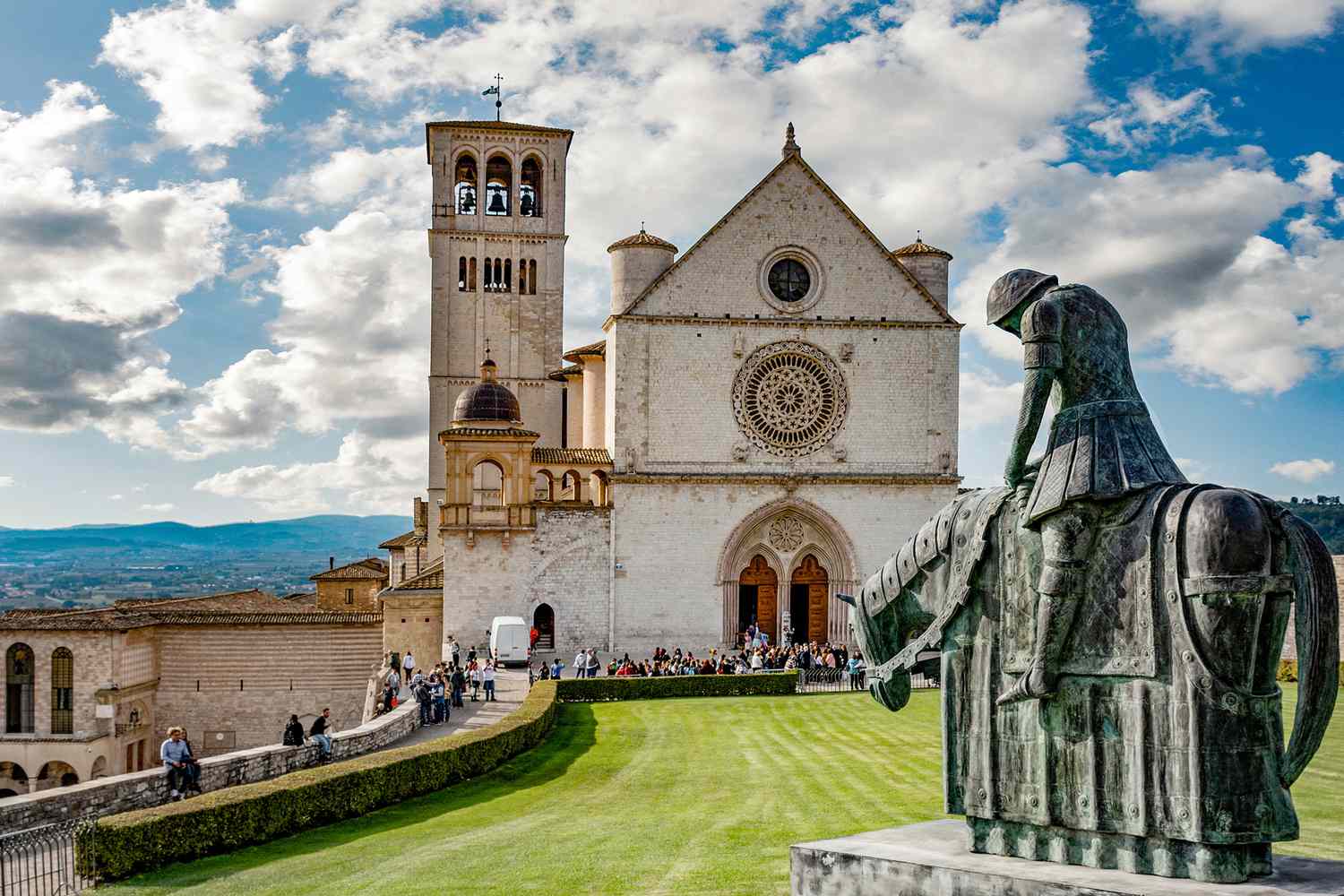
As the Catholic Church and the Franciscan Congregations celebrate the 800th anniversary of St. Francis of Assisi's passing, it is appropriate to reflect on how his message can soothe a communally wounded India. Living in 13th-century Europe during the height of the Crusades, St. Francis encountered a world deeply polarised by religious warfare, political tribalism, and extreme socio-economic inequality. India's present socio-political scenario shares similarities and differences with St. Francis's time. Hence, any reflection must take both into account and consider how his message applies to India's present situation.
Religion-Based Conflicts
Religion-based conflicts are not new to India. The biggest communal conflagration took place at the time of Independence. Mahatma Gandhi, who was deeply influenced by St. Francis of Assisi, played a crucial role in healing the wounds caused by Hindu-Muslim riots. In fact, his martyrdom ended the communal blaze that followed Partition.
While reflecting on solutions to communal conflicts and violence in India, one has to take into account some significant differences between the communal violence immediately after Independence and the communal conflicts and violence of the Narendra Modi era.
The communal riots at the time of Independence were driven by the sudden drawing of borders, mass displacement, and retaliatory fear. The current communal conflicts and violence are the result of ideological consolidation, driven by majoritarian political mobilisation, digital polarisation, and structural nationalism.
While mass and gruesome violence characterised the conflicts at the time of Independence, the current scenario is characterised by low-intensity and frequent incidents such as targeted lynchings, economic boycotts, and state-backed legal actions.
The most significant difference between the two scenarios is that the state, particularly BJP governments, are often accused of being complicit in or facilitating communal conflicts and violence under the Modi dispensation. Discriminatory laws such as the CAA, stringent anti-conversion laws, and "bulldozer justice" targeting Muslims are cited as examples.
An equally important difference is that communal riots at the time of Independence were mainly limited to the border states, whereas the present-day spread of communal hostility is pan-Indian and digital.
Christians were not significantly affected or targeted during the communal riots at the time of Independence. But during the Modi regime, both Christians and Muslims have been victims of discrimination, exclusion, hatred, and violence.
The ideology of the RSS, the parent organisation of the BJP, portrays Muslims and Christians as internal enemies of the nation (Bunch of Thoughts by MS Golwalkar) and, according to We or Our Nationhood Defined by MS Golwalkar, gives them the choice either to become Hindus or to remain as second-class citizens without privileges or even citizenship rights.
Although the RSS has officially distanced itself from Golwalkar's views, many policies and actions of BJP governments are seen as reflecting tendencies of exclusion, discrimination, and hostility towards Muslims and Christians.
It is important to understand and be aware of these differences when Christians enter into dialogue with Hindus, because a large section of Hindus in India is deeply influenced by the Hindutva ideology of the RSS-BJP and has become blind followers of Narendra Modi and the BJP. Many prominent Hindu leaders have also come under the influence of the RSS, which has co-opted some fundamentalist and firebrand Hindu preachers.
1. Entering into Dialogue with People of Various Faiths
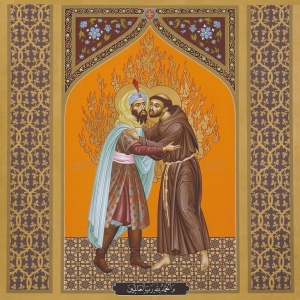
The most striking historical parallel to modern interfaith challenges is St. Francis's legendary journey to Egypt in 1219 during the Fifth Crusade. While Christian and Muslim armies were locked in brutal warfare, Francis chose a path of radical vulnerability. He walked directly into the enemy camp to meet Sultan Malik al-Kamil.
Francis did not approach the Sultan to debate, conquer, or condemn him, but to encounter him as a fellow child of God. The Sultan, in turn, received him with deep respect and hospitality. This historic encounter shows that even amid intense political and religious conflict, meaningful dialogue is possible when driven by mutual respect rather than a desire for dominance.
In the Indian context, first of all, there has to be dialogue between Muslims and Christians, the two major minority communities who are victims of communal politics, to arrive at a common approach to dialogue with Hindu religious leaders, including the RSS and the BJP.
The RSS-BJP combine has been making efforts to divide Muslims and Christians, especially in states where they are significant in number. For example, in Kerala, Muslims and Christians together constitute 44.94 per cent of the population (Muslims 26.56%, Christians 18.38%).
The Catholic Church in India has to take the initiative at the parish, diocesan, regional, and national levels to engage in conversations with Muslim leaders on ways and means of building harmony and collaboration. Consequently, Muslim and Christian leaders together may initiate dialogue with Hindu leaders, including those of the RSS and BJP.
At the same time, faith-based organisations, NGOs, and religious congregations within the Catholic Church may collaborate with faith-based organisations and NGOs of other religions to launch joint ventures that alleviate suffering and promote cultural and literacy activities. This is dialogue in action and people-to-people dialogue. It can put pressure on religious leaders to enter into dialogue. Together, these organisations should counter the spread of hatred, especially on social media platforms.
In all religions, people love peace and harmony. Church leaders and organisations, especially Franciscans, may identify such people and organise them into peace clubs to promote peace and harmony. St. Francis of Assisi's famous peace prayer, "Make me an instrument of your peace," should be promoted in various ways.
Christians, for their part, have to be culturally sensitive to people of other faiths. Institutions serving the public, such as schools, colleges, hospitals, training centres, and social work centres, may adopt common prayers acceptable to people of all faiths. These institutions may also have a common prayer room each, containing the symbols and scriptures of various religions, where people of all faiths can come and pray silently.
2. Radical Inclusivity and the Universal Family
Francis's worldview was anchored in universal fraternity. He did not limit his love to his own religious community. Instead, he extended it to all of creation, famously composing the Canticle of the Creatures, in which he addressed the sun, moon, and elements as "Brother" and "Sister."
For a diverse nation like India, which is home to a vast tapestry of religions, languages, and cultures, this vision of universal kinship is profoundly relevant. It reframes diversity not as a threat to national unity but as a sacred harmony. Francis's spirituality aligns closely with the ancient Indian ideal of Vasudhaiva Kutumbakam (the world is one family). By embracing this perspective, Indian society can move away from a culture of exclusion and majoritarianism towards a collective identity built on shared humanity.
The Church, especially the Franciscans, has to promote unity in diversity by accepting, appreciating, and celebrating diversity. The Church, particularly the Franciscans, has to discourage and reject fundamentalist tendencies found in some Christian denominations. Religious fundamentalism is one of the biggest enemies of peace and harmony.
3. Solidarity with the Marginalised
Communal violence is rarely just about religious issues. It is also intertwined with economic disparity, political disenfranchisement, and rigid social hierarchies. St. Francis was born into a wealthy merchant family but voluntarily chose a life of absolute poverty (povertà). By renouncing his wealth and status, he chose to live among the minores—the marginalised, the poor, and the lepers of his society—to empower them.
India continues to face deep-seated fractures rooted in the caste system and widening economic inequality, which are frequently exploited to trigger communal friction. Francis' radical solidarity with the marginalised offers a powerful critique of status and privilege. His life reminds us that true social harmony cannot be achieved without addressing systemic injustices. To heal communal fractures, India must prioritise the dignity and upliftment of its most vulnerable populations, ensuring that development is inclusive and equitable.
Despite opposition from vested interests and radical Hindutva groups, the Church in India has to continue its efforts to empower the marginalised and support them in living with dignity and accessing their human and fundamental rights.
4. Reverence for the Shared Earth
An often-overlooked dimension of St. Francis's relevance to modern India is his role as the patron saint of ecology. Francis recognised that human well-being is inextricably linked to the earth's health. Today, India faces severe environmental degradation, resource scarcity, and climate vulnerability—issues that disproportionately affect the poor and can trigger conflicts over basic resources such as water and land.
By fostering a Franciscan reverence for nature, Indian communities can find a common, unifying purpose. Environmental degradation does not discriminate based on religion or caste; polluted rivers and toxic air affect everyone. Rallying around protecting the shared environment can serve as a powerful catalyst for intercommunal cooperation, bringing disparate groups together to work for the common good.
The fractures in contemporary India cannot be healed by laws and security forces alone; they require a fundamental transformation of the human heart. St. Francis of Assisi offers a timeless message that transcends his medieval, European, and Christian origins. His life demonstrates that peace is not merely the absence of war, but the active presence of justice, dialogue, and love.
.jpg)
 A. J. Philip
Jacob Peenikaparambil
A. J. Philip
Jacob Peenikaparambil
.png) Chhotebhai
Chhotebhai
.jpg) P. A. Joseph
P. A. Joseph
.png)
.png) Robert Clements
Robert Clements
.jpeg) A. J. Philip
A. J. Philip
.jpg) Jacob Peenikaparambil
Jacob Peenikaparambil