

.png) John Dayal
John Dayal
It is a nice, warm, abiding myth, and was possibly true also in the first two decades of India's independence. The myth that the then-ruling Congress party and the Indian Christian community had a love bond that no opposition group could break.
True, perhaps, when Jawaharlal Nehru was prime minister, and till about 1975, when, in the passion of the Emergency she had declared in 1975, Indira Gandhi brought in the Foreign Contribution Regulation Act, dangerous even then and now totally weaponised by the Narendra Modi Government.
In the interregnum, the Christian community, especially those outside Kerala and in particular converts from Dalit and Tribal communities, have learnt to their cost that governments, and political groups which run them, are not to be trusted. The permanent interest of the parties is, in the short run, to do what will get them elected in the next election.
The Manmohan Singh government, which came to power in 2004 after 20 years or so in the wilderness, liked to speak of inclusion. On one important front, it even acted.
It set up the Sachar Committee on Muslim deprivation, and its findings were received with seriousness, translated into programmes, and acted upon by the central and state governments.
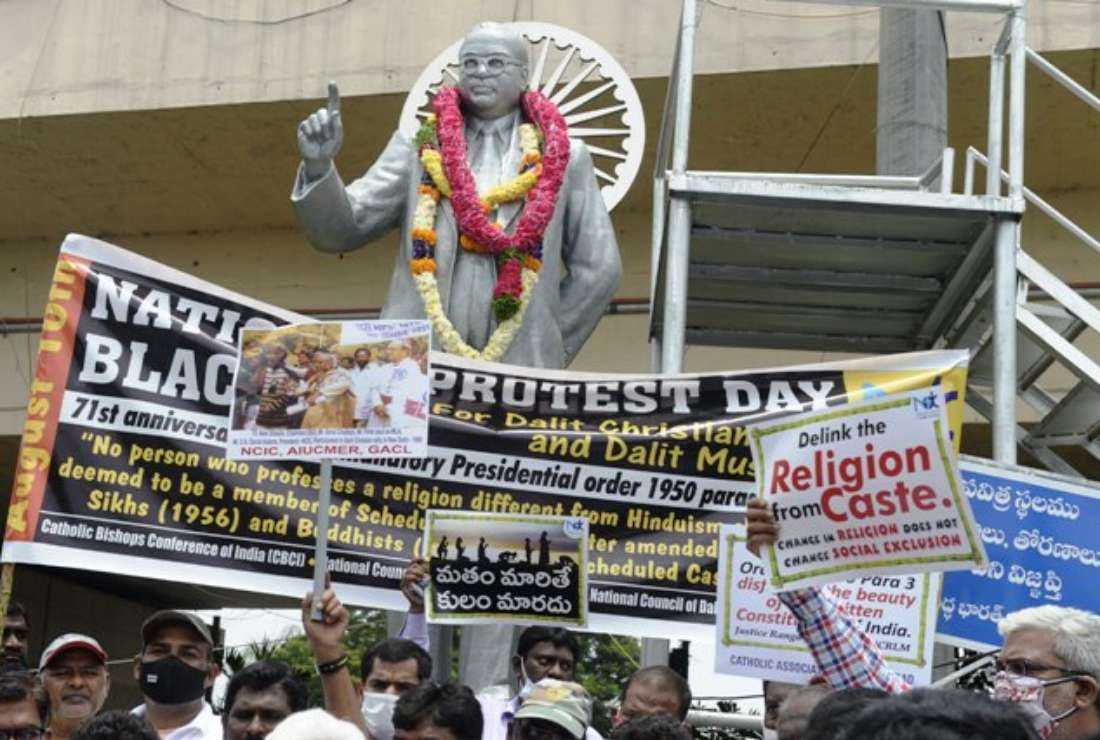
It set up another official body, the Ranganath Mishra Commission, to determine whether caste stigma survives conversion. The commission found that Dalit Christians remain punished by law for their faith — and the same government slowed down, looked away, and settled for drift.
That is the uncomfortable comparison. The UPA was far more willing to address minority disadvantage when the remedy could be packaged as development than when it required constitutional courage.
The Sachar Committee was constituted in March 2005 to examine the social, economic and educational status of Muslims.
It produced a detailed empirical report documenting what many had long argued and the state had too often denied: Muslims were lagging behind in education, public employment, access to credit and basic development indicators.
The government moved quickly. The report was submitted in November 2006 and tabled the same month. Within a relatively short period, the UPA had built the Prime Minister's New 15-Point Programme.
With it came minority concentration districts, scholarships, data monitoring, and other measures intended to give minorities, especially Muslims, a fairer share in state schemes and opportunities. By 2014, the government said it had accepted 72 of the 76 Sachar recommendations.
Whatever the limits of implementation, the Sachar committee entered government discourse. Parliament discussed it. Programmes flowed from it.
The National Commission for Religious and Linguistic Minorities, chaired by Justice Ranganath Misra, had been constituted earlier in October 2004 and began functioning in March 2005.
It had a broader brief than Sachar: backward sections among religious and linguistic minorities, welfare measures, reservation, and the legal and constitutional modalities needed to give those measures effect.
Its terms were expanded in October 2005 to examine the issue that successive governments had avoided for decades — the continuing exclusion of Dalit Christians and Dalit Muslims from Scheduled Caste status under the Constitution (Scheduled Castes) Order, 1950.
The Mishra Commission submitted its report in May 2007. But unlike Sachar, it was not promptly politically owned. It was not laid before Parliament until December 18, 2009. Even after it was tabled, the government's formal line in Parliament in December 2010 was that its recommendations were merely "under consideration."
Here lies the central grievance of Christians, especially Dalit Christians. The UPA had no difficulty acting when the solution lay in scholarships, district planning, access to lending, coaching schemes, and developmental targeting.
It hesitated the moment the issue became one of equal constitutional treatment for those whose caste disability had not disappeared with Baptism.
The Mishra Commission's most important recommendation was that the Scheduled Caste status be de-linked from religion. The Scheduled Castes net should become religion-neutral, as the Scheduled Tribes category already is.
Muslim and Christian Dalit groups, whose Hindu, Sikh and Buddhist counterparts already enjoyed Scheduled Caste recognition, should be brought within the same protection.
Once the state had already accepted that Sikhs and Buddhists, the latter by the VP Singh government, converts could continue to suffer caste disabilities after conversion, the continued exclusion of Christian and Muslim Dalits ceased to be principled.
Dalit Christians were not asking for favours, but for the state to acknowledge a social fact. Conversion does not perform magic, does not dissolve stigma, status barriers, or social discrimination. Christianity rejects caste in its doctrine. Indian society does not surrender caste so easily in practice.
Christians, like other notified minorities, could benefit from aspects of the broader minority-welfare architecture established during the Sachar years. The 15-Point Programme and related schemes were framed for minorities in general, not Muslims alone.
But that argument misses the point that a general scholarship scheme is not the same as constitutional equality. A few benefits from the minority basket do not answer the central Christian complaint that Dalit Christians remained excluded from the Scheduled Caste framework solely because they were Christians.
The Constitution abolished untouchability. But the Scheduled Castes Order of 1950 tethered the remedy to religion. Over time, the law was widened to include Sikhs and Buddhists. Christians and Muslims were left outside.
The state had before it a commission chaired by a former Chief Justice of India, examining an injustice that had been contested for decades. If the government disagreed, it ought to have said so clearly and defended its disagreement.
If it agreed, it should have legislated. What it did instead was worse than either course. It delayed tabling. It kept the recommendations in suspension. It let time do the work that argument would not.
Dalit Christians' claims required the government to say that caste oppression is social, not confessional; that it survives conversion; and that the republic cannot deny equal remedy based on religion. That was a bridge too far.
Sachar was embraced because it could be administered. Mishra was stalled because it had to be confronted.
This matters even today because the difference between the two reports tells us how the Indian state manages minority questions. It is willing to address the disadvantage when the response is distributive. It becomes evasive when the response demands structural equality.
It is comfortable giving minorities a share in schemes. It is less comfortable dismantling a legal discrimination that punishes citizens for leaving the Hindu fold.
Sachar and Mishra should never have been treated as rival texts, experts say. They were complementary. Sachar established that minority deprivation was real and measurable. Mishra pressed the next question: what happens when minority deprivation intersects with caste and conversion?
The government could have evolved a coherent policy of minority justice, one part developmental, one part constitutional. The UPA chose not to.
For Dalit Christians, it meant they could be counted for scholarships through other scenes but not for parity.
The Manmohan Singh government will rightly be credited for opening a serious conversation on minority exclusion. But it should also be judged for where it stopped. It shrank from the politics of equality, where it became difficult.
Muslims received, at least in part, an administrative response to their documented deprivation. Dalit Christians were left with a constitutional wound still waiting for honesty.
.jpeg)
 A. J. Philip
.jpg)
.png) Jacob Peenikaparambil
Jacob Peenikaparambil
.jpg) John Dayal
John Dayal
.jpg)
 Pachu Menon
.jpg)

.png)
.png)
.png) Robert Clements
Robert Clements
.jpg)