

.png) Robert Clements
Robert Clements
.png)
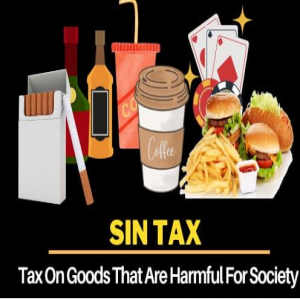
So, the GST Council has decided to simplify our lives. Yes, you heard right—simplify! Out go the old four tax slabs, in come two: 5% and 18%. And for those who like their pleasures with a little indulgence—say, a cigar, a peg, or imported cheese—there's a brand-new "sin and luxury" slab of 40% waiting to whack you.
Now, doesn't that sound moral? Two neat categories and a sermon thrown in: live holy, pay less; sin luxuriously, pay through your nose. Somewhere, I suspect the Council consulted a preacher before they consulted an economist.
But pause for a moment. Who decides what is sin? Is a smoke in the evening really more sinful than sitting smugly in an air-conditioned room? If the price of ACs has crashed to the point where every house on the street hums with cool air, shouldn't cooling be taxed like smoking? One man's indulgence is another man's necessity. Who gets to play God here—the GST Council?
And this is where the hypocrisy becomes too glaring to ignore. While the government lectures citizens on "sinful" spending, the nation itself indulges in a habit far costlier, far deadlier, and far more immoral than a puff or a peg. We continue to buy oil from Russia—yes, that Russia, the bully on the global street, invading neighbours, silencing critics, and flexing muscles like the biggest goonda in the colony.
Billions of dollars flow out of our coffers to Moscow, and billions more into the pockets of a few privileged Indian businessmen who refine and resell that same oil for fat profits.
So, tell me: is it truly a sin to wear lipstick, or is the real sin filling the war chest of a tyrant?
Imagine the irony. The kirana shopkeeper is told to charge 40% extra on a poor woman's lipstick because beauty is "sinful." But at the same time, tankers of crude glide into our ports, duty-paid and government-cleared, their barrels dripping with the guilt of war.
If taxes are supposed to guide morality, then the question is not whether you and I enjoy a cigar, but whether the nation itself enjoys doing business with bullies.
A lipstick does not kill. A comfortable car for a hard-working businessman is not a sin. A peg does not topple governments. But oil money, sent with a smile, props up the very tyrants who thrive on bloodshed.
So here we are: a government that preaches against "sins" of everyday life, while committing one of its own on the grandest scale. Maybe the real sermon should be this—stop calling my smoke or cheese a sin, until you stop buying oil from a bully.
That, dear reader, is the real sin in the sin tax...
.jpg)
 A. J. Philip
.jpg)
.png) Jacob Peenikaparambil
Jacob Peenikaparambil
.jpg)
.png) John Dayal
John Dayal
.jpg)
.png) Joseph Maliakan
Joseph Maliakan
.jpg)
 Pachu Menon
.jpg) Jose Vattakuzhy
Jose Vattakuzhy
.jpg)
 P. A. Chacko
.png)
.png) Robert Clements
Robert Clements
.jpg) A. J. Philip
A. J. Philip