
.png) Joseph Xavier
Joseph Xavier
.jpg)
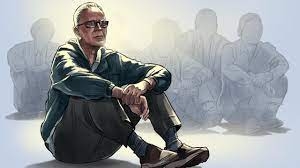
Fr. Stan Swamy died as an undertrial prisoner in Holy Family Hospital Mumbai on July 5, 2021. As we remember his life and mission and recommit ourselves to take forward his legacy on his 2nd death anniversary, let us also remember many human rights activists who are still languishing in various prisons arrested under a draconian law – Unlawful Activities Prevention Act (UAPA).
The first arrest in BK16 (BK stands for Bhima Koregaon issue) happened on June 6, 2018. It is more than 5 years. Out of the 16 persons falsely implicated, Fr. Stan received his eternal reward. Prof. Anand Teltumbde is on regular bail. Mr. Varavara Rao and Ms. Sudha Bharadwaj received bail on technical grounds. Mr. Gautam Navalaka is under house arrest. He has written articles for Social Action, a journal published by the Indian Social Institute, Delhi.
Who are these 16 people? A look at the profile of them will indicate why the State feels threatened and branded them as ‘urban naxels’.
Surendra Gadling is a senior labour and human rights lawyer and general secretary of the Indian Association of People’s Lawyers. He is known for fighting cases pertaining to illegal killings, atrocities and police excesses in the Naxal belt of eastern Maharashtra.
Sudhir Dhawale, a well-known Dalit rights activist, is a staunch Ambedkarite and founder of the Republican Panther Jaliantachi Chalwal, a movement for the Annihilation of Caste.
Mahesh Raut is the youngest of the 16 activists. A graduate of the Tata Institute of Social Sciences, Mumbai, he is a recipient of the Prime Minister’s Rural Development Fellowship. As a co-convener of the Visthapan Virodhi Jan Vilas Andolan, he has led campaigns against the displacement of marginalised communities in the Gadchiroli-Chandrapur region of Maharashtra.
Rona Wilson is a graduate of Jawaharlal Nehru University, Delhi. He fought for the release of several political prisoners.
Shoma Sen is a professor and head of the English Department at Nagpur University and was president of the Nagpur University Teachers’ Association. She is associated with women’s rights movements and is an active member of Stree Chetna, which works on the issues of violence against women.
P. Varavara Rao is a Telegu poet, Marxist ideologue and rights activist. He is also a founder of the Viplava Rachayitala Sangham (Revolutionary Writers’ Association), or Virasam, which publishes divergent political views.
Sudha Bharadwaj is a practising lawyer at the Chhattisgarh High Court and a visiting professor at the National Law University, Delhi. She is the general secretary of the People’s Union for Civil Liberties in Chhattisgarh and worked closely with Father Stan Swamy on the Persecuted Prisoners Solidarity Committee (PPSC), as co-convenor.
Arun Ferreira is a social worker. He studied at St. Xavier’s College and has been part of the All India Catholic University Federation (AICUF), a student movement initiated by the Jesuits in Chennai in 1924. He took care of Fr. Stan as a mother in Taloja prison.
Vernon Gonsalves is an academic and writer by profession. He is known for his activism and social work. He is married to Susan Abraham, a well-known civil rights and labour lawyer, and the couple are always taking the lead in demonstrations and protests in Mumbai. Vernon was also part of the AICUF movement.
Gautam Navlakha, an author, journalist and activist, works with the People’s Union for Democratic Rights and writes for Economic & Political Weekly.
Hany Babu Musaliyarveettil Tharayil is an associate professor at Delhi University and an extraordinary teacher. The students of Delhi University will vouch for his academic calibre. A specialist in language ideology, politics and policy, linguistic identity, marginalised languages and social justice, Babu has published several papers on the issues of caste. He has been a guide and guru to many Dalit, Adivasi and OBC students at Delhi University.
Anand Teltumbde is the most high-profile person in the BK-16. Married to B.R. Ambedkar’s granddaughter, Rama, Teltumbde is an eminent Dalit scholar and public intellectual. He is a graduate of the Indian Institute of Management Ahmedabad and has held several senior corporate positions. He was a professor at the Indian Institute of Technology Kharagpur and at the Goa Institute of Management. Teltumbde has been a strong critique of the right-wing regime and the anti-Dalit discourse it has created.
The activists Sagar Gorkhe, Ramesh Gaichor and Jyoti Jagtap are an integral part of the Kabir Kala Manch, a group which uses art forms to empower marginalised communities.
Fr. Stan was the 16th accused in the BK16 case. He has been a social and human rights activist who dedicated his life to the development of the Adivasis in Central India. Earlier, he had worked for the Dalits and in training a number of individuals, religious, NGO fraternity, and youth motivating them to analyse the society from a structural perspective and engage in the social transformation process. He was fighting against the displacement of Adivasis, corporate looting of land, water, forest and minerals, and land bank, and to free Adivasi youth who were imprisoned and put behind bars as ‘Maoist sympathisers’. Many such youth are still in prison as undertrials.
What can we learn from these BK16? These activists dedicated their lives to the uplift of the poor and the marginalised communities and worked within the Constitutional framework. When the rights of the poor were trampled upon, they questioned the state, corporate lobby and the powerful who loot the wealth of the nation and continued to affirm the dignity and rights of the marginalised communities.
Fr. Stan by his life and mission stood out as a modern prophet who unequivocally said that he will not be a silent spectator when justice is denied to the poor. Even from prison, he said that ‘a caged bird can still sing’ and in chorus. He invites us to reflect on ‘why the truth has become so bitter, Dissent so intolerable and Justice so out of reach. Human rights defenders are repressed but not defeated. Freedom is a long road to go.’
The Arsenal consulting agency has established that BK16 were targeted and without their knowledge false pieces of evidence in the form of letters were interpolated in their computers. The judiciary could not make the state accountable to proceed with the trial and provide them with an opportunity to prove their innocence.
Without bail or trial, these human rights defenders are victims of criminal investigative procedures. The presumption of innocence is a legal principle that every person accused of any crime is considered innocent until proven guilty. When the basic tenets of criminal jurisprudence are not followed by the state, one can only conclude that there are skeletons in the cupboard of the state. We are called to expose the skeletons without fear. What has happened to BK16, is only the tip of the iceberg.
We cannot remain silent. Being silent could only mean that we are neither with the poor nor ready to protect and uphold the Constitution. The best tribute we can pay to Stan Swamy will be to speak truth and truth to power. We need to salute the members of the families of the BK16, who live in hope that justice will reach their door steps. We need to recognise the contribution of human rights lawyers who continue to demand justice from our legal system on behalf of the BK16 and offer pro bono services.
It is heartening to see that Jesuit institutions, dioceses, religious and Civil Society Organisations have planned to commemorate Stan’s 2nd death anniversary with broader demands to the state to repeal UAPA, to free all political prisoners and grant bail to BK16 immediately. The state will not budge easily but it will keenly watch the effect our campaigns as these events will have implications for political parties in the forthcoming elections.
July 5 is an opportune moment to speak out on various human rights violations of the State demanding justice for people from Kashmir to Manipur. Hope is our source of strength. On 5th July, let us sing in one voice in the words of Rabindranath Tagore: Into the heaven of freedom my father let my country awake and recommit ourselves to protect and uphold the Constitution of India.
(The author is currently working as a freelance researcher and human rights activist, based in Madurai)
.jpg)
.png) Cedric Prakash
Cedric Prakash
 ICPA
ICPA
 ICPA
ICPA
 ICPA
ICPA
 ICPA
ICPA
 ICPA
ICPA
 ICPA
ICPA
.jpg)
 A. J. Philip
.jpg)
.png) Jacob Peenikaparambil
Jacob Peenikaparambil
.jpg)
.png) John Dayal
John Dayal