

.jpg) Mr. A C Michael
Mr. A C Michael
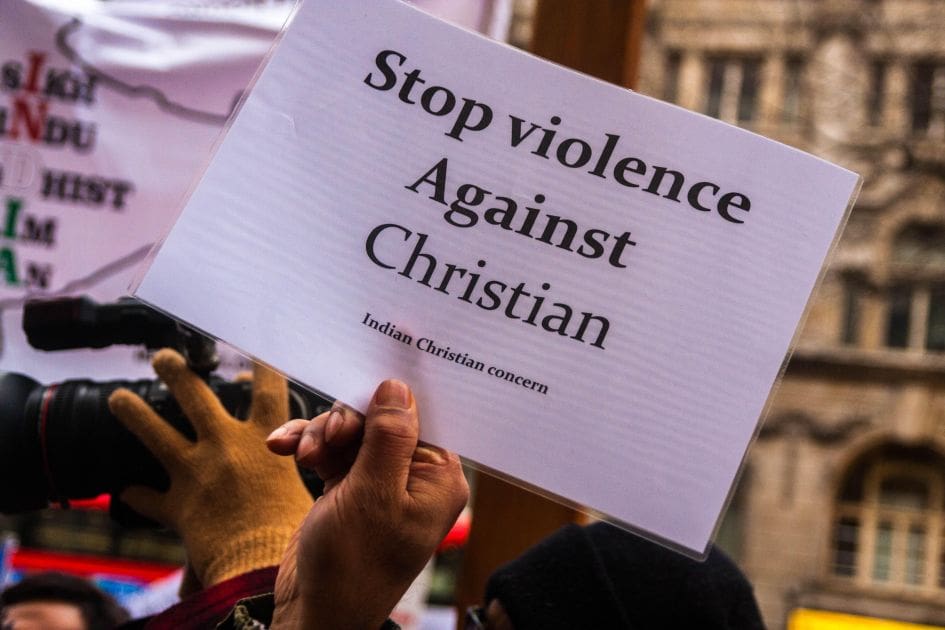
687 INCIDENTS OF VIOLENCE AGAINST CHRISTIANS IN 334 DAYS OF 2023. 531 INCIDENTS ARE IN 4 NORTH INDIAN STATES.
It is a matter of fact that our country has been witnessing a sharp incline in targeted violence against Christians since 2014. The annual ranking by the Open Doors of the World Watch, India is ranked as the eleventh worst country on earth for the persecution of Christians.
According to the United Christian Forum (UCF), which has been offering a toll-free helpline service (1-800-208-4545) since 19 January 2015 to those in distress and not aware of the law of the land and system, There were 147 incidents of violence against Christians in 2014, 177 in 2015, 208 in 2016, 240 in 2017, 292 in 2018, 328 in 2019, 279 in 2020, 505 in 2021, 599 in 2022 and 687 in Nov 2023.
This is despite Article 25 of the Indian Constitution, which guarantees the right to choose one’s religion. In our country today, we have so-called “Freedom of Religion Acts”, which are popularly known as “anti-conversion laws”, in 11 out of the 28 states wherein a person living in India is expected to seek permission from the government to follow a religion of his/her choice by filing written information to a revenue officer in contravention to UN convention.
From January till November 2023, UCF has received reports of 687 incidents of violence against Christians in 23 states of India, which is little over two (2) incidents a day in a secular and democratic country. Out of a total of 687 incidents, 531 incidents have taken place in 4 states of North India, namely, Uttar Pradesh, with 287 incidents, 148 in Chhattisgarh, 49 in Jharkhand and 47 in Haryana.
35 Incidents of violence against Christians in Madhya Pradesh, 21 in Karnataka, 18 in Punjab, 14 in Bihar, 8 each in Gujarat, Tamil Nadu and Jammu & Kashmir, 7 each in Rajasthan and Orissa, 6 each in Delhi and Maharashtra, 4 each in Uttarakhand, West Bengal and Himachal Pradesh, 2 in Assam, 1 each in Andhra Pradesh, Goa, Chandigarh and Daman & Diu.
In almost all incidents reported across India, vigilante mobs comprising religious extremists have been seen either barging into a prayer gathering or rounding up individuals that they believe are involved in forcible religious conversions. Such mobs criminally threaten and/or physically assault people in prayer with impunity before handing them over to the police on allegations of forcible conversions. Often, communal sloganeering is witnessed outside police stations, where the police stand as mute spectators.
There are other states, too, which saw well-orchestrated attacks on Christians. Last year, 2022, it was in Chhattisgarh, due to which over 1000 Adivasi Christians were displaced from their own homes and villages. This year, 2023, Manipur saw the worst ever violence, wherein 175 died and over 1000 individuals were severely injured. Over 5000 cases of arson and 254 churches burnt and vandalised.
Despite widespread international condemnation of the impunity that attackers face, national and state governments have done little to ensure justice. A report titled Criminalising Practice of Faith[1] published by PUCL documented that police colluded with Hindutva groups and turned a blind eye to offences committed against Christians.
________________________
For further details, please contact: Mr. A C Michael: +91-9818155290 acmichael60@gmail.com
[1] “Criminalising the Practice of Faith.” SCRIBD, Dec. 2021, www.scribd.com/document/547414764/Criminalising-the-Practise-of-Faith#.
A C Michael (Full Name: Michael Anthony Cruz)
Former Member of Delhi Minorities Commission, Govt of NCT of Delhi
.jpg)
.png) Cedric Prakash
Cedric Prakash
 ICPA
ICPA
 ICPA
ICPA
 ICPA
ICPA
 ICPA
ICPA
 ICPA
ICPA
 ICPA
ICPA
.jpg)
 A. J. Philip
.jpg)
.png) Jacob Peenikaparambil
Jacob Peenikaparambil
.jpg)
.png) John Dayal
John Dayal