

 A. J. Philip
.jpg)
I do not know who saved me that day in Assisi.
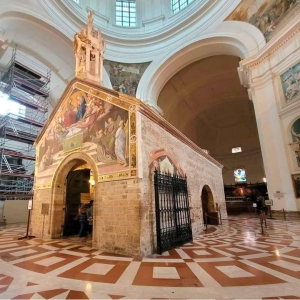
I had just come out of the Basilica of St Francis after spending several hours looking at the murals depicting his life, his coarse habit, the relics preserved beneath the Church and the many objects associated with a man who had renounced wealth to embrace poverty. As I stepped out, I slipped on the polished marble.
For a fleeting moment, I thought I was going to fall. But I did not.
I felt as though someone had caught me from behind and pushed me forward, enabling me to regain my balance. Footballer Diego Maradona used to call such moments the "hand of God." I do not know whether it was St Francis, St Clare, St. Teresa of Kolkata, God Himself or merely the body's instinctive reflex that saved me.
Whatever it was, I remain grateful. I am writing this today partly because I did not fall that day.
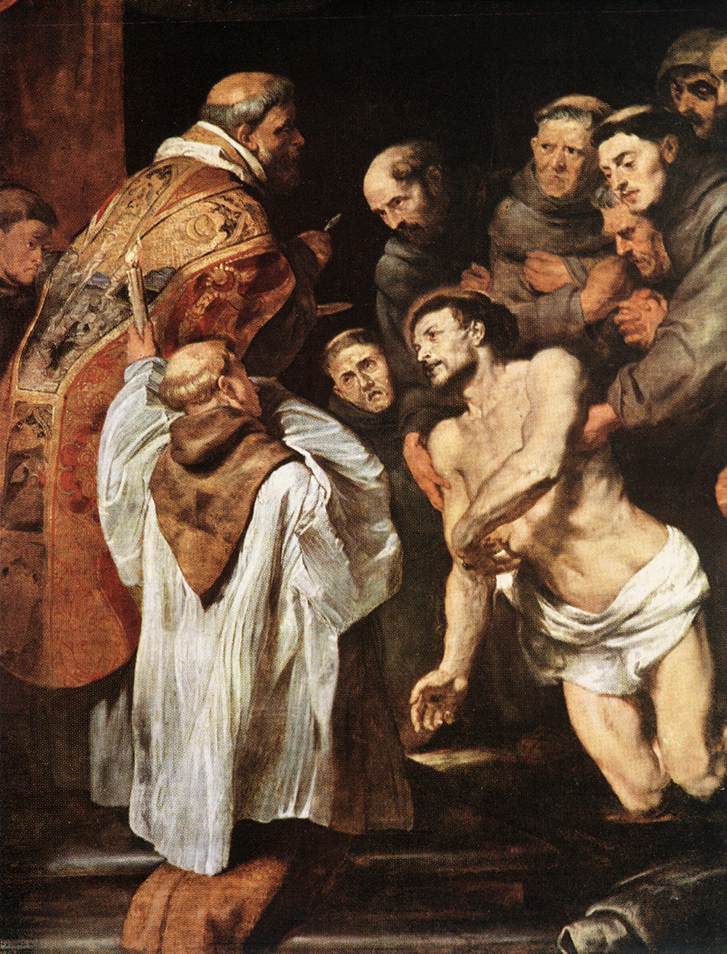
The memory has acquired a special significance in 2026, when the world is observing the 800th anniversary of the death of St Francis of Assisi. He died in 1226, but his influence has travelled across eight centuries. It is difficult to think of another medieval saint whose name, ideas and example have remained so alive in the modern world.
I had gone to Assisi almost by accident. I was in Rome, struggling with the practical problems of being a journalist in a city where even getting through the bureaucracy of the Holy See seemed like a formidable assignment.
Every year on Teacher's Day, I used to receive a beautiful message from my former student Sister Francin Moovelil, who was herself a teacher. I remembered her and made a call.
Immediately, she wrote to her friend in Rome, Fr Biju Madathikunnel, who connected me with Shri Joy Kumar.
There is a colossal statue of St Peter in the square named after him at the Vatican. He holds a key in his hands. But I discovered that Joy was the person who held the key for me. He helped me obtain the accreditation that the Vatican Press Office had promptly rejected.
When I asked Sister Francin whether she had ever visited the Vatican, she said she had not. Then she added something that intrigued me. She wanted to visit Assisi more than the Vatican. The rest was done by my friend Fr Bijoy Capuziner, a theology student in Rome.
That was how I found myself boarding a train for a two-and-a-half-hour journey from Rome to Assisi.
Assisi is to St Francis what Kalady is to Adi Sankara. Both are small places made immortal by men who transformed religious life. Francis was born into wealth. His father was a prosperous cloth merchant. He could have lived comfortably, surrounded by the privileges that came with his birth. Instead, he chose poverty.
Like Siddhartha, who gave up a princely life in search of truth, Francis walked away from material comfort. But his destination was different. He did not leave the Church; he sought to renew it from within. He found virtue in simplicity, humility and service.
The Franciscan movement that emerged from his life eventually spread across the world. The Capuchins, too, trace their origins to the Franciscan tradition.
I got a small taste of that simplicity when I stayed in a friary in Assisi. There was no fan or air-conditioner. Fr Bijoy opened the window to let in fresh air. It was so fresh that, a few hours later, I felt as though I had been transported to Siachen.
A friary was not the place to expect bed coffee. Fr Bijoy, more practical than I, went across the road to a 24-hour cafeteria and returned with a cup of machine coffee.
Breakfast was equally simple: a croissant and coffee. Nothing more. Nothing less for a man who ate 4 idlis and half a litre of sambar for breakfast.
Fortunately, the friary in-charge who had gone for an early morning Mass remembered us and returned with heavily stuffed sandwiches. One sandwich was as satisfying as a masala dosa and a plate of vada eaten together.
There was something reassuring about this simplicity. The world outside was full of noise, commerce and display. Inside the friary, life seemed reduced to its essentials. That was perhaps the first lesson Assisi taught me even before I entered the Basilica.
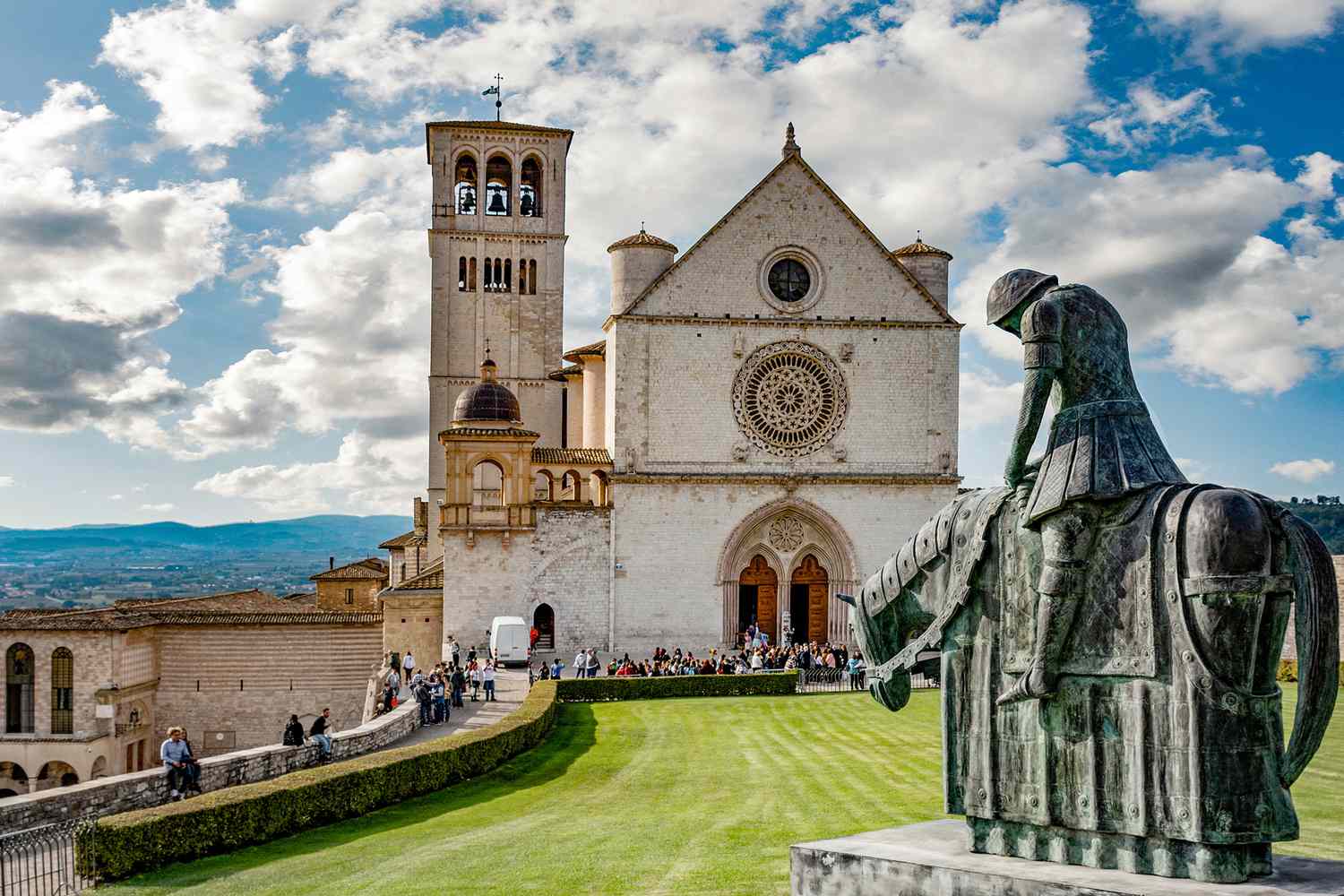
The Basilica of St Francis appeared almost ethereal at night, illuminated brilliantly against the darkness. But daylight revealed another kind of beauty.
It was a cavernous church whose walls and ceilings were covered with magnificent murals depicting episodes from the life of Francis. In the lower Basilica was another small church, with the saint's tomb beneath it.
A museum attached to the Basilica displayed objects associated with his life, including the coarse, rough garment he wore and the instruments with which he subjected himself to penance. I stood before that garment for some time.
It was difficult not to think of people who claim to be God's mercenaries while travelling around in expensive cars. Perhaps they should visit Assisi and look at the cloth worn by the man who made poverty his badge.
Francis did not merely talk about poverty. He wore it. He lived it. He made it part of his identity.
There was another object in the souvenir shop that attracted me: the prayer associated with St Francis.
"Lord, make me an instrument of Your peace."
I bought a copy inscribed on a piece of marble for my friend, the late Omchery NN Pillai. I bought a wooden one for our house.
The prayer is among the most beautiful prayers ever uttered in the Christian tradition: Where there is hatred, let me bring love./ Where there is injury, let me bring pardon./ Where there is discord, let me bring union./ Where there is doubt, let me bring faith./ Where there is despair, let me bring hope./ Where there is sadness, let me bring joy./ Where there is darkness, let me bring light.
Its appeal goes beyond Christianity. It speaks to anyone who believes that peace is preferable to hatred, reconciliation to revenge and service to self-interest.
That may explain why Francis remains relevant 800 years after his death. He did not merely establish an order. He created an example.
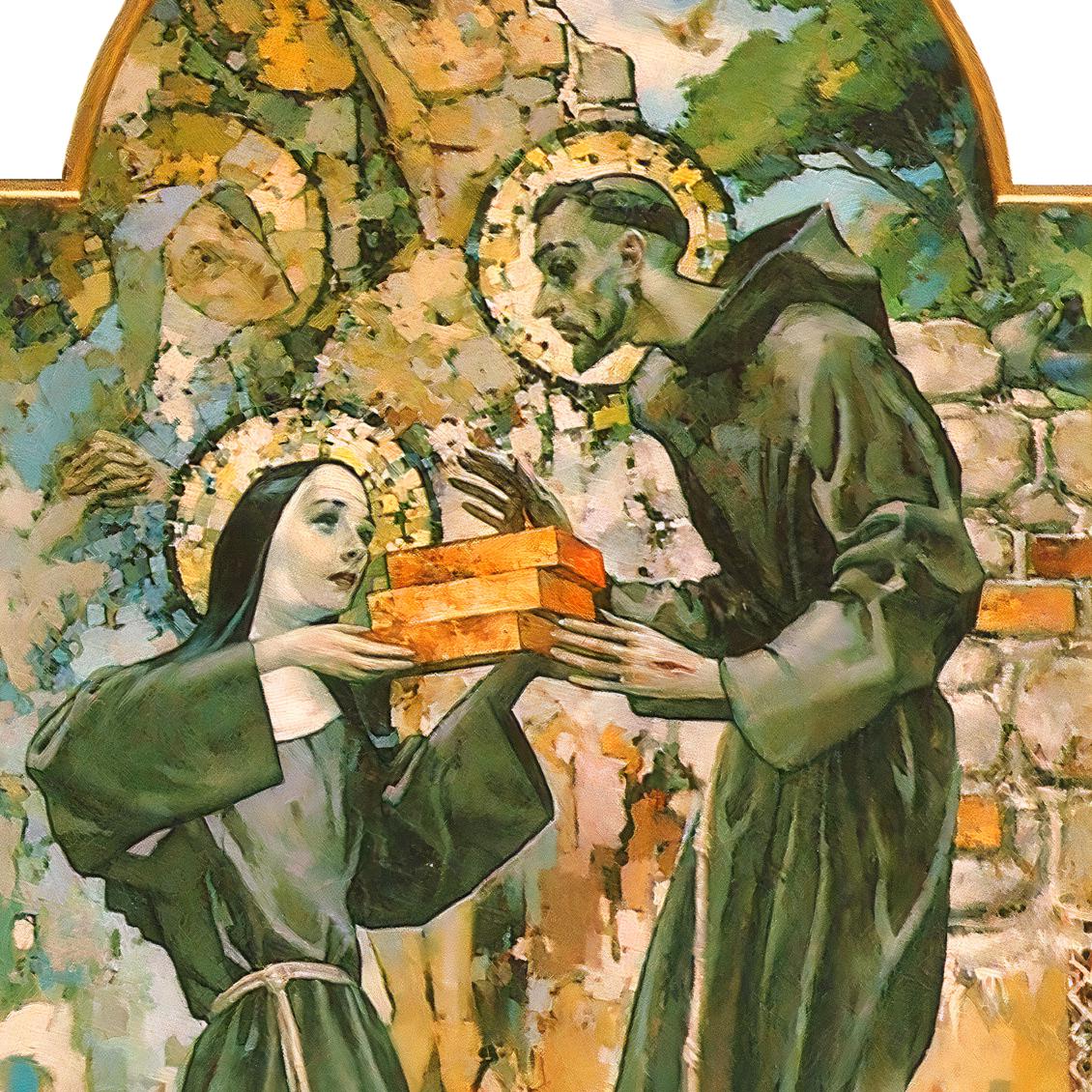
From the Basilica we proceeded towards the Basilica of St Clare. Fr Bijoy told me that Assisi was protected, in a manner of speaking, by two saints—Francis and Clare—on either side.
Clare was not simply an associate of Francis. She was a remarkable religious figure in her own right. She established a community of women committed to prayer, simplicity and a life within the convent.
We later went to San Damiano, where Clare lived with her fellow sisters. Getting there involved walking downhill.
As I walked down, I realised that the difficult part would come later. What goes down must come up.
I missed my wife Betty, who believes that all hills were created for her to climb. She had accompanied me when I climbed Malayattoor, Vaishno Devi and the Shankaracharya Hill in Srinagar.
At San Damiano, Francis had rebuilt a ruined church. Clare established her community there. Her life, like that of Francis, was one of renunciation.
The convent had the appearance of a traditional Kerala naalukettu, with a small garden in the middle and flowering plants around it. It was fascinating to see how the memory of people who lived eight centuries ago had been preserved so carefully.
There was also a story that when thugs attacked Assisi one night, the prayers of Clare helped save the city. Whether one accepts such stories literally or symbolically, they reveal something important about the place. Assisi is not simply a town where two saints happened to live.
It is a town that has made their memory part of its landscape. By the time we returned, my iPhone had recorded more than 15,000 steps, 13 kilometres and 35 floors.
I did not know what the statistics meant. My legs knew. My stomach knew. I was hungry enough for my large intestine to start devouring the smaller one.
Lunch consisted of an assortment of meat and pasta. It tasted perfectly good until Fr Bijoy added chilli powder. The Italian chilli was evidently not designed for an Indian palate.
My nose started running, my stomach began burning, and my eyes watered. Why should one have enemies when one has friends like Fr Bijoy?
Later, we visited another beautiful church near the railway station. I would call it a pregnant church because a smaller church seemed to be enclosed within it.
It was associated with the place where Francis lived for many years. There was also the story of the saint rolling over rose bushes as an act of penance. Miraculously, the roses are said to have lost their thorns. Even today, the roses there are reputed to be thornless, though when planted elsewhere they develop thorns.
There was a statue of Francis holding a basket. A pigeon, we were told, was almost invariably found sitting in it. That day there was no pigeon in the basket. There was, however, a forlorn white pigeon nearby.
Assisi is full of such stories—some historical, some legendary, some impossible to verify and some that perhaps do not need verification. They belong to the emotional history of the place.
My connection with Franciscan history, however, did not begin or end with Assisi. In the 1980s, I travelled to Bettiah in Bihar and wrote about the place for The Hindustan Times, Patna. Bettiah had an extraordinary connection with the Capuchin missionaries who had travelled from Europe through India on their way to Lhasa.
The story fascinated me because it showed how far the followers of St Francis were prepared to travel. These were not tourists undertaking an adventurous journey.
They travelled without aeroplanes, modern roads, comfortable hotels, mobile phones or GPS. Their destination was Tibet, one of the most difficult and inaccessible regions in the world. They were told that there was a community of Christians there.
The Capuchins reached Lhasa in the early eighteenth century. Their mission encountered enormous difficulties like illness, geography, political opposition, lack of resources and the sheer difficulty of communication.
Eventually, Bettiah became an important centre of their work. One of the missionaries, Joseph Mary Bernini, an Italian Capuchin, was invited to Bettiah because of his medical skills. His treatment of a member of the royal family was successful. The Raja subsequently gave permission for missionaries to establish themselves there.
Thus Bettiah, an obscure town in Bihar, became connected with Rome and Tibet. When I visited the place and wrote about it, what struck me was the extraordinary geographical reach of the Franciscan tradition. Assisi was the starting point. Bettiah was one of its distant echoes. My later visit to Goa added another, entirely different, dimension to the story.
On January 1, 2000, I saw the body of St Francis Xavier at the Basilica of Bom Jesus. But Xavier was a Jesuit, not a Capuchin or Franciscan. His story belongs to a different missionary tradition. I mention the visit only because it gave me another personal encounter with a man named Francis whose life was spent carrying Christianity across Asia.
Assisi, however, remains different. It is not merely a place where the remains of a saint are preserved. It is a place where the memory of a saint is alive in the streets, churches, hills and even in the way the town presents itself to visitors.
Eight hundred years after Francis died, perhaps the most important question is not what he achieved but what he chose to give up. He gave up wealth. He gave up privilege. He gave up the security of an ordinary life. He chose instead a life of poverty, service and identification with the marginalised.
His famous prayer captures the essence of that choice. He asks not to be consoled but to console; not to be understood but to understand; not to be loved but to love. That is an extraordinary inversion of the way most of us live.
We want to be understood. We want to be appreciated. We want to be recognised. We want to receive. Francis asked what he could give.
That is perhaps why Assisi remains more than a pilgrimage centre. It is a challenge. The town asks the visitor, silently: What are you carrying that you can afford to leave behind?
When I left Assisi, I carried back the prayer for Omchery, another for my home, memories of Clare and San Damiano, photographs, aching legs and a head full of stories.
But I also carried back something I had not planned to acquire. A question. How much does a person really need to live a meaningful life? I still do not have a satisfactory answer. Perhaps I never will.
But I remember the friary without air-conditioning, the machine coffee, the croissant, the stuffed sandwich, the coarse habit of Francis, the silent tomb, the prayer on marble, the long walk to San Damiano, and the 15,000 steps.
And, above all, I remember the moment when I slipped. Eight hundred years after Francis died, perhaps it is fitting that I should leave the question unanswered. Some experiences become smaller when we explain them. Some mysteries are best preserved as mysteries. Assisi certainly left me with one.
And for that, eight centuries after Francis of Assisi died, I remain grateful to the saint, and to whoever it was who kept me on my feet.
 A. J. Philip
.jpg)
.png) Jacob Peenikaparambil
Jacob Peenikaparambil
.png) Chhotebhai
Chhotebhai
.jpg) P. A. Joseph
P. A. Joseph
.png)
.png) Robert Clements
Robert Clements
.jpeg) A. J. Philip
A. J. Philip
.jpg) Jacob Peenikaparambil
Jacob Peenikaparambil