

.jpg) Jose Vattakuzhy
Jose Vattakuzhy
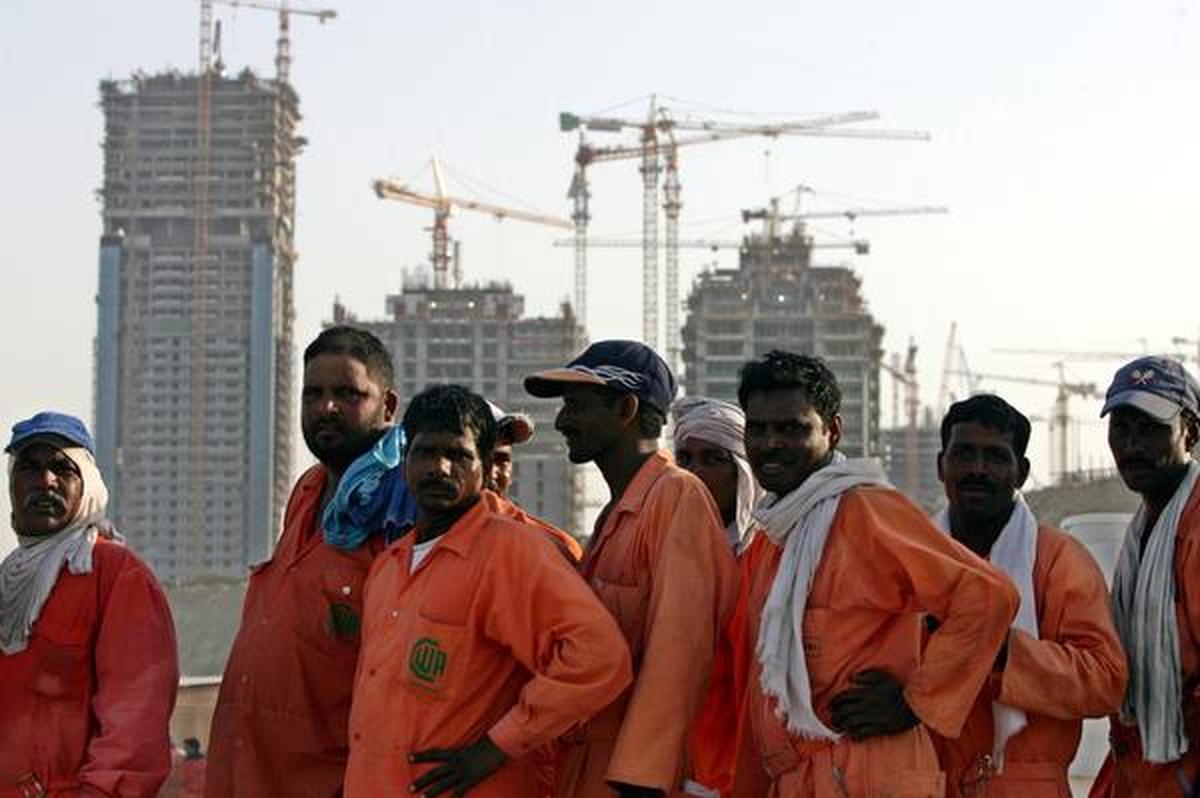
As election campaigns intensify across India to find new members of the assemblies of four States and one Union Territory, political discourse is dominated by promises, slogans, media debates, road shows, and public rallies. Yet, beneath this loud electoral environment lies a largely ignored reality, the silent suffering of millions of Indian migrant workers in the Gulf region.
The ongoing crisis in West Asia, marked by escalating military tensions involving the United States, Israel, Iran, and allied forces, is not merely a geopolitical conflict. It is also a humanitarian crisis. While global attention focuses on strategy and diplomacy, Indian migrant workers remain invisible victims, facing uncertainty, insecurity, and neglect.
The Backbone of the Economy
Indian migrant workers in Gulf Cooperation Council (GCC) countries—such as the UAE, Saudi Arabia, Qatar, and Kuwait—form one of the largest overseas labour forces in the world. They are primarily employed in construction, domestic work, hospitality, and other low-wage sectors.
Their contribution to India's economy is immense. Remittances from the Gulf account for a significant share of India's foreign exchange inflows, supporting millions of families. The total contribution from the GCC for the fiscal year 2024-25 accounted for nearly 38 per cent of India's overall remittance. Projections suggest that India's remittances may reach historic highs in the coming years.
Despite this crucial role, these workers remain politically invisible. Their economic importance is acknowledged, but their rights, welfare, and voices receive minimal attention.
The Escalating Crisis in West Asia
The recent escalation of conflict in the Gulf has intensified global concerns. What began as targeted military actions has expanded into a broader regional conflict, involving missile strikes, drone attacks, and disruptions to critical infrastructure.
A major concern is the vulnerability of strategic oil routes, particularly the Strait of Hormuz, through which a significant portion of the world's oil supply passes. Attacks on shipping and ports have disrupted global trade, increased costs, and affected economic stability worldwide.
While these developments are discussed in terms of global economics and security, their human impact, especially on migrant workers, is often overlooked.
Invisible Victims of War
Indian migrant workers are among the most vulnerable during such crises. Many are already facing job losses, wage delays, or forced leave due to instability in the region. Sectors like construction and logistics are particularly affected.
Despite the risks, many workers choose to stay. This is not a matter of safety, but necessity. Their earnings in the Gulf, often higher than what they can earn in India, are essential for the survival of their families.
War not only threatens lives. It destroys livelihoods. For migrant workers, the collapse of employment can happen overnight, leaving them stranded without income or support.
The Silent Burden: Structural Vulnerability
The hardships faced by migrant workers during the conflict are rooted in deeper structural issues.
Most workers are employed in sectors with weak labour protections and limited oversight. Employment is often insecure, wages are inconsistent, and access to welfare is limited. Many workers depend on recruitment agents and incur heavy debts to secure overseas jobs.
In several Gulf countries, the sponsorship system ties a worker's legal status to their employer. This restricts their mobility and limits their ability to change jobs or leave the country independently. As a result, workers operate with limited autonomy and protection.
Living conditions are often overcrowded and lacking support systems. It further increases their vulnerability.
In times of crisis, these structural weaknesses become more severe. Workers may lose access to income, food, healthcare, and even the ability to return home. Emergency responses rarely prioritise migrant workers, leaving them dependent on uncertain employer support or delayed diplomatic intervention.
From Remittance Heroes to Forgotten Victims
In times of economic stability, migrant workers are celebrated as "remittance heroes." Their contributions are praised for sustaining families and strengthening the national economy.
However, during crises, this recognition quickly fades. They become forgotten victims.
The contrast between the loud rhetoric of electoral politics and the silent suffering of migrant workers reveals a deeper democratic gap. While political narratives dominate public attention, the struggles of those working abroad remain unheard.
Reports indicate thousands of grievances from Gulf workers over the past few years, highlighting ongoing distress. Yet, policy responses remain largely reactive rather than preventive.
Moreover, migrant workers lack representation. They have limited access to unions, collective bargaining, or political platforms. Their concerns rarely influence policy decisions or electoral agendas.
The Human Reality Behind the Numbers
Behind statistics are real lives marked by hardship and sacrifice. Migrant workers endure extreme weather, long working hours, unsafe conditions, and social isolation.
For their families in India, remittances are not optional, but they are essential. This dependence makes workers both indispensable and highly vulnerable.
During crises, evacuation and relief efforts often fail to reach the most vulnerable. Visibility, rather than need, tends to determine who receives assistance.
A Democratic and Moral Imperative
As India moves through electoral cycles, there is an urgent need to bring migrant workers into the national conversation.
Recognising their contributions must go beyond symbolic praise. It must lead to concrete policy measures that ensure their protection, dignity, and rights—both in times of stability and in times of crisis.
A truly representative democracy cannot afford to ignore those who sustain it from afar. Until structural reforms are implemented, every crisis in the Gulf will continue to expose the same uncomfortable truth: the backbone of India's global workforce remains neglected when it matters most.
Indian migrant workers may be hailed as heroes in times of prosperity. But a just and inclusive system will ensure that they are protected, heard, and valued—especially in times of crisis. Only then can their voices rise above the noise.
.jpeg)
 A. J. Philip
.jpg)
.png) Jacob Peenikaparambil
Jacob Peenikaparambil
.jpg)
.png) John Dayal
John Dayal
.jpg)
 Pachu Menon
.jpg)

.png)
.png)
.png) Robert Clements
Robert Clements
.jpg)