

.png) Jacob Peenikaparambil
Jacob Peenikaparambil
.jpg)
For followers of Jesus, Lent—and Holy Week in particular—is a season for spiritual renewal and awakening. This week is marked by sacred prayers, rituals, and traditions. In this context, it is worth reflecting on the nature of spirituality, how it differs from religiosity, and the dynamic relationship between the two.
We generally encounter three types of people in terms of their religious or spiritual orientation.
The first category consists of those who are very religious in the sense that they are meticulous about prayers, rituals, pilgrimages, and similar practices. They do not compromise on these observances. They may also generously contribute to religious causes, such as the construction of places of worship, the erection of statues, and the organisation of festivals and celebrations.
At the same time, however, they may be insensitive, arrogant, unforgiving, and intolerant toward people of other faiths. Many fundamentalists are highly rigid—even fanatical—about their religious beliefs and practices, and sometimes attempt to impose them on others.
The second category includes people who are not particularly concerned about religious rituals or practices, yet they are willing to forgive others. They may be altruistic, compassionate, and just in their relationships and dealings. Some of them may even be critical of hypocritical religious practices.
The third category represents a synthesis of the first two. These individuals take their religious beliefs and practices seriously, while also striving to be exemplary human beings who live by ethical and humane values.
In the Christian context, they are committed to practising the core values taught by Jesus, as summarised in the Sermon on the Mount: forgiveness and reconciliation, sensitivity and compassion, justice and peacebuilding, and respect for every human being and for the earth, our common home. For such people, religious practices serve as a means of inspiration, courage, and inner strength, helping them grow spiritually by living out the core values of their faith.
At times, we also encounter so-called godmen and godwomen who attract lakhs of followers. Their gatherings (satsangs) draw huge crowds, sometimes causing traffic disruptions and hardships for ordinary commuters. Some indulge in hate speech during their discourses, while others have even been imprisoned for heinous crimes.
Against this backdrop, we may ask: Who is truly a spiritual person? What are the indicators of a grace-filled individual? How can we recognise such a person?
Six key indicators may be identified as marks of a grace-filled spiritual person:
(1) honesty and integrity, (2) inclusiveness, (3) forgiveness and reconciliation, (4) courage, (5) compassion, and (6) creativity.
1. Honesty and Integrity
The hallmark of a spiritual person is honesty and integrity. Such a person is completely honest with themselves, with others, and with society as a whole. True spirituality begins with self-honesty—acknowledging one's feelings, shortcomings, and flaws without pretence. It involves confronting personal biases and limiting beliefs rather than justifying or ignoring them.
Likewise, honest persons do not resort to lies or unethical practices such as corruption. Instead, they remain sincere and transparent in all their dealings with others.
Integrity, on the other hand, refers to complete consistency between what one thinks, feels, says, and does. In a person of integrity, there is no gap between thought and speech, or between speech and action. Their thoughts, words, and actions are in harmony, reflecting a balanced and consistent character.
In essence, honest individuals live authentically and with purpose. By resolving internal conflicts, they can live as cohesive, "whole" human beings.
2. Inclusiveness
A spiritual person does not discriminate based on caste, creed, race, language, or nationality. As Jesus taught, God is a loving Father or Mother, and all human beings are brothers and sisters.
Every person has multiple identities—religion, class, gender, profession, language, and so on. While identity can foster a sense of belonging and security, it can also exclude others and even lead to hostility. The very creation of an "us" often implies a "them."
A truly spiritual person transcends these limited identities and embraces the higher identity of shared humanity and the divine presence in all. In this context, the words of Jesus are particularly relevant: "Whatever you did to the least of my brothers and sisters, you did it to me" (Matthew 25:40). Religious fundamentalists who harbour hatred or contempt toward others cannot be considered spiritual. It is nearly impossible for an exclusionary person to become truly spiritual.
3. Forgiveness and Reconciliation
All major religions emphasise forgiveness as a central moral and spiritual value. In the teachings of Jesus, unconditional and boundless forgiveness is regarded as essential; one must forgive others to receive God's forgiveness, as expressed in the Lord's Prayer. The Gospels are filled with passages and parables that underscore the importance of forgiveness.
Similarly, other religions—including Islam, Judaism, Buddhism, Hinduism, and Sikhism—uphold forgiveness as vital for inner peace, moral growth, and spiritual maturity.
Reluctance to forgive, coupled with the desire for revenge, remains one of the root causes of conflict, violence, and war. Humanity has suffered immensely in the past and continues to suffer today due to ongoing conflicts such as those between Russia and Ukraine, the United States, Israel, and Iran, and conflicts between Pakistan and Afghanistan.
4. Courage or Fearlessness
Fear often arises from wrongdoing. A spiritual person, being righteous, is not afraid of anyone or anything—not even persecution or death. Such courage does not harm others; rather, it enables one to suffer for the sake of truth and justice. A spiritual person dares to stand alone even if the whole world is against them.
Jesus is the supreme example of fearlessness. He challenged the religious leaders of his time, exposing hypocrisy and exploitation. He was fully aware that his actions could lead to persecution and death, yet he remained steadfast because he was committed to truth and righteousness.
Mahatma Gandhi is another powerful example. His fearlessness was rooted in his unwavering commitment to truth (Satyagraha) and non-violence (Ahimsa). This enabled him to confront the British Empire and face violent opposition without fear of imprisonment, injury, or death. Key examples include defying the British Salt Tax, facing violence alone in Noakhali, and his refusal to accept security after assassination attempts.
5. Empathy and Compassion
The courage of a spiritual person is always complemented by compassion. Such individuals not only understand and share others' feelings but also take action to alleviate their suffering.
According to the Buddha, compassion (karuna) is an active and boundless desire for all beings to be free from suffering, rooted in deep empathy and interconnectedness. Similarly, many of Jesus' miracles, as described in the Gospels, flowed from his profound compassion.
A truly spiritual person never engages in hate speech. Religious leaders who incite hatred or call for revenge against others betray the very essence of their faith.
6. Creativity
Dr APJ Abdul Kalam, in his writings and speeches—especially Wings of Fire—emphasised that God is the ultimate source of creativity, and that prayer connects us to this source. Spiritual individuals do not merely imitate others; they discover their uniqueness and express it creatively in their lives and mission through their relationship with the divine.
Mahatma Gandhi demonstrated remarkable creativity in India's freedom struggle through methods such as satyagraha, non-cooperation, civil disobedience, and the Swadeshi movement (including the promotion of charkha and khadi). He was the first to apply these methods so effectively in the political sphere.
Jesus, too, showed profound creativity. When a woman caught in adultery was brought before him and condemned under Mosaic law, he responded, "Let anyone among you who is without sin be the first to throw a stone at her" (John 8:7). His entire approach to religion was creative, focusing on holistic transformation and unconditional love.
Means to Become Spiritual
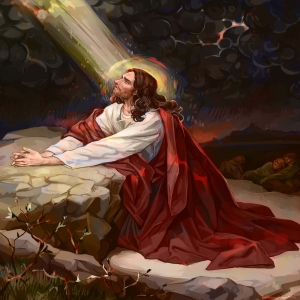
Since individuals are diverse, the paths to spirituality are also varied. One important path followed by great spiritual leaders such as Jesus, the Buddha, and Mahatma Gandhi is contemplation. The Gospels often portray Jesus praying in solitude—on mountains or in lonely places—rather than in public spaces such as synagogues or temples. While he taught in such places to reach people, he sought solitude for prayer.
Through contemplation, individuals can awaken the latent virtues within them. Reading sacred texts, followed by reflection and application to daily life, is another effective means. Introspection or self-examination at the end of each day, along with journaling, can help one learn from experience and bring about positive change.
Finally, while religious practices can support spiritual growth, excessive religiosity may lead to fanaticism and fundamentalism rather than true spirituality.
.jpeg)
 A. J. Philip
.jpg) Jacob Peenikaparambil
Jacob Peenikaparambil
.jpg)
.png) John Dayal
John Dayal
.jpg)
 Pachu Menon
.jpg)

.png)

.png)
.png) Robert Clements
Robert Clements
.jpg)