

.png) Jacob Peenikaparambil
Jacob Peenikaparambil
.jpg)
In April 2026, a major political controversy erupted in the Indore Municipal Corporation (IMC) when Congress councillors Fauzia Sheikh Alim and Rubina Iqbal refused to sing Vande Mataram during a budget session, citing Islamic prohibitions. This led to intense protests by BJP members, who argued that singing Vande Mataram is mandatory and accused the Congress party of placing religious ideology above the Constitution. The BJP in Indore has since turned this into a divisive and polarising issue, targeting both minorities and the Congress party.
"Vande Mataram" is a Sanskrit phrase meaning "I bow to thee, Mother" or "I praise thee, Mother." The song, written by Bankim Chandra Chatterjee in the 1870s, personifies India as a nurturing motherland (Mataram), embodying the nation's cultural identity, natural beauty, and devotion to the country. It served as a powerful anthem during India's freedom struggle. The first two stanzas were adopted as India's National Song in 1937 by the Congress party, taking into account the minority religious sentiments.
To mark the 150th anniversary of the national song, the BJP-led government initiated a heated parliamentary debate in December 2025 regarding the history of Vande Mataram. Prime Minister Narendra Modi accused the Congress party of historically sidelining the song due to "appeasement politics" and reducing it to only two stanzas in 1937. Critics viewed this as a divisive strategy aimed at polarising Hindu voters ahead of the West Bengal Assembly elections due in April 2026.
As a follow-up to the parliamentary debate, the Ministry of Home Affairs (MHA) issued new guidelines in February 2026 mandating the singing of all six stanzas of Vande Mataram at government-organised public programs, schools, and official events. This directive appears to critics to be a continuation of a divisive political strategy, particularly at a time when pressing issues such as rising unemployment, price rises, and the lack of quality education and healthcare remain unresolved for ordinary citizens.
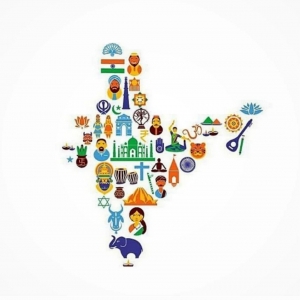
Against this backdrop, it is important to reflect on and understand the meaning of Bharat Mata. Like Mahatma Gandhi, Pandit Jawaharlal Nehru travelled extensively across India—from Kashmir to Kanyakumari—to understand the country and its people. During these journeys, wherever he went, large crowds gathered and raised the slogan "Bharat Mata Ki Jai." Nehru would often ask them what they meant by Bharat Mata. As he recounts in The Discovery of India, many found it difficult to answer. When he persisted, a Jat farmer replied that Bharat Mata was dharti—the good earth of India. The discussion continued, and Nehru finally explained that while the mountains, rivers, forests, and fields were all part of Bharat Mata, "what counted ultimately were the people of India."
Reflecting on this exchange, Nehru writes: "You are parts of Bharat Mata," I told them, "you are, in a manner, yourselves Bharat Mata." As this idea slowly sank in, their eyes lit up as if they had made a great discovery.
Today, when large sections of society are being influenced by religious rhetoric and pseudo-nationalism, there is an urgent need to educate and enlighten people about the true meaning of Bharat Mata.
Bharat Mata is the 140-crore people of India, belonging to diverse religions. India is the birthplace of four major religions—Hinduism, Jainism, Buddhism, and Sikhism. Religions that came to India—Islam, Christianity, Judaism, Zoroastrianism (the Parsi faith), and the Bahá?í Faith—have all become integral to Indian society. As Nehru observed:
"Those who professed a religion of non-Indian origin, or who, coming to India, settled down there, became distinctively Indian in the course of a few generations. Indian converts to some of these religions never ceased to be Indians on account of a change of faith."
Bharat Mata also refers to India's immense linguistic diversity. According to the 2011 Census, India has 121 major languages spoken by over 10,000 people each, and more than 19,500 mother tongues and dialects. Twenty-two languages are officially recognised and promoted by the Constitution, including Hindi, Bengali, Tamil, Telugu, and Marathi.
Bharat Mata also affirms India's cultural diversity. Indian culture resembles a mosaic, marked by immense pluralism that has shaped it over thousands of years. It encompasses classical dance forms such as Bharatanatyam, Kathak, Kuchipudi, and Bhangra; rich musical traditions; diverse architectural styles; and a deeply rooted culture of hospitality. Distinct regional identities have evolved, influenced by geography—from the Himalayan regions to the Gangetic plains and the southern peninsula.
Bharat Mata represents India's caste and ethnic diversity. Indian society is an amalgamation of various ethnic groups, including Indo-Aryans, Dravidians, Mongoloid groups, and numerous tribal communities. It also comprises thousands of castes and sub-castes—estimated at around 3,000 jatis and over 25,000 sub-castes—historically linked to occupations. The Constitution recognises this diversity through provisions for Scheduled Castes (SCs), Scheduled Tribes (STs), and Other Backward Classes (OBCs).
Bharat Mata signifies India's geographical and topographical diversity—its mountains, plains, deserts, forests, and coastlines. These features create varied climates and soil types, supporting remarkable biodiversity. India is home to approximately 7–8% of the world's documented plant and animal species, ranging from tropical rainforests to alpine ecosystems.
Despite these vast diversities, a strong sense of unity emerges from mutual acceptance and appreciation. In The Discovery of India, Nehru described India's unity in diversity as "a deep-rooted, inherent strength rather than an imposed uniformity." He emphasised that India's unity is like a rich tapestry in which diversity is preserved rather than erased.
He beautifully portrayed the composite nature of Indian culture, describing India as an ancient palimpsest—where new layers of history, culture, and thought were inscribed over older ones without completely erasing the past, creating a continuous and complex civilisation marked by deep unity amidst diversity. This vision, based on synthesis and absorption rather than obliteration, informed his idea of building a modern, democratic nation.
Recognising this diversity, the framers of the Indian Constitution established a federal system with a clear division of powers between the Centre and the States. Article 246, read with the Seventh Schedule, provides for a threefold distribution of legislative powers: the Union List, the State List, and the Concurrent List, with residuary powers vested in the Centre.
It is deeply unfortunate that many who loudly chant "Bharat Mata Ki Jai"—and even compel others to do so—seek to impose religious, cultural, and linguistic uniformity on the people of India. The very idea of a Hindu Rashtra runs counter to India's millennia-old heritage of unity in diversity and to the secular values enshrined in the Constitution.
Critics of BJP governments at the Centre and in several states argue that, over the past decade, multiple efforts have been made to promote uniformity and portray diversity as anti-national. Cultural nationalism rooted in religious majoritarianism, they argue, has reshaped social and political discourse, often at odds with constitutional secularism. Examples cited include the Prime Minister assuming the role of a Hindu priest at official functions, restrictions on non-vegetarian food around temples, and bans during certain Hindu festivals.
Some commentators also warn that initiatives such as promoting a Uniform Civil Code, centralising cultural narratives, and attempts to impose Hindi on non-Hindi-speaking states through indirect means risk undermining the Constitution's pluralistic vision. Similarly, encroachments on the rights and autonomy of states—such as Governors withholding assent to state bills, the "double engine sarkar" narrative, the "One Nation, One Election" proposal, the expansion of central agencies' powers, fiscal dependence through the GST framework, the abolition of the Planning Commission, and the weakening of the Inter-State Council—are efforts to impose uniformity.
The slogan "Bharat Mata Ki Jai" and the song Vande Mataram, as adopted by the nation at Independence, should inspire every citizen to take pride in India's religious, cultural, linguistic, and social diversity. Fundamentally, they represent a public affirmation of acceptance and respect for pluralism. They must also serve as a reminder of our collective responsibility to protect India's heritage of unity in diversity against all attempts to impose uniformity in the name of nationalism.
.jpg)
.png) Cedric Prakash
Cedric Prakash
 ICPA
ICPA
 ICPA
ICPA
 ICPA
ICPA
 ICPA
ICPA
 ICPA
ICPA
 ICPA
ICPA
.jpg)
 A. J. Philip
.jpg) Jacob Peenikaparambil
Jacob Peenikaparambil
.jpg)
.png) John Dayal
John Dayal