

.png) Dr. Pauly Mathew Muricken
Dr. Pauly Mathew Muricken
“Liberty is the breath of life to nations” -- George Bernard Shaw
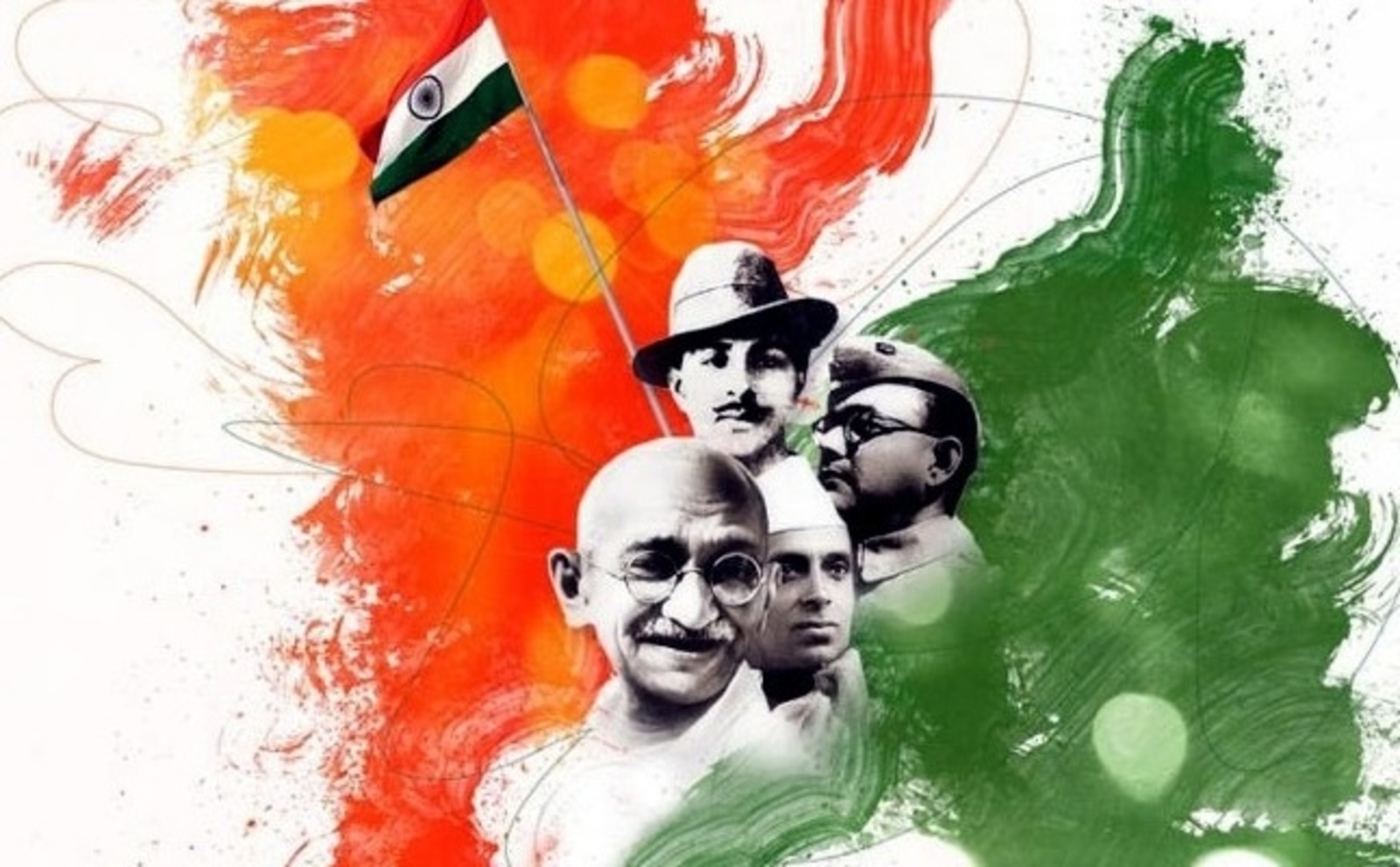
August 15 is the day of patriotism, celebrated with demonstrations of joy and festivity, solemnized with pomp, parade, marching band, firetrucks and illuminations from one end to the other. No matter what you call the occasion, it is the most memorable epocha in the history of India, a day recognizing our heroes and sheroes, a day that brings Indians of all stripes together. We remember the Indian Independence Act of 1947 and honour the Declaration that preceded it which put an end to more than two centuries of colonial rule. But what is it really? Well, these instruments are our nation’s founding documents containing specific set of ideas seared into the consciousness of every person who calls India their “home” today.
The fitting ideas central to true freedom was well described by Thomas Jefferson as self-evident truths. That it says all men are created equal, and that their Creator endows them with certain unalienable rights, including life, liberty, and the pursuit of happiness. People formed a unified Army to fight the tyranny of the British rule on behalf of the nation, to fight for the birth of a new nation, a new way of life where they -- and only they -- would control its direction.
Independence, an aspiration
Independence is an aspiration and a goal. Constitution seeks to form a more Perfect Union for its people. It eloquently explains why our forefathers faced bullets, lathis and martyrdom to be absolved from the foreign allegiance and to die for their own freedom, the freedom of their families, their neighbours, and for future generations whom they never had the chance to meet. They proved that India is not built on fear, but on courage, determination and imagination.
Independence marked the end of the chord that tied the Colonies to a tyrant. Today we honor that meritorious class of veteran, non-commissioned officers and privates, who have shed their blood or lost their limbs in the service of our country. Nothing is a more melancholy sight than to behold those noble souls whose bravery and selflessness keep us living free in the way enjoying the fruits of freedom.
Into the ‘Heaven of Freedom’
The Book ‘Freedom at Midnight’ written by Dominique Lapierre and Larry Collins (1975) paints a sweeping picture of the tumultuous year of our country’s Independence from the British Empire in 1947 and takes the readers to the landscape of the falling British Raj and make us understand the minds of the great actors of the time. Mahatma Gandhi clearly understood the true freedom. According to him, it is never dear at any price. It is the breath of life. Gandhiji wanted the freedom for the full ex
The midnight freedom reminds us of the pain of being enslaved, of the strength in unity. It defines sacrifice and makes us cherish the freedom that we have today. The idea of being an independent nation, where sovereign power lies with the people to determine our future places a huge responsibility on our shoulders. It was the relentless struggle of our great patriots that liberated our motherland from the colonial rule. Gandhiji was seeking liberty from both foreign rule and the indigenous social chains that had long incarcerated our society. The resultant democracy gives us the right to live freely as proud citizens of the country.
But then, even after 76 years of glorious path, can we really feel the ‘heaven of freedom’? The ‘heaven of freedom’ embraces the Gandhian philosophy of ‘truth’ and Swami Vivekananda’s luminous vision of freedom of ‘thought and action’. For realizing this true freedom, we must awaken from the sorrowful state of ignorance, laziness, prejudices, irrationality and narrow-mindedness and move towards a state of fearlessness, free knowledge, truth and perfection. This alone can lead us and our nation to progress and prosperity.
Crave for Economic Freedom
Nehru after Independence said: There could be no real freedom without economic freedom and that “to call a starving man free is but to mock him”. The concern of the common man principally is economic security which includes livelihood and protection of life and liberty. There is a need for reducing the gap between the ‘haves’ and the ‘have-nots’ to maintain stability and peace in the society.
President Roosevelt of the United States, during the course of deliberations that led to the framing of the UN Charter made this powerful observation: “We have come to the clear realization of the fact that true individual freedom cannot exist without economic security and independence. Necessitous men are not free men. People who are out of a job are the stuff out of which dictators are made. In our day these economic truths have become accepted as self-evident”.
Memories of the British Raj
The struggle for freedom was not only to demolish the foreign rule but also to build an egalitarian society to secure a life of quality to the people with right to equality. The prevailing conditions before Independence were miserable and pathetic. People suffered with poverty, ignorance and illiteracy, want of food and shelter. Even basic human freedoms were not available. The plight of the women was that of a subjugated inferior being. These conditions made the people firm to fight for freedom so that people could lead a life of dignity with peace and happiness. Nehru said on the occasion of Independence: “The ambition of the greatest man of our generation has been ‘to wipe every tear from every eye’. That may be beyond us, but as long as there are tears and sufferings, so long our work will not be over”.
‘Free’ at last
The riches of freedom and security of justice are something that cannot be bestowed; it must be achieved. Those who expect to reap the blessings of freedom must undergo the fatigue of supporting it. Our national flag represents all of us and all the freedom and values we hold precious. Let us not wallow in the valley of despair. We must sit together at the table of brotherhood to witness the oasis of freedom and justice and eventually become instrument for social engineering and change. But just as Tagore’s poem ‘Freedom’ sincerely hopes, “Freedom from fear is the freedom I claim for you my motherland.” Freedom of the rulers and the ruled is not the right to do what they please, but the opportunity to do what is right.
Long years ago we made a tryst with destiny and now time has come to redeem our pledge. From every mountainside and hamlet, from every City and State in the country, true freedom must ring. Every citizen of this country must be provided with the wherewithal to develop and rise to the fullest stature. Let us fulfill the mission of transforming our nation into a beautiful symphony of brotherhood. On this memorable occasion, we shall join hands and sing the soft melodious song of Martin Luther King Jr., ‘Free at last, Thank God Almighty, we are free at last’.
(Dr. Pauly Mathew Muricken is a prominent Lawyer, an acclaimed writer and a distinguished academician based in Kochi)
.jpg)
 A. J. Philip
.png) Cedric Prakash
Cedric Prakash
.jpg)
 P. A. Chacko
.jpg)
.jpg)
.jpg) Thomas Menamparampil
Thomas Menamparampil
.png)
.png)
.png) Robert Clements
Robert Clements
.jpg)
.png)
.png) Chhotebhai
Chhotebhai