

.jpg)
Bengal, once celebrated as a land of pluralism and reform, is today witnessing a troubling contradiction. The same soil that welcomed waves of missionaries from the 15th century — who built schools, hospitals, and printing presses, who healed the sick and educated the poor, who stood alongside reformers in shaping Bengal's modern identity — now sees priests threatened with ultimatums to vacate their parishes.
From the Jesuits of Hugli to the Serampore Trio, from the charitable hospitals of Jiaganj to Mother Teresa's Missionaries of Charity tending to the destitute on Kolkata's streets, Bengal's Christian legacy has been one of service and coexistence.
That legacy is also embodied in East India's oldest church, Bandel Church, established in 1599 on the banks of the Hooghly River, which continues to serve as an inter faith pilgrim centre drawing Hindus, Muslims, and Christians alike.
Yet in Sandeshkhali and Nazat, intimidation and fear have replaced dialogue and harmony, exposing a fracture in the very pluralism that once defined the region.
Early Missionary Presence in Bengal
The Christian presence in Bengal dates back to the 16th century, when Augustinian and Jesuit missionaries arrived in Hooghly in 1576 to serve Portuguese settlers. By 1599, Augustinians had built Bengal's first church, dedicated to Our Lady of the Most Holy Rosary. The Mughal siege of 1632 destroyed much of this early infrastructure, yet the seeds of missionary engagement had already been sown.
Other illustrious Christian institutions like Serampore College (1818), Scottish Church College (1830), and St. Xavier's College (1860) introduced new methods of teaching, literacy, and social outreach. Their presence marked the beginning of Bengal's openness to waves of missionaries who followed.
Legacy of Serampore Trio
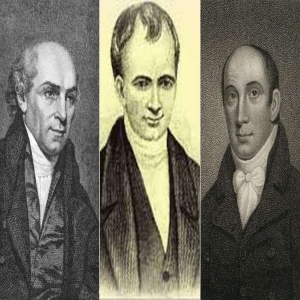
The most transformative chapter came in the early 19th century with the arrival of the Serampore Trio — William Carey, Joshua Marshman, and William Ward. Together, they reshaped Bengal's intellectual landscape.
Carey's printing press produced the first Bengali Bible, while Serampore College became a hub of vernacular education. Marshman's wife, Hannah, opened one of Bengal's first schools for girls, challenging caste and gender barriers. Their vision was clear: education was not a privilege for the elite but a right for all.
Archival letters from Carey capture their ethos: "We seek not to uproot, but to plant alongside — to educate, to heal, and to serve." Their contributions influenced reformers like Raja Ram Mohan Roy, who drew inspiration from missionary schools and printing presses in his own campaign for social reform.
By the mid 19th century, missionary schools dotted Bengal's towns and villages, offering literacy to marginalised communities and opening doors for women's education. This legacy continues today in institutions like Scottish Church College Kolkata, St. Xavier's College Autonomous and University, Kolkata; Loreto College Autonomous Kolkata and scores of other Christian institutions which remain pillars of academic excellence.
Healthcare Missions and Social Reform
Missionaries also pioneered medical outreach. The London Missionary Hospital in Jiaganj (1894) became a lifeline for marginalised communities, offering charitable care to those excluded from traditional systems.
Women missionaries played a crucial role, training local nurses and midwives, and professionalising roles once stigmatised. By bridging indigenous healing traditions with modern biomedical practices, they left a lasting imprint on Bengal's healthcare system.
In Murshidabad, medical missions introduced vaccination campaigns and maternal care, reducing mortality rates and reshaping public health. These efforts were not merely charitable; they were transformative, embedding healthcare into Bengal's social fabric.
Mother Teresa and Street Level Care
The 20th century brought another defining chapter with Mother Teresa's Missionaries of Charity, headquartered in Kolkata. Beyond orphanages and homes for the dying, her Sisters offered street level medical care — tending to lepers, dressing wounds, and providing basic medicines to those abandoned on pavements.
Her work embodied the missionary ethos of service at its most visible and vulnerable level. As one sister recalled: "We did not wait for the sick to come to us; we went to them, where they lay on the streets." This grassroots medical outreach became a hallmark of Kolkata's identity, reinforcing the Christian contribution to Bengal's healthcare and humanitarian landscape.
Survivor Voices in Contemporary Bengal
That legacy stands in stark contrast to the present. At St. Claret Catholic Church, Nazat in Baruipur diocese (South 24 Parganas) near Kolkata, Fr. Anuj Hembrom recalls the moment an aggressive group came to the parish: "This is the same man who threatened the Sandeshkhali pastor yesterday (July 31, 2026). Now (August 1) he has come to Nazat with the same intimidation. They gave me seven days to vacate. I have never felt so vulnerable in my own parish."
Video footage gone viral on social media shows the saffron clad leader shouting: "Go away to America or New Zealand! They are funding you from there to do all this. Pack up your bags and leave from here!"
Church leaders, including Fr Dr Felix Raj, Vice Chancellor of St. Xavier's University Kolkata, appealed to police for urgent protection. "We cannot allow such threats to go unchecked. The safety of our clergy and faithful must be guaranteed," he said.
Herod Mullick, Founding State Secretary of the Bongiyo Christiyo Pariseba (Bengal Christian Council), condemned the intimidation: "This is not just an attack on a priest, but on the constitutional right to practice one's faith. We demand swift protection and accountability."
Linking Past and Present
The juxtaposition of both scenarios is stark. Bengal once embraced missionaries who enriched its culture, education, and healthcare. Today, native priests are told to leave, accused of being foreign agents.
The continuity of worship at St. Mary's Church, Kudamallor, Kottayam — built in AD 1125 by a Hindu king and linked to St. Alphonsa's baptism — underscores that Christianity in India is not foreign but deeply rooted. Kerala's Kudamallor shrine, born of royal patronage and centuries of devotion, stands as a reminder of coexistence.
From the 15th century onward, Bengal welcomed missionaries who built schools, hospitals, and presses, contributing to education, healthcare, and social reform. Today's intimidation under the new government is historically blind, ignoring centuries of coexistence and contribution.
The current wave of anti Christian intimidation in Bengal under the recently elected Bharatiya Janata Party government is not merely a law and order issue; it is a profound contradiction of history. The same land that once nurtured sages, reformers and missionaries now witnesses threats against its own clergy.
As the seven day ultimatum ticks down in Nazat, the faithful look to both history and law for reassurance that their right to worship will endure. The story of Bengal's missionary legacy is not just about the past; it is a call to protect the present and safeguard the future.



.jpg)
 A. J. Philip
.jpg)
.png) Jacob Peenikaparambil
Jacob Peenikaparambil

.png) Chhotebhai
Chhotebhai

.jpg) P. A. Joseph
P. A. Joseph
.png)
.png) Robert Clements
Robert Clements
.jpeg) A. J. Philip
A. J. Philip
.jpg) Jacob Peenikaparambil
Jacob Peenikaparambil