

We live in a remarkable age. Never before have human beings possessed such possibilities to communicate, travel, learn, discover and work together. A message can cross continents in seconds. Knowledge once accessible only to a few is now available to millions. Medical science has saved and improved countless lives. Technology and encounter have transformed the way we work and communicate with one another more frequently than ever before, making humanity more connected than at any other time in history-for which we can be grateful.
Yet every light also reveals shadows. The same world that has become more connected can still remain deeply divided. We communicate instantly and yet struggle to listen to one another. We travel across continents and yet remain strangers to those closest to us. We possess more, but the question of what is truly enough remains unanswered. We have gained unprecedented power over nature, while becoming increasingly aware of the wounds inflicted upon our common home.
The question, therefore, is not whether humanity has progressed. It clearly has. The deeper question is: What kind of humanity will accompany our progress?
How can greater knowledge be accompanied by greater wisdom, greater prosperity by greater solidarity, greater power by greater responsibility, and greater connectivity by genuine human fraternity?
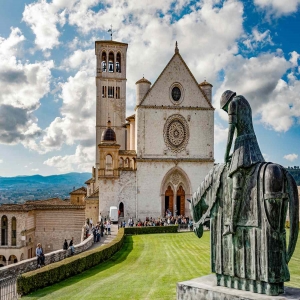
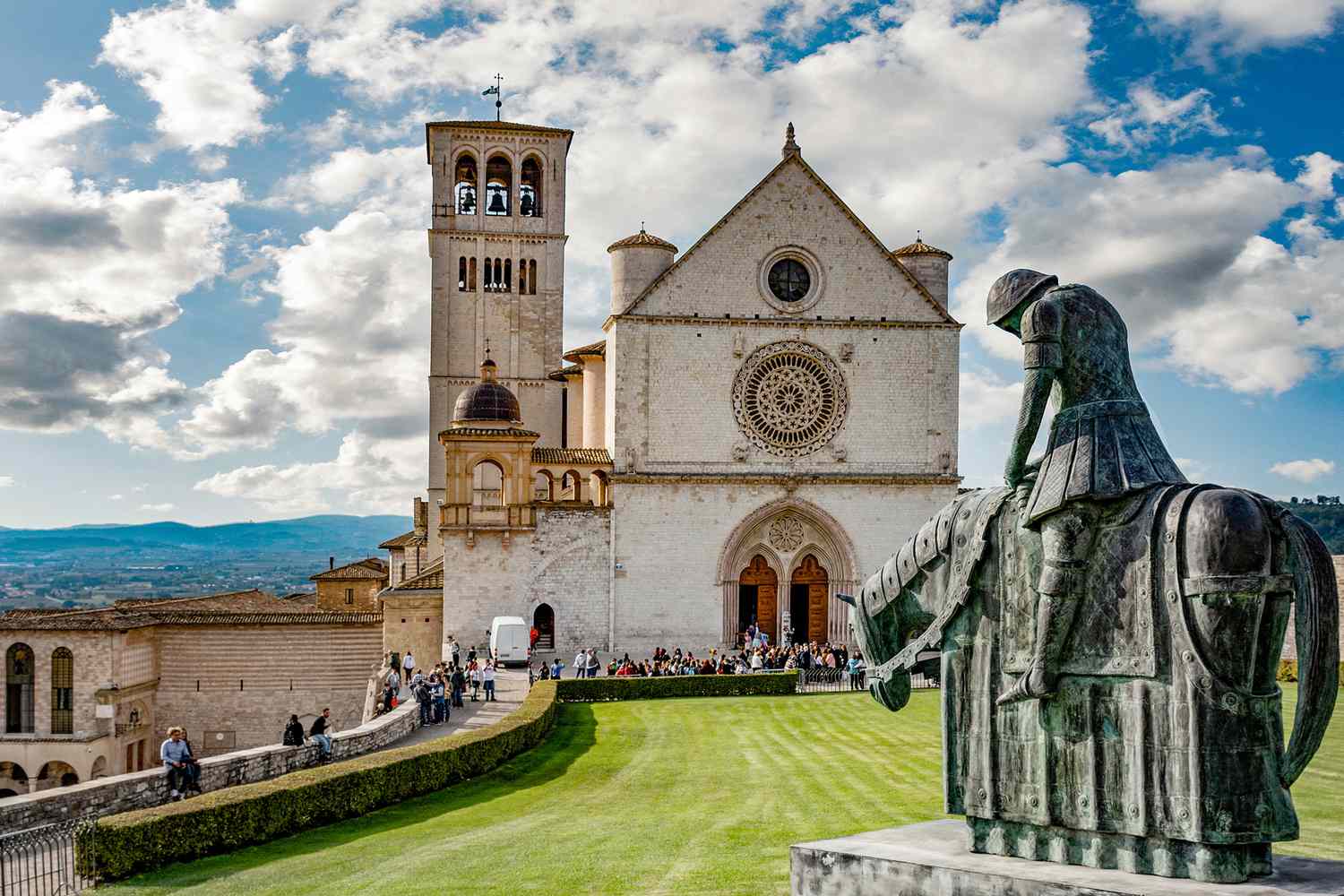
It is precisely here that, eight centuries after his death, the witness of Francis of Assisi still speaks with remarkable freshness.
Francis died in 1226. Eight hundred years later, we live in a world radically different from the one he knew. Yet many of the questions that shaped his life remain. How should we use what we possess? How should we treat the poor? How should we encounter the stranger? Can difference become a source of enrichment rather than hostility? Can violence be resisted without reproducing violence? And how should humanity relate to the earth that sustains it?
Francis does not belong merely to the past. He has something to say to the present and the future.
A witness beyond boundaries
Francis is unmistakably a saint of the Catholic Church, rooted in the Christian Gospel and formed by the faith of his time. Yet his witness has travelled far beyond the Church's boundaries. People of different cultures, religions and convictions have found in him a compelling figure of peace, simplicity, fraternity, dialogue, service and care for creation. His universal appeal does not diminish his Christian identity. Rather, it shows how a deeply rooted life can speak beyond its own boundaries.
Francis did not build his life around walls but around relationships. He moved from possession to simplicity, from privilege to service, from fear of the stranger to encounter, from domination to fraternity, and from treating creation as an object to receiving it as a gift and a shared home.
Francis, therefore, is not simply someone standing against the modern world. Rather, he can help the modern world become more human.
From possession to relationship
One striking feature of contemporary society is our extraordinary capacity to possess. We can produce more, travel farther, consume more and acquire things with unprecedented ease. Yet Francis raises an increasingly important question: Does possessing more necessarily make us more human?
Francis chose simplicity not because he despised the world, but because he wanted to be free enough to love it rightly.
For him, possessions could never measure a person's worth. The poor were not problems to be managed from a safe distance; they were brothers and sisters to be encountered. His life moved towards the margins rather than away from them.
This is perhaps one of the most relevant challenges Francis offers our age: to move from possession to relationship.
Possession asks, "What belongs to me?"; Relationship asks, "For whom am I responsible?"
Consumption asks, "What more can I have?"; Responsibility asks, "What can I share?"
Privilege asks, "What can I gain?"; Service asks, "What can I give?"
This does not mean rejecting material progress but asking what progress is ultimately for. Prosperity becomes meaningful when it serves human dignity; knowledge becomes fruitful when it serves life; technology becomes valuable when it strengthens rather than weakens our human relationships.
An Indian reader may naturally find resonance in the life and thought of Mahatma Gandhi. India's freedom was shaped by the sacrifice of countless women and men whose courage and dedication remain worthy of the highest respect. Gandhi occupies a distinctive place among these remarkable figures, thanks to his proactive commitment to non-violence, simplicity, and self-restraint.
Francis and Gandhi belonged to different centuries, traditions and historical circumstances. Yet both challenge the assumption that development is measured by possession, power and domination.
Their witness invites a question that remains important for every society: How much is enough for one person when another has so little?
From difference to fraternity
One of the most beautiful episodes in Francis's life is his encounter with the Muslim Sultan al-Malik al-Kamil in Egypt during the Fifth Crusade.
In 1219, while Christian and Muslim forces were at war, Francis travelled to Egypt and met the Sultan. Their encounter remains a significant moment in Christian-Muslim relations, not simply because two men of different faiths met amid conflict, but because both were open to peace. Peace belongs to no single religion or culture; it is a deep human longing. Francis went forward as a brother seeking another brother, and the Sultan received him with openness. Francis did not cross a boundary to defeat the other; he crossed it to meet him.
The same spirit appears in the episode of the Wolf of Gubbio. A creature feared by the people was not simply confronted with violence. Francis approached it, sought to understand the situation and called it "Brother Wolf." In both encounters, his response to fear was not hostility, but encounter and the search for peace.
This matters especially for India, a land of extraordinary religious and cultural diversity. Difference is part of our daily reality. Our challenge is not to eliminate difference, but to live with it without allowing it to become suspicion or hostility.
Francis offers a simple movement: Encounter → understanding → dialogue → fraternity.
Dialogue does not require us to abandon our identity. It asks whether we can remain secure in who we are while being open enough to listen to another.
Today, Francis invites us to ask: What fear-created boundaries are we willing to cross to meet one another as brothers and sisters?
The wounded Francis and the wounded world
Another dimension of Francis speaks deeply to our time: Francis was himself wounded.
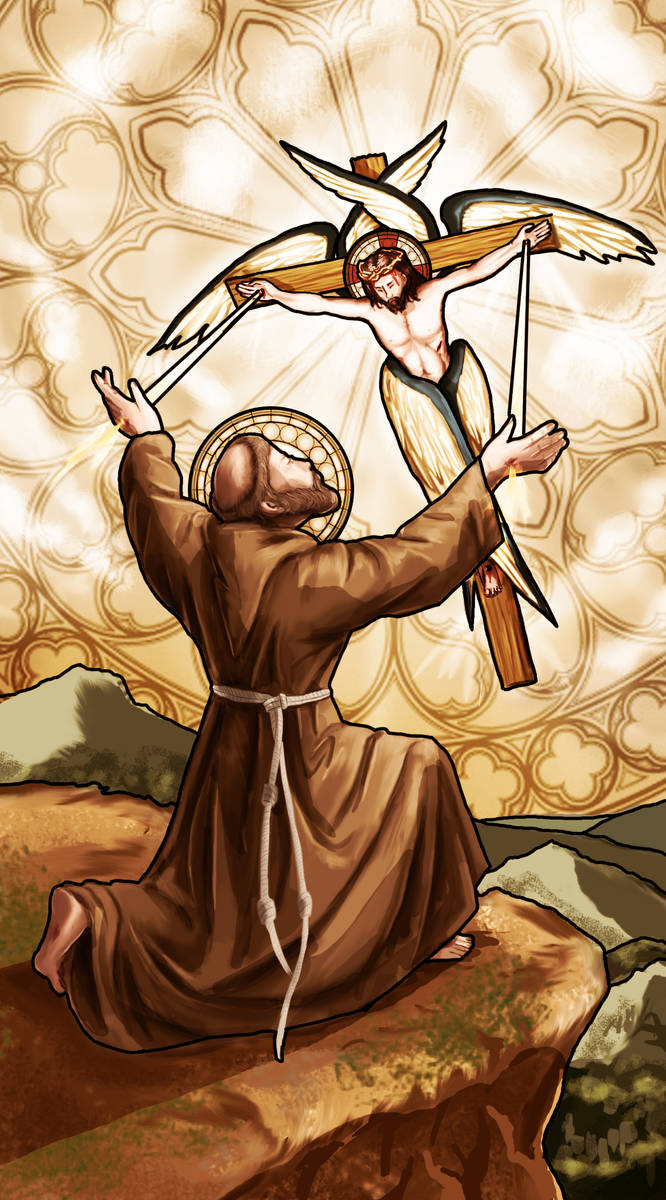
His life passed through suffering, struggle and profound transformation. In 1224, at La Verna, he received the stigmata, traditionally understood as the signs of Christ's Passion. For Christians, this has a profound spiritual meaning. Yet the image of the wounded Francis can also speak powerfully to our wounded world.
A wound gives us a choice. The wounded person can become a wounder. Someone who has been humiliated may humiliate another; someone who has experienced violence may reproduce it; someone who has been excluded may exclude another. Thus, wounds can be passed from one person to another, from one generation to another.
But another possibility exists: the wounded person can become a wounded healer.
One who knows suffering from within may become more sensitive to another's suffering. The wound need not become a weapon; it can become a place from which compassion emerges.
Perhaps this is one of the most urgent lessons Francis offers our wounded world today: We cannot always choose the wounds we receive, but we can choose what we do with them.
From wound to healing
India's freedom struggle was marked by the sacrifice of countless people who suffered and gave themselves for the nation's freedom. Among these remarkable freedom fighters, Gandhi's distinctive contribution was his attempt to make non-violence an active force. His ahimsa was not passive resignation. Through satyagraha, he sought to resist injustice through truth and disciplined non-violence, refusing to answer hurt with hurt.
His message was, in essence: I will resist injustice, but I will not allow injustice to determine the kind of person I become.
This offers an illuminating Indian resonance to the Franciscan message of peace and fraternity. Francis and Gandhi belonged to different centuries, traditions, and circumstances, yet both challenge the logic that suffering is simply passed from one person to another.
The deeper question, therefore, is not "Who wounded us?" but "What will we do with our wounds?" Will our wounds become weapons, or openings through which compassion enters the world?
A person wounded by hatred can choose compassion. A community wounded by violence can choose reconciliation. A person who has experienced exclusion can become one who includes. The wounded need not become wounders. They can become healers.
Francis and our common home
Francis' fraternity extended beyond human beings.
In his Canticle of the Creatures, he sings of Brother Sun, Sister Moon, Brother Wind, Sister Water and Mother Earth. Creation is not merely something to be used. It becomes part of a relationship of gratitude, wonder and responsibility.
Eight centuries later, this vision has acquired extraordinary relevance.
Humanity has gained enormous power over the natural world. Yet ecological crisis reminds us that power without responsibility has consequences. The degradation of land, water and air affects everyone, but particularly the poor and vulnerable. Francis invites us to move from ownership to belonging.
We do not merely live on the earth; We belong to the earth.
His ecological vision is not simply about protecting trees, rivers or animals. It is about recovering a relationship with the whole of life. Care for creation and care for the poor belong together.
Francis for our time
Eight hundred years after his death, what does Francis ask of us?
He does not ask us to abandon science, reject technology, or turn our backs on development. Rather, he asks a deeper question: What kind of humanity will accompany our progress?
Let greater knowledge be accompanied by wisdom.
Let greater prosperity be accompanied by solidarity.
Let greater power be accompanied by responsibility.
Let greater connectivity become genuine relationship.
Let religious difference become an opportunity for encounter.
Let our wounds become sources of compassion.
Let our relationship with creation become one of care rather than domination.
Francis remains relevant because he invites us to recover something that no technological advancement can give us automatically: the capacity to live as brothers and sisters.
He reminds us that the poor person is not a burden, but a brother or sister. The stranger is not necessarily a threat, but a person waiting to be encountered. The person of another faith is not an enemy, but a human being with whom dialogue is possible. The earth is not merely a resource, but our common home… And the wounded person need not become a wounder.
Perhaps this is Francis' enduring relevance after eight centuries. His message is not a call to return to the past, but an invitation to enter the future with a more human heart.
The world has made extraordinary progress in what it can do. Francis asks us to grow equally in how we live, how we relate, how we serve and how we care.
Perhaps, eight centuries after his death, this is the gift Francis still offers India and the world: to transform possession into sharing, difference into dialogue, power into service, wounds into healing, and our common home into a place of fraternity.
And perhaps his most timely invitation is also his simplest: Let us not pass our wounds on to one another. Let us allow them to become places from which compassion, fraternity and peace can begin.
.jpg)
 A. J. Philip
.jpg)
.png) Jacob Peenikaparambil
Jacob Peenikaparambil
.png) Chhotebhai
Chhotebhai
.jpg) P. A. Joseph
P. A. Joseph
.png)
.png) Robert Clements
Robert Clements
.jpeg) A. J. Philip
A. J. Philip
.jpg) Jacob Peenikaparambil
Jacob Peenikaparambil