

 Dr Suresh Mathew

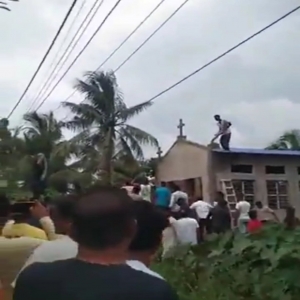
West Bengal is witnessing a disturbing escalation of attacks and intimidation targeting its Christian minority. Churches have been vandalised, prayer meetings disrupted, pastors assaulted, and worshippers threatened. Incidents reported by several national and regional media reveal a pattern that the state government can no longer dismiss as isolated local disturbances.
Since the BJP assumed power in May 2026, Christian organisations have documented numerous incidents of hostility. The geographical spread and apparent inadequacy of the official response raise serious questions about the government's commitment to protecting religious minorities.
Among the major incidents reported by the media are:
1. July 5 – Subhasgram, South 24 Parganas: An under-construction church was attacked, and the crosses on its rooftop were damaged over allegations of religious conversion. (The Telegraph, October 11, 2026).
2. July 12 – Barasat, North 24 Parganas: Around 60 people entered the premises of the Salesian Sisters and threatened the nuns over the construction of a memorial chapel and cemetery. (Scroll, September 27, 2026).
3. July 21 – Raniganj, West Burdwan: A Christian Sunday prayer gathering was raided, with worshippers harassed over conversion allegations. (Scroll, September 27, 2026).
4. July 21 – Haldia, East Midnapore: A group barged into a private residence during Sunday prayers, verbally abused worshippers and accused them of religious conversion. (Scroll, September 27, 2026).
5. July 26 – Raipur, Bankura: Members of the Vishwa Hindu Parishad confronted women conducting a Christian prayer gathering and questioned their right to hold the meeting. (Scroll, September 27, 2026).
6. September 13 – Haripal, Hooghly: A prayer gathering near a Christian family's residence was attacked, with family members assaulted and household appliances vandalised. (Catholic Connect, November 5, 2026).
7. October 2 – Keshpur, Paschim Medinipur: A mob of 80 to 100 people attacked a woman's home during a prayer meeting. She testified that she was assaulted and disrobed. (Catholic Connect, November 5, 2026).
8. October 9 – Jalalkhali, Nadia: A mob disrupted a Christian convention organised by the Vincentian Fathers at the Divine Love Retreat Centre for the Santhali Christian community. Six people were injured, two seriously, and church property and religious symbols were damaged. The gathering was suspended despite prior administrative permissions. (Catholic Connect, October 11, 2026; The Telegraph, October 11, 2026).
9. October 31 – Narayantala, Basanti, South 24 Parganas: A mob disrupted the inauguration of a Church of North India congregation in Bishop Subrata Chakraborty's presence. Priests and worshippers were assaulted, the Cross vandalised, and mobile phones smashed. (The New Indian Express, November 1, 2026; Alt News, November 7, 2026).
10. November 1 – Gola More, Malda: A house church was vandalised during Sunday prayers. Musical instruments, tables and other property were damaged, while worshippers were threatened over allegations of conversion. (Alt News, November 7, 2026).
11. November 9 - Raidighi, South 24 Parganas: A grotto dedicated to Mother Mary was vandalised in Khari Bamuner Chak village under the Catholic Diocese of Baruipur. The grotto, adjoining the 150-year-old Ascension Church, was found uprooted and damaged, prompting church authorities to lodge a police complaint. Parish priest Fr Ujjwal Mondal said the act was committed under the cover of darkness with the specific intention of hurting religious sentiments. "We have appealed to the police to identify and apprehend the culprits so that communal harmony is maintained in the area," he told The Telegraph. (Telegraph, November 10, 2026)
These are not the only reported incidents. An investigation published by Scroll on September 27 documented at least 35 attacks and disruptions between July 1 and September 20. A subsequent dossier cited by The Telegraph on November 9, drawing on India Hate Lab's documentation, recorded 60 incidents since May 4, including raids on private prayer gatherings and violent mob attacks. These reports cover different periods and datasets, but both point to a serious pattern that requires independent verification and investigation.
A people's tribunal held in Kolkata on November 2 heard testimonies from victims across several districts. The accounts included physical assaults, threats, destruction of property and alleged police inaction. The Bangiya Christiya Pariseba has also alleged that victims have faced difficulties registering police complaints and that perpetrators have not been held accountable in several cases.
The scale of the problem was also reflected in the November 6 protest march in Kolkata, in which priests and Christian representatives from different denominations demanded protection and justice. Their appeal was not for preferential treatment but for the basic security guaranteed to every citizen.
The recurring accusation of forced conversion has become a convenient pretext for confronting Christian congregations. If there is evidence of unlawful conversion, the police must investigate and act according to law. But no allegation, however serious, authorises private groups to raid homes, interrupt worship, assault people or vandalise religious institutions. Such actions violate the law and must be treated as criminal offences.
The BJP government must answer a fundamental question: why have Christian congregations repeatedly faced intimidation without an effective deterrent? Why have victims and church representatives had to approach human rights commissions and organise public protests to demand basic police protection? Why has the administration failed to reassure a vulnerable minority that its constitutional rights will be protected?
The government cannot claim these are merely isolated law-and-order incidents when independent media investigations and community organisations document a recurring pattern across districts. Nor can it remain content with announcing investigations while victims continue to live in fear.
The constitutional obligations are clear. Article 14 guarantees equality before the law, Article 21 protects life and personal liberty, and Article 25 guarantees freedom of conscience and the right to freely profess, practise and propagate religion, subject to constitutional limitations. These rights are not privileges bestowed by the government or the majority. They are guarantees of citizenship.
The state government must order independent investigations into all reported attacks, ensure FIRs are registered wherever cognisable offences are disclosed, prosecute those responsible, protect vulnerable congregations, and hold police officials accountable for refusing complaints or shielding perpetrators. The National Human Rights Commission and National Commission for Minorities must also pursue the complaints before them.
The responsibility is particularly significant for the BJP government because the reported escalation has occurred during its tenure. It must demonstrate through concrete action that political or ideological affiliations will not protect anyone accused of violence. Silence, delayed investigations and routine assurances cannot substitute for accountability.
West Bengal's Christian community is not asking for special privileges. It is demanding the same constitutional protection available to every Indian. Its churches, schools, hospitals and charitable institutions have served society without discrimination. But even without that contribution, every Christian has an equal right to worship, assemble and live without intimidation.
A government that cannot protect a small congregation gathered for prayer has a serious obligation to explain its failure. Electoral mandates do not diminish constitutional responsibilities. Protecting minorities is not an act of political generosity; it is a fundamental duty of the State.
West Bengal must not allow mob power to replace the rule of law. A church cannot be treated as an unlawful gathering merely because someone objects to its existence. A pastor cannot be assaulted on the strength of an unproven allegation. No citizen should have to seek permission from a self-appointed religious vigilante to practise their faith.
The BJP government must act decisively. Every attack must be investigated, every perpetrator held accountable, and every victim assured of protection. The Constitution guarantees religious freedom. The government has no discretion to dilute that guarantee, and the majority has no authority to take it away.
.jpg)
 Cedric Prakash
.jpg)
 A. J. Philip
.jpg)
 Jacob Peenikaparambil
Dr Suresh Mathew
.jpg)
 John Dayal
.jpg)
.jpg)
.png)
 Robert Clements
.jpg)
 P. A. Chacko