

 A. J. Philip
.jpg)
Every day, thousands of cases are disposed of by courts in Delhi. It is humanly impossible for a handful of legal correspondents to report every case, let alone understand its wider implications. Some orders, therefore, pass almost unnoticed, even when they have the potential to shake the conscience of the nation.
One such order was passed by the Supreme Court on October 28, granting bail to two men convicted in the infamous Bilkis Bano gang-rape and murder case. The order came into public view only in the middle of November. By then, three weeks had passed since the two men had secured relief from the highest court in the country.
The two beneficiaries, Bipinchand Kanaiyalal Joshi and Pradip Ramanlal Modhiya, were among the eleven men convicted of participating in one of the most horrific crimes committed during the Gujarat riots of 2002. They had been sentenced to life imprisonment.
The Supreme Court suspended their sentences and granted them bail pending the disposal of their appeals challenging their convictions. The bench took note of their incarceration for more than 17 years and the fact that one of them was severely handicapped. It also observed that questions of fact and law remained to be decided.
Yet, when the accused are men convicted of gang-raping a pregnant woman and murdering members of her family, the circumstances demand exceptional judicial sensitivity. The question is whether the rights and anxieties of the victim received the attention they deserved.
To understand the enormity of the tragedy, it is worth recalling the words of the Supreme Court itself in its historic judgment of January 8, 2024, which quashed the remission granted to the eleven convicts.
"The grotesque and diabolical crime in question was driven by communal hatred and resulted in twelve convicts (one died later), amongst many others, brutally gang-raping the petitioner, namely, Bilkis Yakub Rasool, who was pregnant at that time."
The judgment went on to describe how her mother was gang-raped and murdered, her cousin, who had just delivered a baby, was also gang-raped and murdered, and eight minors, including the cousin's two-day-old infant, were killed.
Bilkis' three-year-old daughter was murdered by smashing her head against a rock. Her two minor brothers, two minor sisters, her phupha (father's brother-in-law), phuphi (father's sister), mama (mother's brother) and three cousins were also killed. It is difficult to read these lines without feeling a deep sense of revulsion. One can scarcely imagine the horror experienced by a young woman who witnessed the destruction of almost her entire family.
What crime had Bilkis and her relatives committed to deserve such a fate? They had committed no crime. Their only misfortune was that they were Muslims. I was born a Christian; millions of my fellow Indians were born Hindus. None of us chose the religion into which we were born. Yet, in the Gujarat of 2002, religious identity became a death sentence for many innocent people.
The tragedy unfolded in March 2002, when Narendra Modi was the Chief Minister of Gujarat. The First Information Report was registered against unknown persons on March 4, 2002. The investigation agency subsequently filed a closure report, claiming that the accused could not be traced. The Judicial Magistrate accepted the report on March 25, 2003.
The men who attacked her apparently believed that she was dead. She had, in fact, lost consciousness but not her life. She survived to tell the world what had happened. More importantly, she refused to accept the closure of the investigation as the final word on the matter.
There is an eighteenth-century play by William Congreve titled "The Mourning Bride," which gave the English language the famous ex
Bilkis approached the Supreme Court, challenging the miscarriage of justice. The court responded by ordering that the investigation be entrusted to the Central Bureau of Investigation and that the trial be transferred to Maharashtra. It was an extraordinary intervention, and a necessary one. The Supreme Court had effectively acknowledged that a fair investigation and trial could not be guaranteed in Gujarat.
The CBI eventually arrested the accused. The trial was conducted in Mumbai before a special court. Several people, including policemen, were acquitted for want of sufficient evidence. Eleven men, however, were convicted in 2008 and sentenced to life imprisonment. The Bombay High Court upheld their convictions in 2017. Thus, after years of struggle, Bilkis had secured what many victims of communal violence never receive: a judicial finding of guilt and punishment for those responsible.
The convictions should have brought the matter to a close. Instead, they marked the beginning of another extraordinary chapter. In August 2022, the Gujarat government ordered the premature release of all eleven convicts under its remission policy. They walked out of prison to a reception that was as shocking as the original crime.
Some people associated with the ruling party welcomed them with garlands and sweets. A BJP MLA reportedly certified that the men were sanskari (cultured). Their caste identity was also invoked in their defence, as though belonging to an upper caste could somehow mitigate the gravity of their crimes. It was a spectacle that exposed the depths to which political considerations could distort the meaning of justice.
Those who believe in the rule of law were left wondering what had happened to the national motto, Satyameva Jayate (Truth alone triumphs), borrowed from the Mundaka Upanishad.
The remission decision was challenged before the Supreme Court by Bilkis herself and several other petitioners. Among them were MP Mahua Moitra and others who believed that the release was a travesty of justice. The January 8, 2024, judgment delivered by a Supreme Court bench comprising Justices BV Nagarathna and Ujjal Bhuyan was a landmark. The court quashed the remission orders, holding that Gujarat had no jurisdiction to grant them.
The judgment was remarkable not merely for its conclusion but also for its observations about the manner in which the remission proceedings had been manipulated. The court found that the earlier proceedings had been founded on suppression of material facts and misrepresentation. It also exposed the collusion between the petitioner and the Gujarat government.
The Supreme Court directed all eleven convicts to surrender and return to prison within two weeks. They did so. The court had restored a measure of faith in the judicial system. Alas, the judgment did not lead to more immediate and stringent action against those responsible for misleading the court.
The 2024 judgment made another important observation about the philosophy underlying remission. Quoting Plato's The Laws, the Supreme Court explained that punishment should not be inflicted merely for vengeance. Its purpose should be prevention and reformation.
Plato compared punishment to medicine administered by a doctor for the patient's benefit. If a criminal is capable of reform, the state should make efforts to improve him through education and other suitable means, eventually allowing him to return to society as a better citizen.
But the court also emphasised that a convict's claim to a second chance has to be balanced against the rights of the victim and the victim's family. Remission is not a mechanical exercise in which the number of years spent in prison or the conduct recorded by prison authorities alone determines the outcome.
This is precisely where the Bilkis Bano case becomes particularly disturbing. Did the eleven convicts ever express remorse for what they had done? Did they acknowledge the enormity of their crimes? Did they seek forgiveness from the woman whose family they had virtually wiped out?
There was no publicly evident ex
There is another detail that deserves attention. The convicts were not necessarily confined to prison throughout the 17 years they claim to have spent behind bars. They had enjoyed furloughs and paroles, allowing them to spend time with their families. The January 2024 Supreme Court judgment itself referred to the benefits they had received. It is therefore necessary to examine the entire history of their incarceration rather than reduce the question to a bare calculation of years.
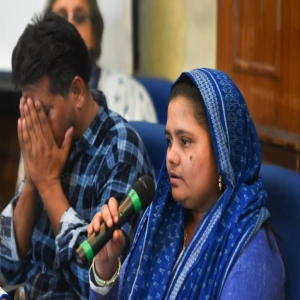
There is something deeply troubling about the circumstances in which the latest order was passed. Bilkis Bano has expressed anguish that she was not heard before the relief was granted.
Her concerns about the safety of herself and her family cannot be dismissed as an emotional reaction irrelevant to judicial proceedings. She has already experienced what happens when the machinery of the state fails to protect her. The release of even two of the eleven men is bound to revive memories of that terrible experience.
The Supreme Court is not obliged to grant a victim a right to be heard in every bail application. But there is a compelling case for ensuring that a victim of a crime of this magnitude is not reduced to a spectator in proceedings that have a direct bearing on her security. The Bilkis Bano experience demonstrates this with painful clarity.
The Supreme Court is the final court of appeal in the country. It cannot be expected to dispose of every matter immediately. But when a delay in the judicial process becomes a ground for granting relief to persons convicted of such grave offences, the institution must also examine its own responsibility for the delay.
Bilkis Bano has already fought several battles. She has emerged as a symbol of extraordinary courage. If there is an Indian equivalent of David taking on Goliath, it is Bilkis Bano. She had neither political influence nor financial resources comparable to those arrayed against her.
She had only the truth of her experience and an unshakeable determination to secure justice. She refused to be intimidated by the powerful, the influential and those who believed that political patronage could protect the guilty.
I would be happy to be contradicted if anyone can suggest another individual in independent India who has endured comparable suffering and demonstrated such extraordinary courage in pursuing justice. Her achievement is not simply that she succeeded in getting eleven men convicted. It is that she forced the institutions of the country to confront their failures and reminded us that the rule of law must apply even when the accused enjoy powerful political connections.
Those who speak incessantly about Indian civilisation and its moral values should remember that civilisation is tested not by the treatment meted out to the powerful but by the protection extended to the vulnerable. The measure of a society is not how it celebrates its heroes but how it treats its victims.
The men should, at the very least, be asked to acknowledge the enormity of what they did and seek forgiveness from Bilkis Bano. Forgiveness cannot be demanded from her, nor can she be compelled to offer it. It is entirely her choice. But the absence of any genuine attempt at reconciliation should make us question whether the spirit of reformation that underlies remission has been fulfilled.
Let the Supreme Court hear the convicts' appeals without further delay. Let every legal argument advanced by the convicts be examined with the care it deserves. But let the safety, dignity and rights of Bilkis Bano receive equal consideration. The court must ensure that she does not once again become a victim of a system that appears more responsive to the claims of the powerful than to the cries of the helpless.
The law of conscience is superior to the letter of any law. Bilkis Bano has already demonstrated that a lone woman can stand up to Goliath. The least the nation can do is ensure that she does not have to fight him all over again.
.jpg)
 Cedric Prakash
A. J. Philip
.jpg)
 Jacob Peenikaparambil

 Dr Suresh Mathew
.jpg)
 John Dayal
.jpg)
.jpg)
.png)
 Robert Clements
.jpg)
 P. A. Chacko