

.png) Jacob Peenikaparambil
Jacob Peenikaparambil
.jpg)
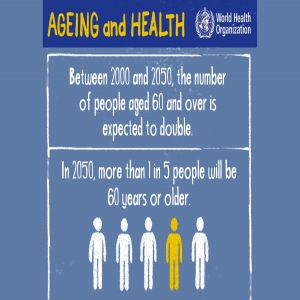
The world is undergoing an unprecedented demographic transformation. The proportion of older people is rising rapidly, while the proportion of younger people is declining. This shift is driven primarily by two interconnected trends: declining total fertility rates (TFR), which result in fewer children being born, and increasing life expectancy due to advances in public health, medical care, and living conditions.
According to the World Health Organisation (WHO), in 2020, the number of people aged 60 and above globally surpassed the number of children under five for the first time. By 2080, people aged 65 and above are projected to outnumber those under 18. These trends have profound implications for governments, economies, families, communities and religious institutions.
India currently enjoys a demographic dividend, with a relatively large proportion of its population in the working-age group. However, the country is also moving rapidly towards an ageing society. One major challenge is that India is growing old at a considerably lower level of economic development than many Western countries did when they experienced a similar demographic transition.
Many developed countries accumulated substantial wealth before their populations aged and were therefore better positioned to provide comprehensive health-care and social-security systems for older people. India, by contrast, has limited public welfare and health-care provisions for senior citizens. Consequently, many elderly people, particularly those who are poor, alone or dependent on others, struggle to live with dignity and security in the later years of their lives.
A New Venture by Kerala Government
Against this backdrop, the Kerala Government's initiative, under Chief Minister VD Satheesan, to establish a Department for Senior Citizens Welfare deserves appreciation. What makes the proposed approach particularly significant is its attempt to move beyond viewing senior citizens merely as beneficiaries of welfare programmes. Instead, it seeks to recognise them as valuable human resources whose knowledge, skills, experience and creativity can contribute to the development of society. Building a robust "Silver Economy" is an important step in this direction.
According to government announcements and budget proposals, the initiative seeks to actively engage senior citizens through several measures:
Strategic Utilisation of Expertise: Creating platforms and programmes to draw upon the knowledge, professional expertise, skills and life experience of senior citizens for community and state development.
Elderly Entrepreneurship: Introducing entrepreneurship programmes for senior citizens who wish to establish small businesses or engage in productive economic activities, thereby enabling them to remain active and economically engaged.
Statewide Survey for Active Ageing: Conducting a comprehensive survey of senior citizens across the state to understand their aspirations, opinions, abilities, needs and priorities, and to identify ways of promoting active ageing and the silver economy.
Silver Economy Policy: Developing a comprehensive policy framework covering retirement infrastructure, senior-led innovations, employment opportunities and the participation of civil society and other stakeholders in creating an economy that responds to the needs and capacities of an ageing population.
The fundamental idea behind such an approach is that ageing should not be regarded merely as a social or economic burden. Senior citizens can continue to make meaningful contributions to society when opportunities are created for them to use their abilities and experience.
Role of the Church and Religious Congregations
The Church, particularly religious congregations, has a long history of caring for older people, especially those who are poor, abandoned or otherwise vulnerable. According to information available online, the Catholic Church in India runs hundreds of homes and institutions for the elderly, providing residential care and other forms of support to thousands of senior citizens.
However, the emerging concept of active ageing opens up a much wider field of engagement. Senior citizens should not be viewed only as recipients of care; many of them can also become providers of valuable services. This is particularly relevant for religious congregations experiencing a decline in vocations and, consequently, increasing difficulties in managing their institutions and carrying out their ministries.
Religious congregations could explore ways to involve competent and willing senior citizens in the management and functioning of institutions such as schools, hospitals, social-service centres, and other ministries. Retired teachers, administrators, health professionals, social workers, accountants, lawyers and other professionals could contribute their expertise on a voluntary or part-time basis.
Parishes and religious houses could also collaborate with local self-governments and government departments to survey senior citizens. Such surveys could identify their skills, professional backgrounds, interests, willingness to volunteer, and health and welfare needs. Based on this information, programmes could match their abilities with local community needs.
For example, retired teachers could support children who experience learning difficulties. Retired professionals could provide career guidance to young people. Senior citizens with agricultural experience could assist farmers, while those with administrative or financial expertise could support community organisations. In this way, intergenerational relationships can be strengthened, and older people's experience can serve younger generations.
Senior Citizens' Day-Care Centres
Just as children benefit from day-care centres, senior citizens can also benefit from day-care centres for older adults. These non-residential facilities can provide social interaction, nutritious food, recreational activities, basic health support and opportunities for meaningful engagement during the day. They can also provide much-needed respite for family caregivers.
Parishes and religious congregations could establish such centres through their existing institutions. Well-designed day-care centres can reduce loneliness and social isolation, promote mental and physical well-being, enhance self-esteem, and give older adults a sense of purpose and belonging.
Such centres should not be conceived merely as places where elderly people are kept during the day. They can become vibrant community spaces where senior citizens interact with one another, participate in cultural and educational activities, share their skills and contribute to the wider community.
Health Care for the Elderly
Bedridden and homebound senior citizens require specialised health-care services. Some hospitals and organisations have already introduced mobile medical units that visit such people at home, conduct regular medical check-ups and provide necessary health-care services. Such initiatives need to be expanded, particularly in rural and economically disadvantaged areas.
Healthy, professionally qualified senior citizens could also be encouraged to volunteer in these programmes. Retired doctors, nurses, pharmacists, physiotherapists, counsellors and other health professionals could contribute their expertise. Even senior citizens without professional medical qualifications can assist with companionship, follow-up visits and other forms of support.
The Vayomithram scheme in Kerala, which provides community-based health and support services to older people, offers another valuable model. Church organisations and civil-society groups in other parts of the country could replicate similar initiatives, especially in rural areas where access to health-care services is limited.
Legal Aid and Protection of Rights
Legal assistance is another important area in which senior citizens need support. Many elderly people face difficulties related to property, inheritance, pensions, maintenance, financial exploitation and other legal matters. Some are also vulnerable to neglect, abuse and exploitation.
Church organisations could establish legal-aid services for senior citizens in collaboration with legal-service authorities and voluntary lawyers. Retired lawyers and legal professionals could offer their services on a voluntary or part-time basis. Such initiatives would help safeguard the rights, dignity and security of older people.
Conclusion
Non-governmental organisations (NGOs) and faith-based organisations, including associations such as the Society of St. Vincent de Paul and parish-based mothers' associations, have enormous potential to engage senior citizens in meaningful social action. Their involvement should not be limited to providing care for elderly people. They can also create opportunities for senior citizens to use their knowledge, skills, professional expertise and life experience for the benefit of children, youth, families and the wider community.
To make such initiatives sustainable, Church organisations and NGOs can collaborate with local governments, businesses and corporations to mobilise financial and technical resources. Partnerships can be developed for day-care centres, mobile health services, legal-aid programmes, educational support, counselling, entrepreneurship and other community-based initiatives.
The demographic transition taking place worldwide requires a fundamental change in how society perceives ageing. Senior citizens are not merely people who need care; they have much to contribute. Their accumulated knowledge, experience, wisdom and skills constitute a valuable social resource.
Therefore, the goal should be not merely to add years to life, but also life to those years. By creating opportunities for senior citizens to remain active, productive and socially engaged, society can transform ageing from a perceived burden into an opportunity. Recognising and mobilising the capacities of older people can strengthen intergenerational solidarity and make an important contribution towards building a more compassionate, inclusive and healthy society.
(This article is published in a Malayalam magazine, Carmala Kusumam, in its September issue.)
.jpeg)
 A. J. Philip
Jacob Peenikaparambil
A. J. Philip
Jacob Peenikaparambil
.jpg)
.png) John Dayal
John Dayal
.jpg)
 Pachu Menon
.jpg)

.png)
.png)
.png) Robert Clements
Robert Clements
.jpg)