

.png) Jaswant Kaur
Jaswant Kaur
.jpg)
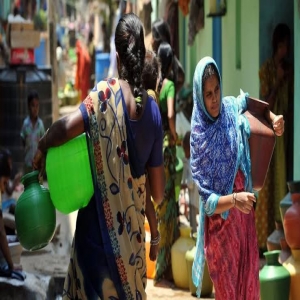
Last week, the homemaker's labour got a price tag. While recognising them as "nation builders," the Supreme Court fixed a notional price of ?30,000 a month in a compensation case. The judgment was remarkable not because of the number, but because it forced India to confront a question it has avoided for decades: Why do we recognise the value of a woman's work only after she is gone?
The question becomes even more relevant when read alongside the findings of the National Family Health Survey (NFHS-6). Taken together, the judgment and the survey tell a story that is both encouraging and unsettling. The NFHS-6 paints a picture of an Indian woman who is more educated, more connected and more empowered than previous generations, yet continues to carry a burden that remains largely invisible.
The headlines from NFHS-6 offer plenty to celebrate. Institutional deliveries have crossed 90 per cent. Antenatal care has improved. Child stunting has declined. But the survey also reveals a contradiction.
Despite decades of investment in food security programmes, supplementary nutrition schemes and maternal health interventions, nearly four out of five children between six and 23 months do not receive a minimum acceptable diet.
This raises an important question. Are we paying enough attention to the conditions under which care is provided?
A child does not become well-nourished merely because food is available. Someone has to breastfeed, prepare meals, feed the child throughout the day, monitor illness, and ensure hygiene. In most Indian households, that responsibility falls overwhelmingly on women.
The survey also points to rising levels of overweight and obesity among women, alongside an increase in high blood sugar. These trends suggest that while we have made significant progress in helping women survive pregnancy and childbirth, many women now face a different set of health challenges.
For decades, maternal health policy focused on reducing mortality. There is no doubt that we have produced results. But survival is only the beginning of the conversation.
The question today is not whether women survive childbirth. It is whether they are healthy, supported and able to sustain the caregiving responsibilities that society continues to place upon them.
The recent Time Use Survey found that women spend nearly 5 hours a day on unpaid domestic work, compared to less than 2 hours for men. When unpaid caregiving is added, the gap widens further. Across rural and urban India, women continue to perform the overwhelming share of unpaid domestic and care work. And this is in addition to the financial contributions they make.
Over the years, we have measured women's empowerment through access to education, technology, and financial services, but not much attention has been paid to measuring their exhaustion.
The NFHS-6 tells the story of a woman who is at once empowered and overburdened. She is more likely to have completed school or own a bank account than her mother ever was. Yet she remains the person expected to feed the child, care for ageing parents, manage the household and absorb the shocks of family life. In other words, the survey shows that new growth opportunities have been added faster than old responsibilities have been removed.
The survey also shows an increase in female-headed households, which is often read as evidence of empowerment. But the reality is far more complex. Many such households arise due to widowhood, migration, or separation. In these homes, women are not merely decision-makers. They are often sole earners, caregivers and household managers. The authority associated with being the 'head' of a household frequently comes with an accumulation of responsibilities.
Of course, numbers may differ across states, yet one pattern remains constant: women continue to perform the bulk of unpaid care work.
This reality should have important implications for our development policy. Our conversation on growth increasingly revolves around manufacturing, artificial intelligence, skilling, youth and so on.
We assume that our future workforce will be healthier, better educated and more productive than the workforce we have today. However, NFHS-6 reminds us that the demographic dividend, which we often talk about, has its foundation long before a child enters a classroom. It is built during the first 1,000 days of the child's life and is largely dependent on caregivers' labour.
This is why NFHS-6 should not be viewed merely as a health survey. It is also a report card on India's invisible care economy. Behind every statistic on child nutrition stands a woman whose labour rarely enters economic calculations.
The Supreme Court's judgment is significant because it recognises the economic value of that labour. NFHS-6 points to its developmental value.
The lesson from both is not that women need sympathy. Nor is it that every nutrition challenge can be traced back to unpaid care work. The evidence does not support such a simple conclusion.
The lesson is that India cannot continue to discuss women's empowerment solely in terms of education, bank accounts, internet access and decision-making power. There is no doubt that these achievements matter. But they are not sufficient.
The next phase of empowerment must focus on caregivers. So what would this mean?
It does not mean putting a salary on every homemaker, a debate that is both politically and administratively complex. It means recognising that the quality of care a child receives is closely linked to the well-being of the person providing it.
For too long, public policy has focused on the child, the pregnant woman or the household as separate units. NFHS-6 suggests that the caregiver herself must be prioritised.
This requires expanding access to quality childcare and creches, particularly for women in the informal sector. It requires stronger support systems for breastfeeding mothers, improved screening and management of non-communicable diseases among women and community-based nutrition counselling that recognises the time constraints under which many women operate.
It also requires a broader social shift. Care work cannot continue to be treated as an inexhaustible resource supplied by women at no cost. A more equitable sharing of care responsibilities within households would benefit not only women but also child nutrition, family well-being and economic productivity.
If India is serious about building human capital, it must invest not only in children but also in those who raise them. Care work should not be viewed as a private matter performed by individual women for the benefit of individual families. It is work that underpins the country's social and economic development.
The Supreme Court has already called homemakers nation builders. The real challenge now is not to calculate the value of a woman's contribution after she is gone. It is to recognise, support and invest in that contribution while she is still alive.
A country that relies so heavily on the labour of caregivers cannot afford to treat their well-being as an afterthought.
.jpg)
.png) Cedric Prakash
Cedric Prakash
 ICPA
ICPA
 ICPA
ICPA
 ICPA
ICPA
 ICPA
ICPA
 ICPA
ICPA
 ICPA
ICPA
.jpg)
 A. J. Philip
.jpg)
.png) Jacob Peenikaparambil
Jacob Peenikaparambil
.jpg)
.png) John Dayal
John Dayal