

 Sacaria Joseph
On September 24, 2024, the Potsdam Institute for Climate Impact Research in Germany released the result of its first planetary health check evaluating nine critical processes of the Earth system that regulate the stability and resilience of our planet's life-support systems. The data emerging from this health check are crucial for understanding the relation between environmental factors and their implications as we engage individually and collectively to care for our common home, our mother Earth.
The nine processes examined include climate change, biosphere integrity, land system change, freshwater change, biogeochemical flows, introduction of novel entities, ocean acidification, stratospheric ozone depletion, and atmospheric aerosol loading. The health check reveals that six of these nine processes—climate change, biosphere integrity, land-system change, freshwater use, biogeochemical flows, and the introduction of novel entities—have already breached their safe operating limits, posing significant danger to the planet.
While climate change is caused by an escalating rate of greenhouse gas emissions, resulting in unprecedented changes in average global temperature, weather patterns and ecosystems, biosphere integrity is compromised due to substantial loss of biodiversity, which threatens the essential functions and balance of the ecosystem. The existing land system changes due to mindless deforestation and unchecked urbanisation that significantly reduce the much-needed ecological balance. Over-extraction and pollution of freshwater have pushed freshwater sources to unsustainable levels in many parts of the world. Biogeochemical flows – excessive use of chemical fertilisers – have been the cause of the disruption of the natural processes by which nitrogen and phosphorus circulate through the environment, resulting in severe environmental degradation. Lastly, introducing novel entities, such as synthetic materials like plastics, poses various risks to ecosystems and human health.
The report warns that if these breaches are not addressed, human health, economic stability, and social equality will be at significant risk. It underscores the need for a coordinated response, combining impactful local actions, effective national policies, and persistent global governance to secure a safe and just future for humanity.
The International Day of Climate Action, celebrated annually on October 24, is a periodic reminder of the importance of coordinated responses to environmental conservation and care for our common planet. It also reminds us to introduce and foster sustainable practices both individually and collectively to restore the health of the Earth.
With human activities, particularly industrial processes, driving unchecked greenhouse gas emissions, the world faces unparalleled global warming and climate change with potentially catastrophic consequences. The indiscriminate use of fossil fuels by the industrialised and rapidly industrialising nations has contributed significantly to this crisis. Today, 80% of the global energy sources are fossil fuels – oil, coal and gas. With the international community acknowledging the importance of urgent and concrete climate action to address the crisis, efforts to handle it have intensified over the years. Transitioning from fossil fuel dependence to renewable energy sources such as solar, wind, hydro, geothermal, and biomass is crucial to this fight against global warming and climate change.
Under the 2015 Paris Agreement, each signatory country voluntarily submits its Nationally Determined Contributions (NDCs), outlining its pledged actions and targets for reducing greenhouse gas emissions, transitioning to renewable energy sources, and adapting to the impacts of climate change. While collective global efforts are underway to combat the climate crisis, individual actions are also increasingly recognised as essential in the fight against climate change.
Despite having a per capita carbon footprint of only 2 tonnes, significantly lower than the global average of 4.7 tonnes, India has emerged as a responsible global leader in the fight against climate change and care for our common home. The nation's ambitious targets and policy frameworks, coupled with a growing emphasis on individual responsibility, underscore its commitment to a sustainable future that ensures the renewal of our planet's health.
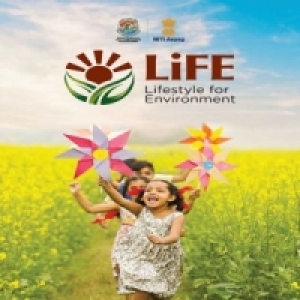
By means of various initiatives designed to care for the planet, India has set ambitious climate targets under the Paris Agreement. These include reducing emissions intensity by 33-35% from 2005 levels and increasing the share of non-fossil fuels in its energy mix to 40% by 2030. Moreover, at the COP-26 summit in Glasgow in 2021, India pledged to achieve net-zero emissions by 2070. Alongside the collective national commitments, India introduced individual responsibility through its groundbreaking initiative, the Lifestyle for the Environment (LiFE) mission, during COP-26 in 2021 in Glasgow. LiFE envisions a global movement where citizens integrate environmentally friendly practices into their daily lives, thereby strengthening collective efforts to address the climate crisis driven by global warming.
Although large-scale industries are major contributors to emissions, there is no doubt that individual consumption patterns also play a crucial role in shaping environmental consequences. A 2019 United Nations Environment Programme (UNEP) report highlighted the impact of lifestyle changes, suggesting that if 1 billion people adopt important behavioural changes – such as reducing meat consumption, cutting down food waste, opting for public transportation and cycling and switching to energy-efficient appliances – global carbon emissions could be reduced by 20% by 2030.
LiFE's mission builds on this concept of individual responsibility within the global climate action framework. Rooted in India's Nationally Determined Contributions (NDCs) under the 2015 Paris Agreement, LiFE emphasises that, if widely adopted, individual actions can significantly reduce global emissions and environmental degradation. The initiative aims to cultivate a network of Pro-Planet People (P3) who adopt and promote sustainable living. The mission aspires to make 80% of all Indian villages and urban areas environmentally friendly by 2028 and mobilise 1 billion people globally to adopt sustainable behaviours between 2022 and 2027.
The LiFE mission challenges the prevailing 'use-and-dispose' economic model by transforming individual habits and advocating for a circular economy built on thoughtful and sustainable consumption and production. The initiative is structured into three interconnected phases – change in demand, change in supply, and change in policy. Phase I focuses on fostering behavioural change at the individual and community levels, encouraging responsible consumption that drives demand for sustainable products and services. Phase II emphasises the supply side, urging businesses and industries to align with growing consumer preferences for eco-friendly options. Phase III seeks to influence policy changes by showcasing the feasibility and economic benefits of sustainable practices, paving the way for large-scale reforms that support both national and global sustainability goals.
India's climate action framework includes several flagship initiatives that incorporate the LiFE mission. The National Action Plan on Climate Change (NAPCC) serves as a strategic guide for climate mitigation and adaptation. The National Clean Air Programme (NCAP) focuses on reducing air pollution, while the National Green Hydrogen Mission (NGHM) promotes clean energy alternatives. Additionally, India's renewable energy projects – focused on solar, wind, and biofuels – are central to reducing dependence on fossil fuels. The Green Credit Programme (GCP) incentivises individuals, communities, and businesses to adopt sustainable practices by offering tradeable credits for activities like water conservation, afforestation, and sustainable agriculture.
In the domain of Environmental Sustainability, projects like the National Mission for Clean Ganga (NMCG) aim to restore the Ganges River ecosystem, while the Nagar Van Yojana (NVY) promotes urban forestry. Water management efforts are bolstered by initiatives such as the Jal Jeevan Mission (JJM), which ensures access to clean water in rural households, and the Atal Bhujal Yojana (ABY), which focuses on sustainable groundwater use. The National Mission for Sustainable Agriculture (NMSA) drives climate-resilient farming techniques in agriculture. At the same time, the Soil Health Card Scheme (SHC) ensures soil quality improvement, and the National Afforestation Programme (NAP) boosts forest cover. Waste management is addressed by the Swachh Bharat Mission (SBM), while the Plastic Waste Management Rules (PWMR) tackle the plastic waste challenge. Coastal and marine ecosystems are safeguarded by initiatives like Swachh Sagar Surakshit Sagar (SSS) and the Coastal Zone Management Authority (CZMA).
On the social development front, initiatives such as the Pradhan Mantri Ujjwala Yojana (PMUY) provide clean cooking fuel to households, reducing indoor air pollution and improving health outcomes. The Green Skill Development Programme (GSDP) equips individuals with the skills necessary for green jobs, supporting the transition to a sustainable economy. The initiatives of the National Disaster Management Authority (NDMA) enhance resilience against climate-induced disasters, helping communities prepare for and respond to environmental challenges.
At the heart of LiFE is the belief that individual choices can have a far-reaching impact on global sustainability. To catalyse this change, the mission's 21-Day Challenge encourages people to adopt one eco-friendly action for 21 consecutive days, leveraging behavioural science insights that suggest a habit is formed through sustained effort over time. By cultivating environmentally conscious behaviours, the LiFE mission aims to inspire a global shift in consumption patterns, ultimately influencing industries and policy frameworks to prioritise sustainability.
India's integration of the principles of LiFE into its climate action strategies ensures that the nation's sustainability efforts are comprehensive and impactful. Through its multifaceted approach, which includes climate change mitigation, environmental sustainability, and social development, India is working to build a resilient, environmentally conscious society. With the LiFE mission at its core, the country's efforts extend beyond national borders, aiming to mobilise global citizens to participate in this collective journey towards a sustainable future.
Ultimately, the LiFE mission envisions a world where individuals, industries, and governments are aligned in their efforts to combat climate change. Through the power of collective action, LiFE aspires to create a model for sustainable living that not only addresses the current climate crisis but also ensures the well-being of future generations. The mission aims to trigger systemic transformation towards a greener, healthier planet by fostering change in demand, supply, and policy.

 Cedric Prakash
.jpg)
 Mathew John

 Jacob Peenikaparambil
.jpg)
 John Dayal
.jpg)
.jpg) Jessy Kurian


.jpg)
 P. A. Chacko
 Robert Clements
.jpg) Jacob Peenikaparambil