

.png) Joseph Maliakan
Joseph Maliakan
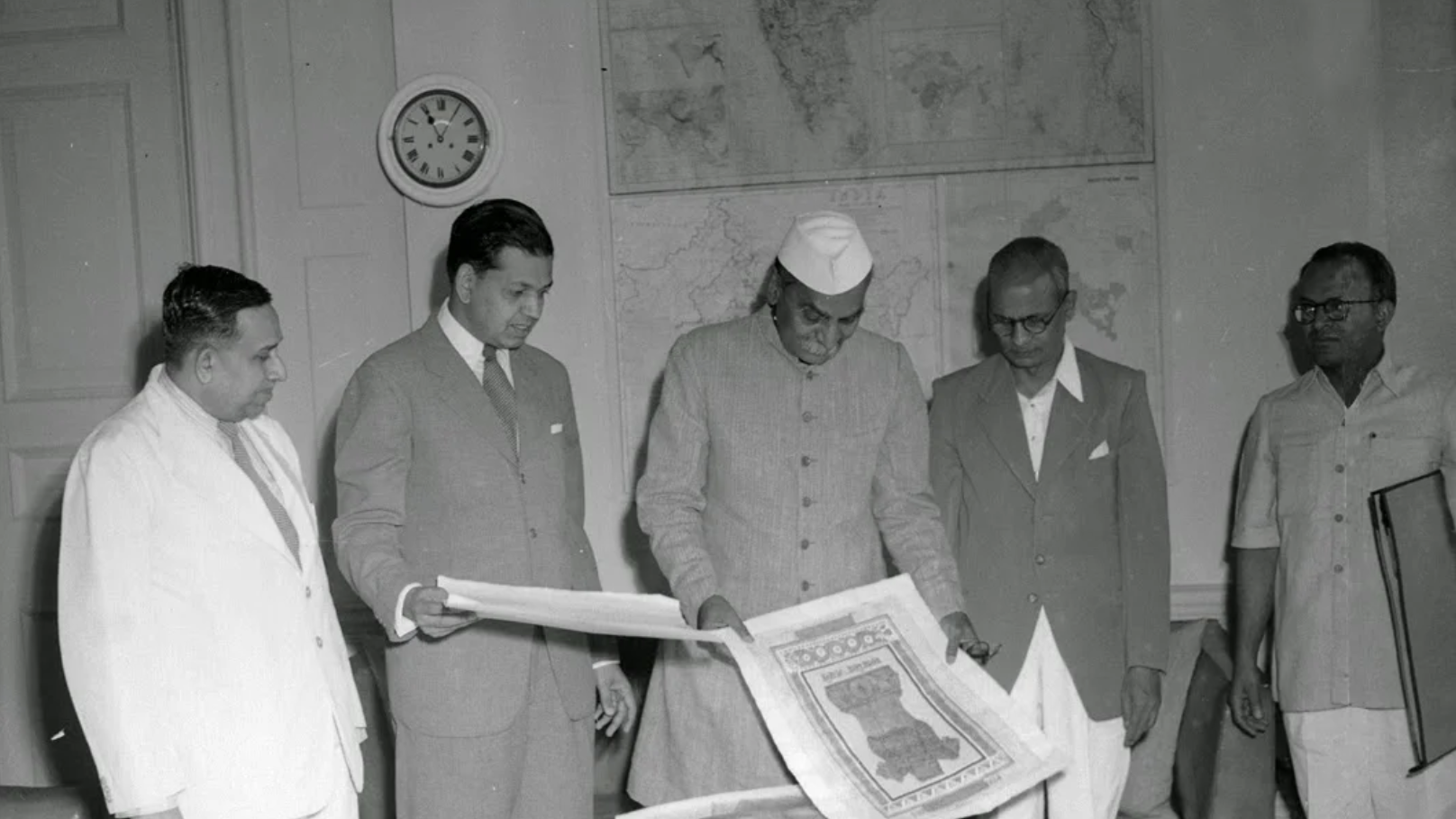
Rejecting a challenge to the insertion of the words "socialist" and "secular" in the Preamble to the Constitution of India, a Supreme Court Bench comprising the Chief Justice of India, Sanjiv Khanna and Justice Sanjay Kumar on Monday, November 25, 2024, on the eve of the 75th anniversary of the adoption of the Constitution, ruled that both Socialism and Secularism are part of the basic structure of the Indian Constitution.
The original Preamble, adopted on November 26, 1949, declared India a sovereign, democratic republic. The Constituent Assembly consciously resolved not to use the socialist or secular terms in the Constitution because both concepts had yet to be defined in the Indian context.
When the Constitution came into force on January 26, 1950, the Preamble stated:
WE, THE PEOPLE OF INDIA, having solemnly resolved to constitute India into a SOVEREIGN DEMOCRATIC REPUBLIC and to secure to all its citizens:
JUSTICE, social, economic and political;
LIBERTY of thought, ex
EQUALITY of status and of opportunity;
and to protect among them all
FRATERNITY assuring the dignity of the individual and the unity and integrity of the Nation;
IN OUR CONSTITUENT ASSEMBLY, this twenty-sixth day of November 1949, do HEREBY ADOPT, ENACT AND GIVE TO OURSELVES THIS CONSTITUTION.
Various members attempted to include the concepts of Socialism and Secularism in the Preamble to the Constitution during the Constituent Assembly debates. However, following intense debates, the Constituent Assembly resolved not to include both these concepts in the Preamble to the Constitution.
These words were inserted in the Preamble through the infamous 42nd Amendment to the Constitution during the Internal Emergency in 1976, which greatly expanded the powers of the Union government.
The 42nd Amendment, as far as the Preamble is concerned, states that "for the words "SOVEREIGN DEMOCRATIC REPUBLIC," the words "SOVEREIGN SOCIALIST SECULAR DEMOCRATIC REPUBLIC" shall be substituted. Though subsequent amendments to the Constitution, 43rd and 44th, undid many changes brought through the 42nd Amendment, the Amendment to the Preamble, the insertion of the words socialist and secular, was not touched.
Forty-four years after the insertion of the words "socialist" and "secular" in the Preamble in July 2020, Dr Balram Singh, a Supreme Court advocate, filed a petition challenging the inclusion of the words socialist and secular in the Preamble of the Constitution. Similar petitions were also filed by former Law Minister Subramaniam Swamy and advocate Aswani Kumar Upadhyay. They argued that the word secular was consciously excluded from the Preamble by the framers of the Constitution, and the concept of socialism curtailed the freedom of the Union and State governments while framing economic policies.
The Supreme Court rejected these arguments in a seven-page ruling, saying that "the flaws and weaknesses in the arguments are obvious and manifest." The judgement pointed out that when the Constitution was being drafted, the meaning of the word "secular" was "considered imprecise" as it was interpreted as opposed to religion.
However, over time, "India has developed its own interpretation of secularism, wherein the State neither supports any religion nor penalises the profession and practice of any faith," the court said.
The ideals espoused in the Preamble, fraternity, equality, individual dignity and liberty, among others, reflect this secular ethos. The concept of socialism also has evolved to have a unique meaning in India. Socialism refers to the principle of economic and social justice, where the State ensures that no citizen is disadvantaged due to economic or social circumstances and does not necessarily put restrictions on the private sector, which has "flourished, expanded and grown over the years, contributing significantly to the upliftment of the marginalised and under privileged sections in different ways."
The judgement further clarified that the "additions to the Preamble have not restricted or impeded legislations or policies pursued by elected governments, provided such actions did not infringe upon fundamental and constitutional rights or the BASIC STRUCTURE of the Constitution." Therefore, the court held that there was no justification for challenging the Amendment inserting socialist and secular in the Preamble of the Constitution.
The court further observed that the Constitution is a 'living document' subject to the Parliament's power of Amendment. This amending power extends to the Preamble as well.
Socialism, in the Indian context, primarily means a Welfare State that provides equality of opportunity irrespective of race, religion, or gender and does not prevent the private sector from operating. As for secularism, over time, India has evolved its own brand of secularism. The State neither supports any religion nor penalises the profession and practice of any faith, the judgement said.
While every citizen should welcome the judgement, civil society will do well to ponder how secular and socialistic the Union Government, the State governments and other institutions have been in their behaviour. January 2023 witnessed the Prime Minister of India undertaking Pooja in Ayodhya. And just hardly a month before his retirement, the Chief Justice of India conducted Ganapathi Pooja at his official residence with the Prime Minister in attendance. Religious persecution is also increasing. If this is our secularism, only God alone can save us!
As for socialism, the less said, the better. Inequalities are on the increase. While the number of billionaires in India is increasing, unemployment is also increasing. There is also no respite from farmer suicides. India's slide in the World Poverty Index is also very alarming.
.jpeg)
 A. J. Philip
.jpg)
.png) Jacob Peenikaparambil
Jacob Peenikaparambil
.jpg)
.png) John Dayal
John Dayal
.jpg)
 Pachu Menon
.jpg)

.png)
.png)
.png) Robert Clements
Robert Clements
.jpg)