

.png) Joseph Maliakan
Joseph Maliakan
.jpg)
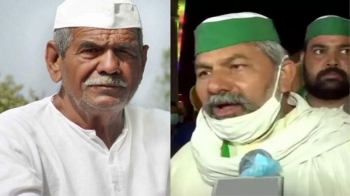
“This is a drama of madmen, only those should join it who will fight to the finish,” Bharatiya Kisan Union (BKU) leader Mahendra Singh Tikait declared, addressing the farmers’ rally at the Boat Club lawns in the national Capital in October 1988. With a brute majority of 404 in a House of 544, the Rajiv Gandhi government gave little heed to the farmers’ grievances. Power had gone into the rulers’ heads and they believed nothing could touch them.
This led the farmers from Western Uttar Pradesh, led by Tikait, to descend in droves on the lawns of Boat Club seeking redressal of their long-pending demands.
During the six-day sit-in at the Boat Club, in one of the interviews to this reporter, Tikait said, “These people who read in English Schools and sit in air-conditioned offices in cities have not looked at us for the last 40 years and have no right to rule us. They have to listen to us now.”
Before staging the protest at Boat Club, the BKU had held a 25-day dharna outside the office of the Divisional Commissioner, Meerut. The demands of the farmers included: writing off of loans; increase in sugar cane price; pension for farmers; reservation of government jobs for farmers’ wards; inclusion of farmers’ representatives in Agricultural Prices Commission and local development boards; proper compensation for land acquired by the government; and withdrawal of criminal cases against farmers.
Most Opposition parties, including the BJP, had supported the agitation. Farmers’ unions from different parts of the country had also come out in support of the protest. However, both the Uttar Pradesh government as well as the Central Government described the agitation as a local western Uttar Pradesh phenomenon led by ‘rich farmers’. Many ruling party leaders thought Tikait as a ‘crazy man’ leading his followers with unrealistic demands.
As in the present agitation of farmers, senior Tikait too had come with hundreds of bullock carts, tractor-trolleys and motorcycles. The agitation lasted for a week and the BKU leader lifted the siege of Delhi without a formal agreement with the government on their demands, though he had managed to elicit a few concessions and assurances.
However, the U.P. Government under Chief Minister N D Tiwari, just before the 1989 general elections, conceded some of the demands of the farmers. In the elections, Rajiv Gandhi and the Congress got a severe drubbing. Obviously, Tikait had, through his unconventional leadership, managed to arouse the farmers in different parts of the country.
One of the main features of Tikait’s struggle was to keep party politics away from the centre stage. No politician was allowed to take the stage during the agitation and politicians were kept at arm’s length. Tikait had no political ambition and did not fight any election until his death in 2011. He adopted the principles of non-cooperation and non-violence in his struggles. At one time, he advised farmers to stop paying electricity bills. The farmer-leader also had a group of experts to advise him and to negotiate with the government.
In the current agitation, farmers’ day-to-day problems have been relegated to the background and the repeal of the three agriculture-related central Acts has become the single point programme. In Punjab, the agitation started in June 2020 immediately after the promulgation of the three ordinances. It intensified after Parliament passed the three Bills in spite of the demand from several Members of Parliament to refer them to a Select Committee of the House before it became law.
Like in 1988, power seems to have blinded the ruling BJP with its majority of 303 seats in the Lok Sabha. The Modi Government did not even think it proper or necessary to consult the Akali Dal, the BJP’s oldest ally in the National Democratic Alliance (NDA), forcing the lone Akali Minister in the Union Cabinet Harsimrat Kaur Badal to resign in protest.
While in 1988 the farmers moved from Meerut to Delhi with comparative ease, in November 2020 they had to fight their way from Punjab to Delhi facing teargas shells, water cannons and trenches dug on national highways.
Initially, just like in 1988, the Central government argued that the agitation was confined to only the ‘rich farmers’ from Punjab. Many BJP supporters also alleged that the agitation was being led by Khalistani elements inside and outside the country. As the farmers continued their agitation peacefully the government gradually shed these views and started negotiations with the farmers. While the government insisted that the Acts were beneficial to farmers, the latter stuck to the demand that they be repealed. Several rounds of talks between the farmers and the government have not resolved the dispute.
The farmers’ unions have taken a leaf from the senior Tikait and have so far kept political parties and politicians away from the agitation. While everyone is welcome to lend support, no representative of any political party has been invited to speak from their stage.
However, after the Republic Day incidents and Rakesh Tikait’s breaking down a few times while appealing for support from more farmers, some political leaders were allowed to meet the leader at the stage and lend their support to the agitation.
As in 1988 agitation when the police had stopped water supply and delivery of food packets in and around the protest site, this time too the police cut electricity supply and prevented water tankers from entering the protest sites for a few days. However, the police have relented on these ‘inhumane’ measures which drew widespread criticism.
Taking the security measures to unprecedented level, following the violence during the Republic Day, the Delhi police went on a fortification spree at all borders of Delhi with neighbouring states of Uttar Pradesh and Haryana as if the police were preparing for a prolonged war with the farmers. The unreasonable and ludicrous actions of the police have been condemned by all opposition parties. The farmers’ protest has also been gaining international support from both celebrities as well as world leaders.
One only hopes that the Modi government sheds its majoritarian attitude, repeal the agriculture laws which by all accounts blatantly violate the federal structure of the Indian Constitution and will adversely affect the livelihoods of crores of small farmers and agriculture labourers in the country.
.jpg)
.png) Cedric Prakash
Cedric Prakash
 ICPA
ICPA
 ICPA
ICPA
 ICPA
ICPA
 ICPA
ICPA
 ICPA
ICPA
 ICPA
ICPA
.jpg)
 A. J. Philip
.jpg)
.png) Jacob Peenikaparambil
Jacob Peenikaparambil
.jpg)
.png) John Dayal
John Dayal