

.jpg) Fr. Stanislaus D’Souza
Fr. Stanislaus D’Souza
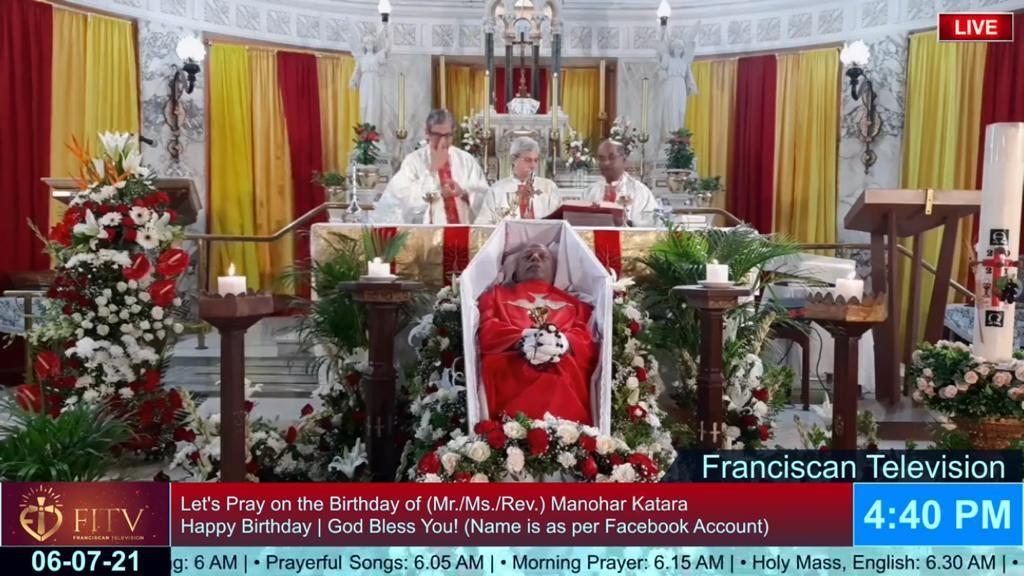
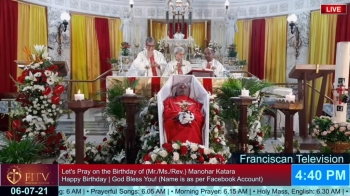
(Edited version of the homily of Fr. Stanislaus D’Souza, Jesuit Provincial of South Asia (POSA), during the funeral service of Fr. Stan Swamy at St. Peter’s Church, Bandra, Mumbai)
Dear Friends, we have gathered here online and offline to bid farewell to our brother and friend, guide and mentor Fr. Stan as he makes his final journey. I’m sure our hearts are full of mixed feelings; on the one hand we feel sorrow and sadness at the sudden demise of our brother, on the other our hearts are filled with gratitude and joy because we had an opportunity to know him and learn from him.
The gospel reading of the day on the good shepherd sums up life and death; vocation and mission; what he stood for; what he did as a Jesuit and a priest; and why he had to die while still in judicial custody.
There is one image that is very popular among Christians; it is the image of the good shepherd; the good shepherd carrying the sheep on the shoulder, the shepherd keeping the little lamb on his lap.
There are four things a good shepherd does -- he perceives, he provides, he protects and he prefers. As the Gospel says the good shepherd perceives the sheep; he gives them names; and calls them by name; he knows them and comforts them.
The good shepherd protects them. He leads them from the front, and when they rest, he rests in front of them to protect them from the enemy. The good shepherd provides; if there is one thought that envelops the mind of the shepherd it is to find pasture, it is to find running water for the sheep. That’s why he takes the sheep always to the green pastures and running water to satisfy their hunger and quench their thirst. Finally the good shepherd prefers and it is important the good shepherd has a heart for the poor. That’s why whenever he takes the sheep to the pasture he leads the young ones first.
In fact, our Lord was a good shepherd. Look at His life and His works; he fed them; he healed them; he walked on the water; and finally raised the people to life.
Fr. Stan not only knew the words on the image of the good shepherd but he also knew the shepherd intimately and he loved Him and followed Him closely. He became a good shepherd after the example of our Lord and Master.
It is said that Fr. Stan was prepared for a prestigious school but walking on the footsteps of his Master he chose to work for the poor, especially Tribals and Dalits. He completely identified himself with the poor and the marginalized and wore the smell of the sheep as Pope
Francis would say. He sacrificed and suffered for them; he was arrested; he was hounded because of his staunch support to Adivasis’ and Dalits’ basic human rights.
He was charged with crimes he never even attempted. Finally, his death was because of the rough treatment meted out to him; in life and death Fr. Stan was like his Master.
In his death, we Jesuits of India have lost a courageous, committed and a compassionate elder brother who worked selflessly for the mission of the society, reconciliation and justice. However, a person like Stan cannot die, he will rise in the lives of the poor; he will rise in the struggle for justice and peace; he will raise a generation of people committed to take up the work of his Master. I believe that there will surely be people with commitment who will carry forward his legacy, the work among the under privileged.
Fr. Stan is now with his God. There he will even be more powerful than he ever was when he was with us on earth; he will surely intercede with God and get God’s intervention in the history of this nation. Therefore, as we moan his untimely and unjust demise, we shall still celebrate his life wholly dedicated to the service of the last, least and the lost.
Dear Fr. Stan, we would like to thank you for all that you have been to us and specially to the poor; when you are up there do whisper a prayer for us.
.jpg)
.png) Cedric Prakash
Cedric Prakash
 ICPA
ICPA
 ICPA
ICPA
 ICPA
ICPA
 ICPA
ICPA
 ICPA
ICPA
 ICPA
ICPA
.jpg)
 A. J. Philip
.jpg)
.png) Jacob Peenikaparambil
Jacob Peenikaparambil
.jpg)
.png) John Dayal
John Dayal