

.png) Chhotebhai
Chhotebhai
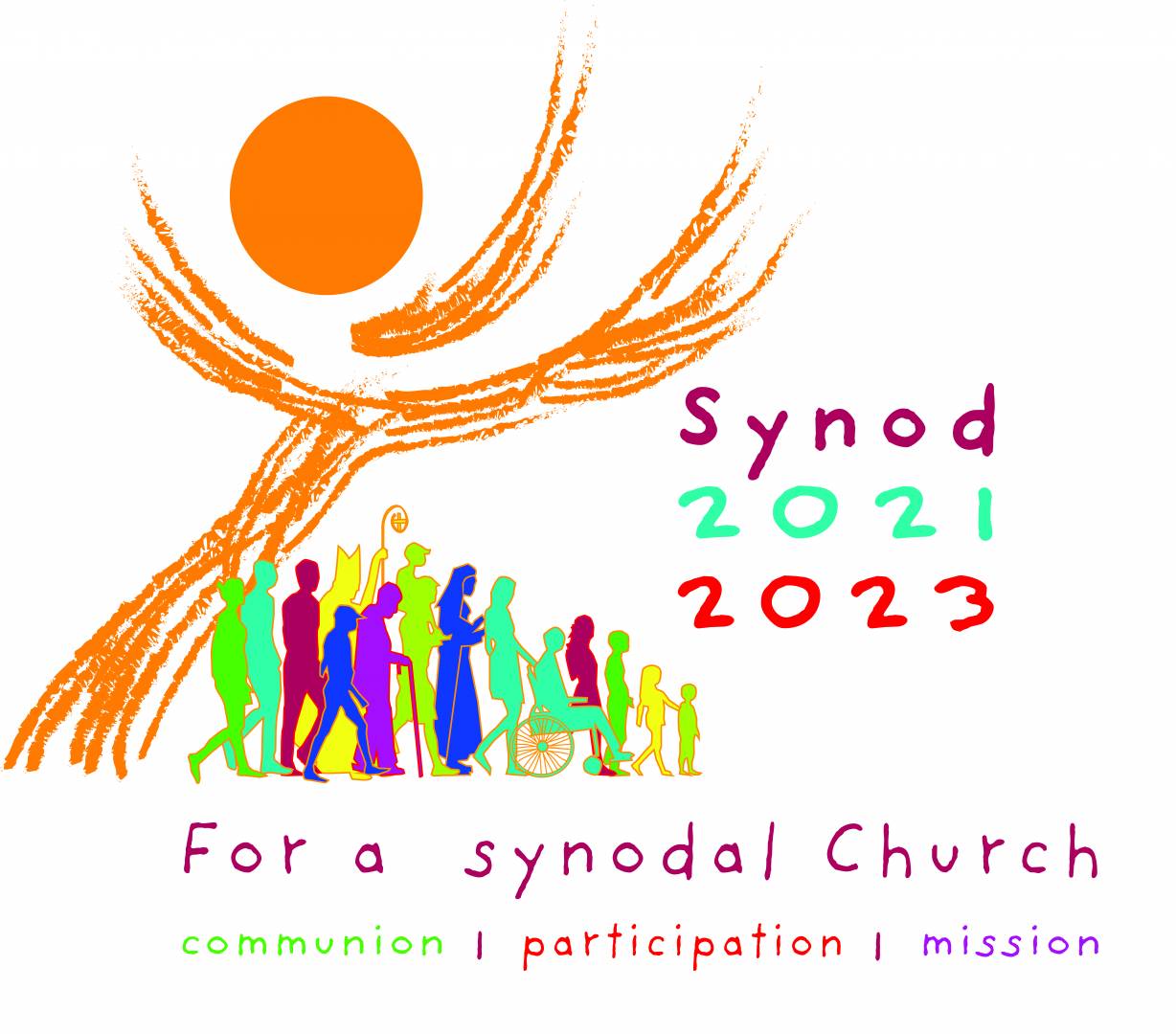
What a silly question. It is just eleven kilometres from Jerusalem. There’s more to it than meets the eye though. There are just two references to Emmaus in the Bible, one each in both the Testaments. In the light of the Synod on Synodality 2021-23 both incidents are significant.
Take the first incident recorded in the historical book 1Macabees Chapter 4. It recounts a fierce battle in 134 BC between the forces led by Judas the Israelite and Gorgias a Gentile. Judas’ forces are outnumbered and ill-equipped. Yet they win the battle because of their faith. This is significant in view of the doubts and cynicism in the minds of many, not just the laity, regarding the Synod.
They too feel that we are ill-equipped (not quite ready for such a mammoth exercise) and outnumbered (in the sense that the views of the hierarchy and clergy will prevail over that of the ignorant laity). This is human logic. But the power of God far exceeds human logic or estimates. If we have faith, then indeed we can move mountains (cf Mat 17:20) of doubt.
Take the example of Vatican II. Before that we had a priest centred liturgy, with the priest having his back to the congregation. He occasionally whipped around to ominously say “Dominus vobiscum” in Latin, an alien language. While the Mass was in progress some in the congregation would be fingering their rosary beads, while others were making the rounds of various statues in niches in the church. Has not that changed radically to a far more participative and meaningful liturgy? (Even if we still have miles to go).
Earlier we arrogantly stated that there was no salvation outside the Catholic Church, thereby consigning all Protestants, heretics, schismatics, non-Christians and atheists to hell. This Latin statement “Extra ecclesiam nulla salus” is attributed to the writings of St Cyprian of Carthage in the third century. In contrast see this statement from the Dogmatic Constitution of the Church. “Those also can attain to everlasting salvation who through no fault of their own do not know the gospel of Christ or his Church, yet sincerely seek God, and moved by his grace, strive by their deeds to do His will as it is known to them through the dictates of conscience. Nor does divine Providence deny the help necessary for salvation to those who, without blame on their part, have not yet arrived at an explicit knowledge of God, but who strive to live a good life, thanks to His grace” (LG16). I see this as one of the crucial turning points of Vatican II.
Take another controversial Latin saying, “Roma locuta, causa finita est” (Rome has spoken, the case is closed). This too is attributed to another North African, St. Augustine, in the early 5th century. It was a response to the Pelagian heresy. In contrast today the Church acknowledges that it has much to learn from the secular world. “This sacred synod affirms the legitimate autonomy of human culture and especially of the sciences” (GS 59). Turning full circle, the present Synod emphasises listening to those on the margins, the voiceless.
My next example is of marriage. St Paul had a warped idea of it, because of his belief that the end of the world was near. Nevertheless, he was humble enough to admit that it was his own personal opinion when he said, “I have no directions from the Lord, but I give my own opinion ... from now on those who have wives should live as though they had none” (1 Cor 7:25,29). This statement was for centuries blown out of proportion and context by a male celibate clergy to denigrate marriage as second class. Again, in sharp contrast, this is what Vatican II has to say about marriage, “Finally, Christian spouses in virtue of the sacrament of matrimony, signify and partake of the mystery of that unity and fruitful love which exists between Christ and his Church ... The family, is so to speak, the domestic Church” (LG 11). Far from being second class, Vatican II asserts that marriage and family life are a beautiful way of being Church, making Christ present in the modern world.
I will take one more example (there are many more to establish the sea change wrought by Vatican II in the church’s orthodoxy, if not entirely in its orthopraxis). There are several instances in the New Testament where slaves are told to docilely obey their masters (cf Eph 6:5, Col 3:23, Titus 2:9). Again in sharp contrast this is what the Council had to say, “Among the basic rights of the human person must be counted the right of freely founding labour unions ... Another such right is that of taking part freely in the activity of these unions without risk of reprisal ... The strike can still be a necessary, though ultimate, means for the defence of the workers own rights and the fulfilment of their just demands” (GS 68).
I have quoted just a few instances from Vatican II ecclesiology to indicate that it was indeed a watershed moment in the life of the church; its changed self-understanding, and consequent interaction with the world “outside its walls”. Sure we still have many miles to go in its implementation, but that should not lead us to despair or cynicism. Remember that despair is the main weapon of the Evil One, whereas hope is a cardinal Christian virtue. If someone were to still insist that Vatican II was a failure, I would throw the book at them, the good book, the Bible. How far have we followed the teachings of Jesus in the sacred scriptures? Instead of blaming Vatican II or the Bible, let us look inwardly at ourselves. Like the rich young man we may have kept all the laws, and not yet become disciples of Jesus (cf Mat 19:16-22).
I now move to the second instance of Emmaus, one of my favourites. The incident is reported in Luke 24:13-35. We have read this passage many times. Let us now reflect on it in the light of the Synod “journeying together”. Emmaus is the perfect example of that. It happened on the very day of the Resurrection (v13). They were discussing the event (v15). Jesus joined them but they didn’t recognize him (v16). When Jesus challenged them they became downcast (v17). The disciples then spoke about the death and resurrection of Jesus (v19-24). Jesus then explained the scriptures to them (v 25-27). At the end of the journey he broke bread with them (v30). He then vanished from their sight (v31). They found their hearts burning (v32). They then rushed to bear witness to their experience (v33).
This Pilgrim’s Progress may not be quite like the one written by John Bunyan in 1678, but it is full of relevance in the light of the Synod. Look at the sequence of events – journeying together (participation), reflecting on the death and resurrection of Jesus, Jesus himself encountering them, being confronted by him, feeling downcast (humbled), but not down and out. They reflected on the scriptures, shared the breaking of the bread (communion). Their hearts burned (they were enthused), and they immediately set out to bear witness (mission).
This is exactly what the Synod is all about - journeying together, listening, sharing, participating, meditating on the passion and resurrection, contemplating the Word of God, breaking bread and finally going out.
Some readers may have a niggling doubt – where did Jesus vanish after the breaking of the bread? Had he abandoned them? To the contrary; their hearts burned. They had internalised Jesus. He was incarnated in them. The Word became flesh, as it does, time and again, in those who believe.
As we begin our Synod preparations let us draw inspiration from both the events of Emmaus. Only then will the Synod attain its purpose. A final word of caution. Pope Francis has repeatedly warned that the Synod is not an end in itself. The Synod may end but synodality is the new way forward; of being church through participation, communion and mission.
Come Holy Spirit to lead and inspire us. Enkindle in us the fires of your love as you did to the disciples on their journey to Emmaus.
(The writer is the Convenor of the Indian Catholic Forum. He may be contacted at noronha.kp@gmail.com )
.jpg)
.png) Cedric Prakash
Cedric Prakash
 ICPA
ICPA
 ICPA
ICPA
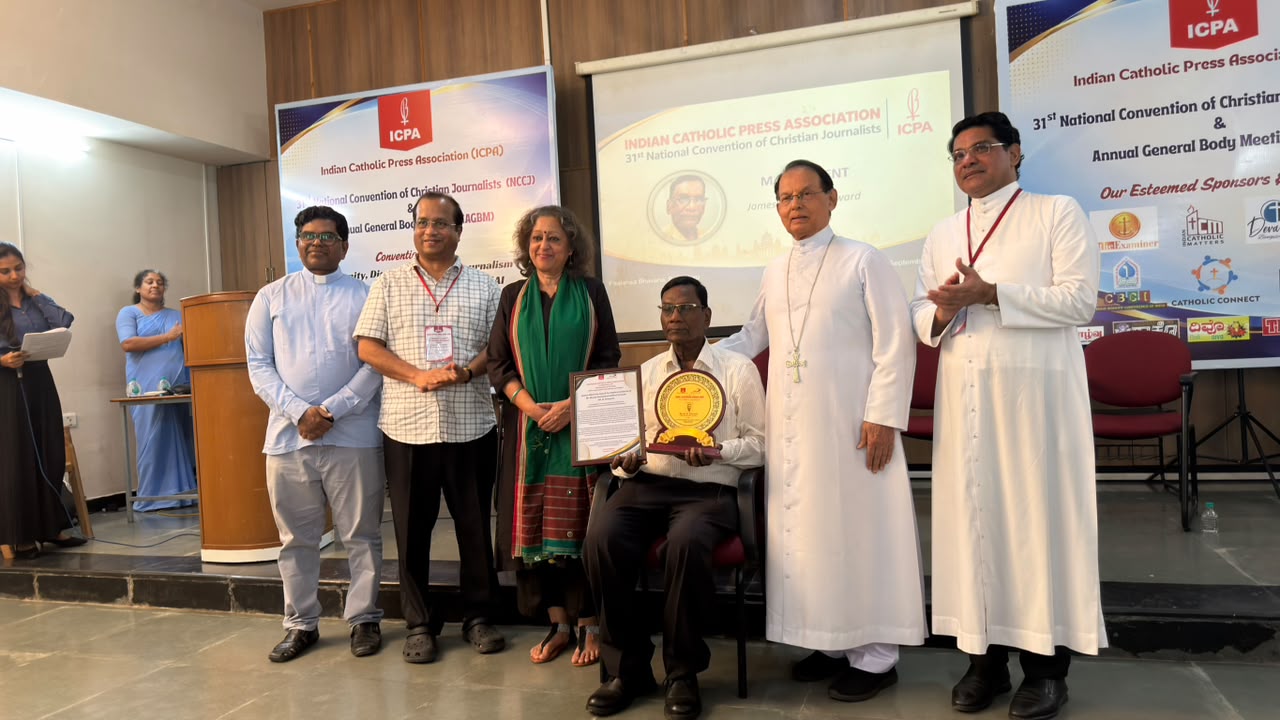 ICPA
ICPA
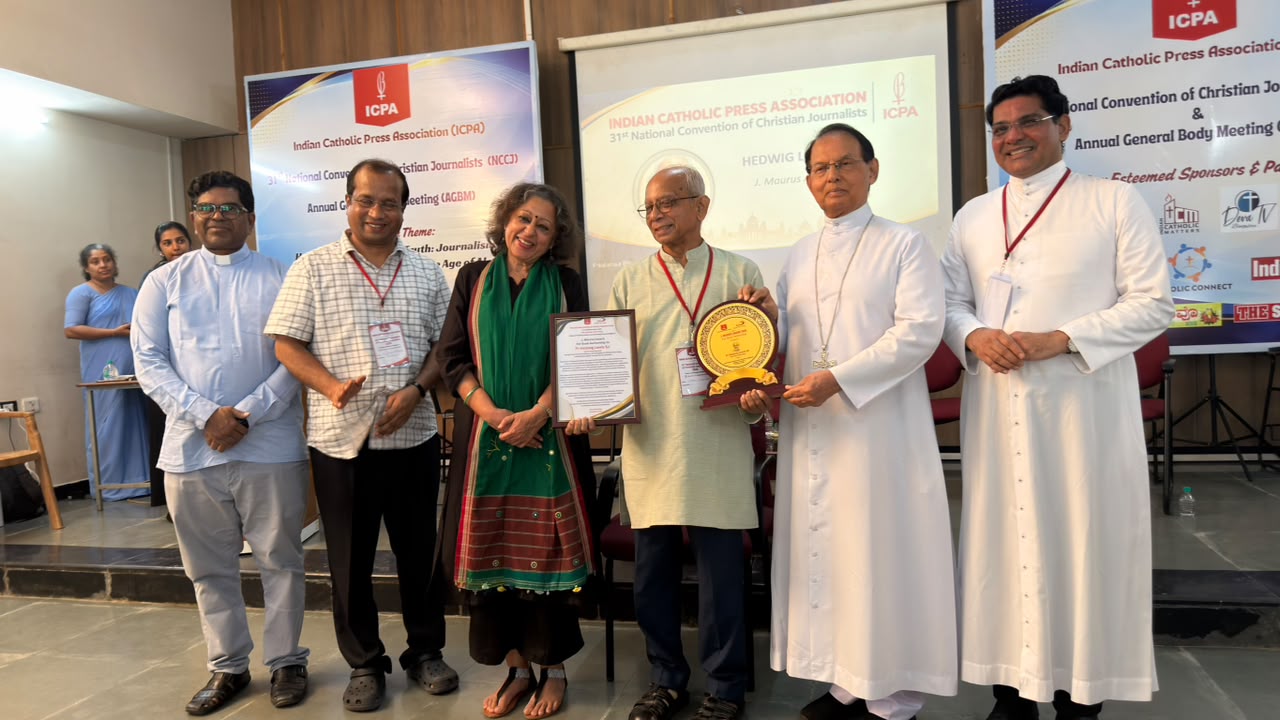 ICPA
ICPA
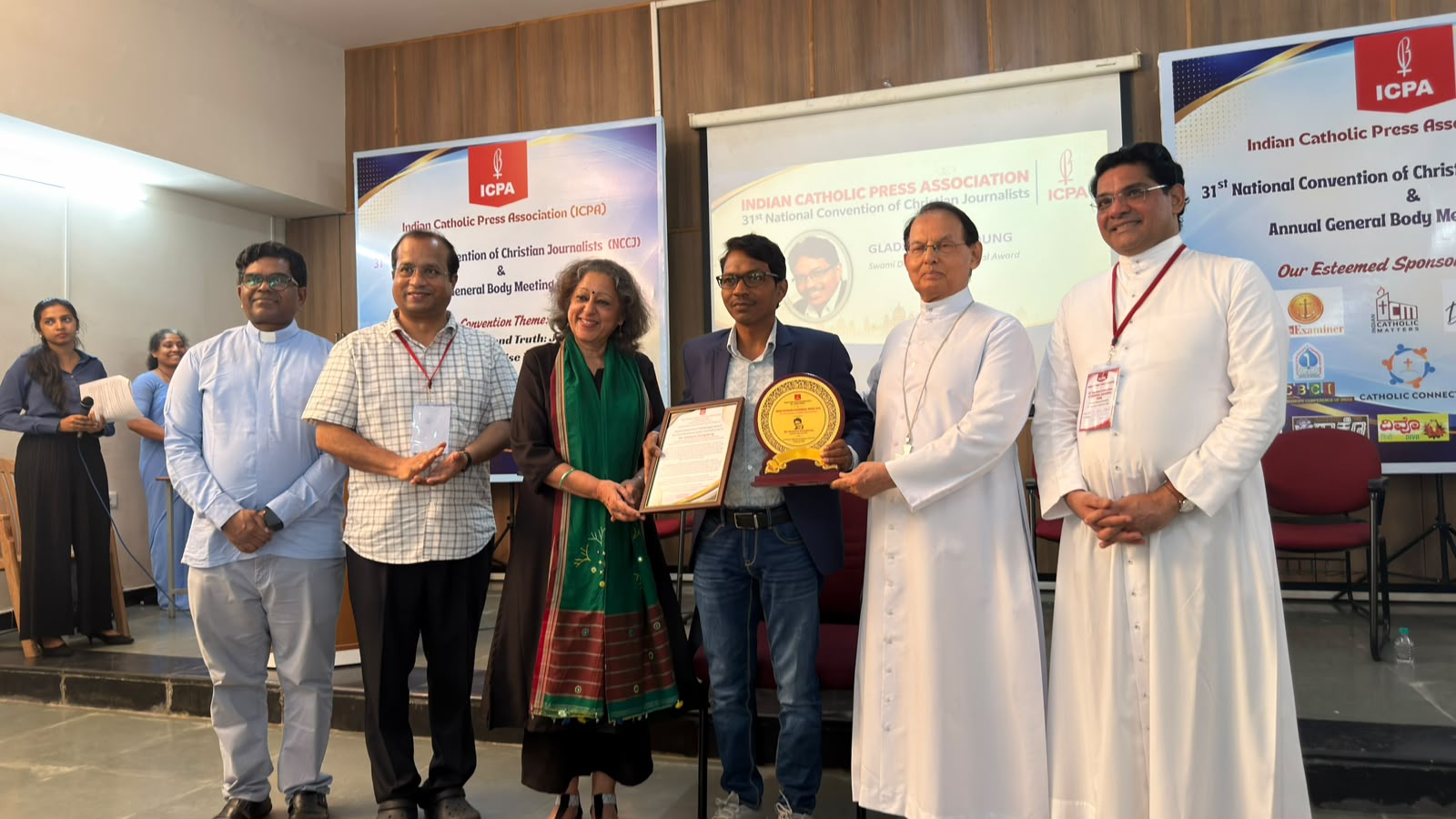 ICPA
ICPA
 ICPA
ICPA
.jpg)
 A. J. Philip
.jpg)
.png) Jacob Peenikaparambil
Jacob Peenikaparambil
.jpg)
.png) John Dayal
John Dayal