

.png) Dr Suresh Mathew
Dr Suresh Mathew
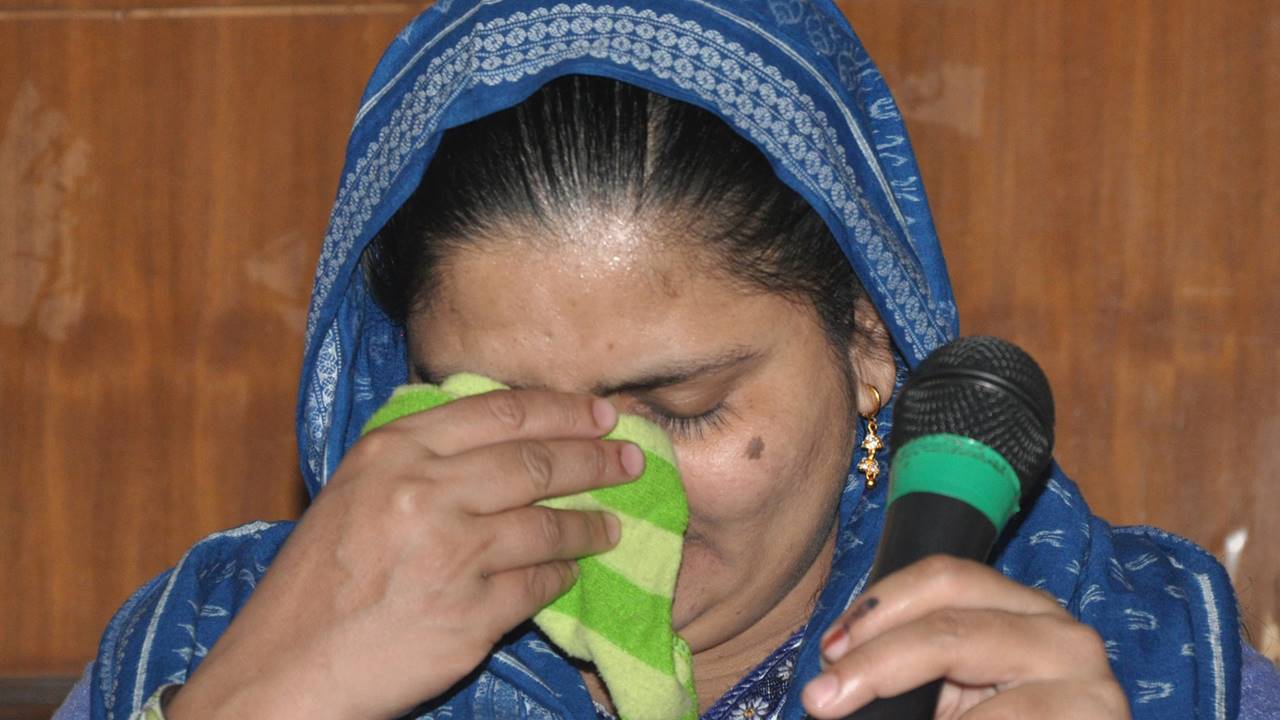
The day every Indian was beseeched to hold the Tricolour in hand and have national anthem on lips, Bilkis Bano sat in a remote place in Gujarat with her body going numb, bereft of words, and her life coming crashing down. She was in shock unable to come to terms with what she heard: Eleven convicts sentenced to life imprisonment for her gang-rape and murder of her family members have been released from jail. The Gujarat government had remitted their life-term and permitted premature release from the prison.
Adding insult to injury, people gathered outside the Godhra jail, with ladoos and garlands, to give a grand welcome to the convicts. Coincidently, on the same day, Prime Minister Narendra Modi had waxed eloquent on Nari Shakti: Can we not pledge to get rid of everything in our behaviour, culture and everyday life that humiliates and demeans women?” The opposite happened, not in any other state, but in his own state where he reigned supreme before becoming the Prime Minister.
The Gujarat government has come out with an unconvincing justification for its decision: A panel constituted by the state government had approved a plea for remission of their life sentence. According to reports, the committee that recommended the remission had five office-bearers of the Bharatiya Janata Party, including two MLAs; the rest of the members were government appointees. The grant of remission may be justified taking course to technicalities. But it goes against the spirit of court verdicts and informed public opinion that pleas of perpetrators of heinous crimes like rape and murder should not be considered for remission of life-term.
Bilkis Bano had fought a tortuous legal battle to get the conviction of the 11 who had, initially, managed to escape the long arm of the law. The Gujarat government and the police had apparently manipulated the FIR, medical reports and post-mortem report; and evidences were destroyed. Though the trial had started in a court in Ahmedabad, it was apparently heading for a ‘disastrous closure’.
The Supreme Court transferred the case to Mumbai after Bilkis expressed apprehension of harm to witnesses and tampering with evidence. She found a ray of hope when, in 2008, the Special Court in Mumbai sentenced the 11 to life-imprisonment. It is this much delayed justice, which reached the door-steps of Bilkis after much trial and tribulation, that has now been derailed by the remission of the sentence.
Dispensation of justice is getting more and more communalized in the country. State after state, especially in BJP-ruled ones, the minorities find the going increasingly tough. In Uttar Pradesh, the government has withdrawn scores of riot cases in which the victims are undeniably Muslims. In many cases, those who have given out a battle cry against minority communities are going scot-free; similar is the case of hate-mongers from the Hindutva brigade who have called for genocide of people belonging to a minority community; the accused are roaming around like heroes who have won a battle.
The situation has degenerated to a level in which culprits and victims are seen through the prism of communalism. In this scenario, the nation cannot turn a deaf ear to the poignant question raised by Bilkis Bano: ‘How can justice for any woman end like this?’
.jpg)
.jpg)
.png) Jacob Peenikaparambil
Jacob Peenikaparambil

.png) John Dayal
John Dayal
.jpeg)
.png) Joseph Maliakan
Joseph Maliakan

.png) Dr Arnald Mahesh SDB
Dr Arnald Mahesh SDB

.jpg) Jose Vattakuzhy
Jose Vattakuzhy
.png)

.jpg) Isaac Gomes
Isaac Gomes
.png)
.png) Robert Clements
Robert Clements