.jpg)


.png) John Dayal
John Dayal
.jpg)
They stand out in any gathering of Catholic clergy, their coffee-brown hooded robes a sharp contrast to the pristine white cassocks of the priests, the saffron or sky-blue saris of the women religious and the colourful "Sunday best" of the laity in a Christ the King procession through a town's streets.
The Capuchins, friars of the Franciscan Order and followers of the Saint of Assisi, have a hoary history of some four centuries in India, and though they may not be well known in every diocese or parish, the prayer of St Francis, "make me a channel of your peace," is by now an anthem of the nation's civil society.
My own close acquaintance with the community began with Indian Currents. Fr John Vallamattam, the legendary Kerala priest known for his struggles to shield educational institutions from government control and for his expertise on Gurudev Rabindranath Tagore, was then a secretary at the Catholic Bishops' Conference of India (CBCI) centre in New Delhi. He conceived a magazine that, in his words, would bring the Catholic Church and its work to the knowledge of India's reading masses, and would also be a window through which the Church looked at the country's politics and political economy.
The magazine was launched, but the Church was perhaps not ready for it, and resources soon ran thin despite Fr John's numerous visits to dioceses across the country, many of them in the North East. The bishops of the day perhaps did not see the need for a magazine outside a diocese's control, devoted neither to ecclesiastical leaders nor to reporting the many activities that make up parish life.
The magazine was on the verge of closure when the Capuchins entered the scene. Fr John introduced me to Fr Dr Xavier Vadakkekera, an accomplished scholar of mass communications and one of a remarkable family of siblings, many of whom had been ordained.
Fr Xavier said the Capuchin Fathers would see that Indian Currents did not die.
It has not only survived but thrived, becoming an authentic platform for incisive political analysis and an unabashed, unafraid critique of the powerful and the rich.
The magazine's survival is about more than owning a mouthpiece; it reflects the recognition that such a voice is necessary if the cause of the victims of regress and greed is to be amplified. The infrastructure built to sustain that voice now stands in brick and mortar, and the magazine reaches the office of almost every bishop in the country and many public libraries.
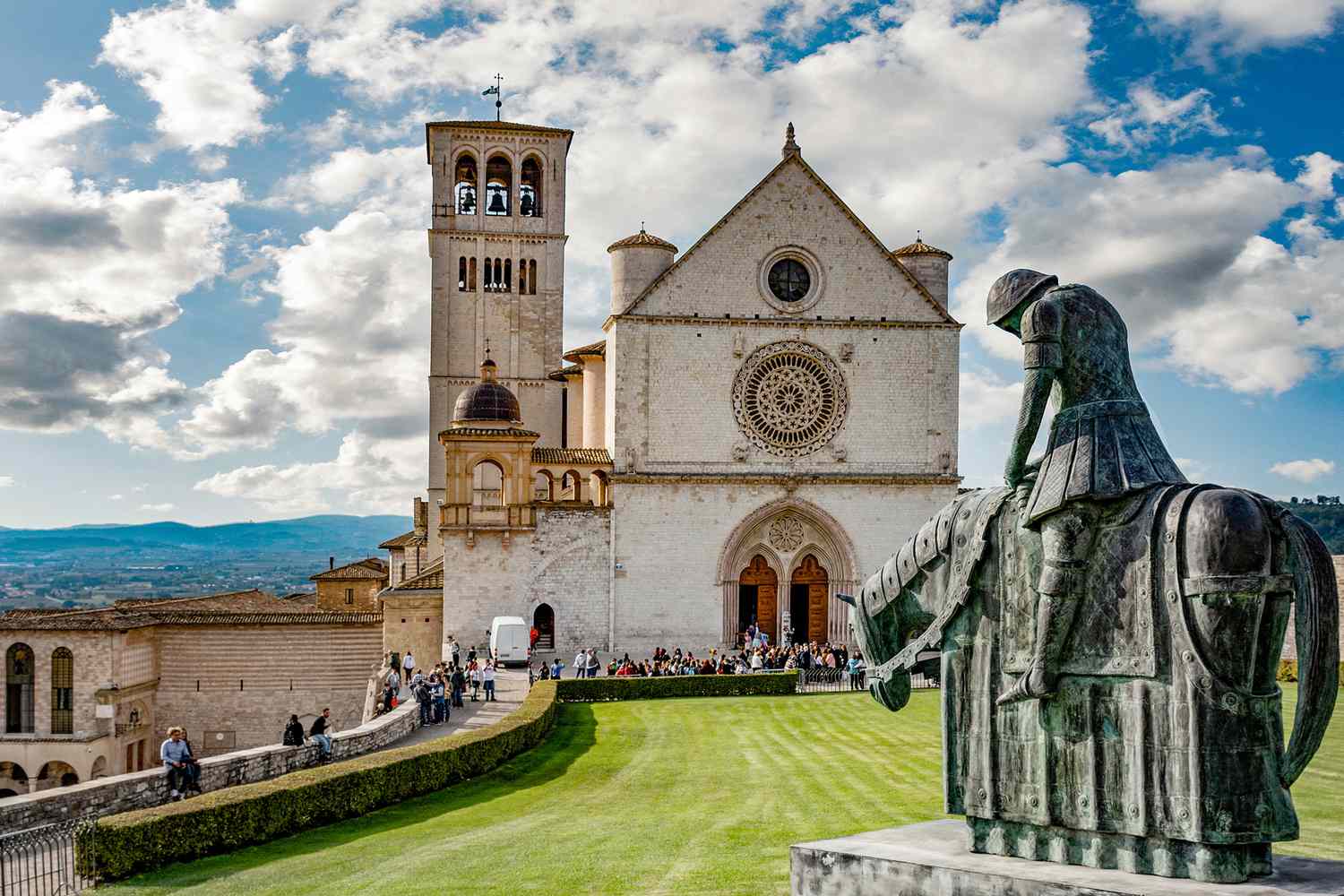
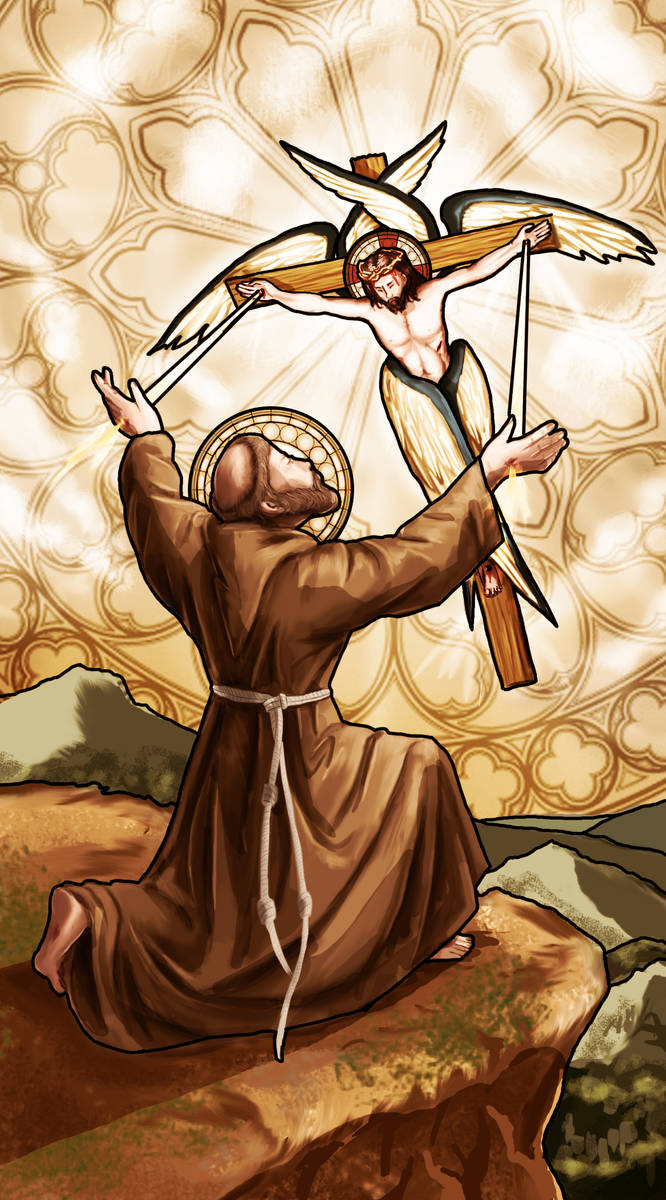
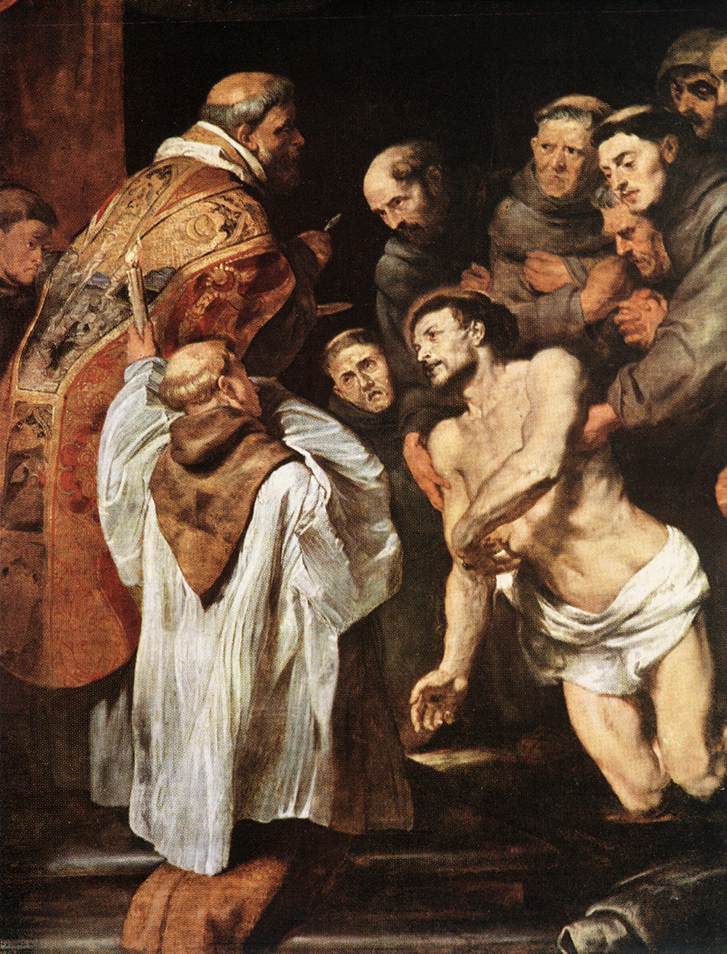
This is an important achievement in the Franciscan Jubilee Year, when the Franciscan family, of which the Capuchins are a First Order branch, marks the 800th anniversary of the passing of St Francis of Assisi. They call it the Transitus, the passing, a singular celebration for any saint in the Church, as a young friar reminded me.
Franciscan spirituality begins with a decision that seems radical even now - to follow the Gospel literally, in the footsteps of Jesus Christ. For the founder, this meant embracing the poverty of the Incarnation, the humility of the Cross and a life of fraternity with every creature.
This spirituality is not abstract but a way of being in relationship with God, with the poor, and with structures of power, lived on the social periphery alongside those pushed there.
India is precisely such a periphery, and one where the Capuchin charism has taken deep root. The Order arrived in 1632, and after early setbacks, established missions in Surat in 1639 and Madras in 1642. In the late nineteenth and early twentieth centuries, Italian, Canadian and American Capuchins revived the presence, and a novitiate opened in Mussoorie in 1880 before moving to Sardhana and then, in 1930, to Monte Mariano in Mangalore.
India is one of the world's fastest-growing large economies, expanding at around seven per cent a year, but the figures do not hide the depth of its inequality, as seen in the World Inequality Report 2026, which says that the top ten per cent of earners capture about 58 per cent of national income, while the bottom half receives only 15 per cent.
Wealth is even more concentrated, with the richest ten per cent holding roughly 65 per cent and the top one per cent about 40 per cent. Female participation in the labour force remains among the lowest in the world, unemployment among educated youth is high, and Scheduled Tribes remain disproportionately poor.
Layered onto this inequality is a political project that directly challenges the Franciscan option for the poor and the minority.
Since 2014, and with renewed intensity after the 2024 elections, the Bharatiya Janata Party under Prime Minister Narendra Modi has consolidated power on a Hindutva platform, its milestones marked by the consecration of the Ram Temple in Ayodhya, the Citizenship Amendment Act, the National Register of Citizens process, anti-conversion laws in many states and the 2025 Waqf amendment.
Attacks on churches, mob violence and the use of the Foreign Contribution Regulation Act to restrict civil society have created a climate of fear, and Dalit Christians and tribal converts face demands that they be stripped of constitutional protections. The Church itself is a minority here, and the Capuchins, as a visible Catholic presence, are not immune, though their response to these challenges has been ample.
The message that Francis shaped eight centuries ago in a small Umbrian town speaks with unusual force to a republic of 1.4 billion people that promised itself justice, liberty, equality and fraternity. He chose poverty in a merchant society that measured a man by his purse, and chose to be a minor, the lesser brother, in a Church and feudal order that prized rank. In 1219, at the height of the Crusades, he went unarmed to meet Sultan al-Malik al-Kamil at Damietta, seeking conversation rather than conquest. Each of those choices finds an echo in the questions India faces today.
Franciscan poverty is not a romance of want but a refusal of the idea that human worth is measured by possession and productivity, and in a country where hundreds of millions live one illness, or one failed harvest away from ruin, the friar who shares what he has becomes a rebuke to an economy that treats the poor as a cost to be managed rather than citizens to be served.
Minority is the second strand, and in India it carries an edge Francis could not have foreseen, for a politics built on the claim of a single religious majority has turned Muslims, Christians, Dalits and Adivasis into suspects in their own country.
The Franciscan choice to take the last place willingly contradicts the belief that numbers confer moral authority, and reminds the Church that its task is not to seek protection from power but to keep company with those whom power has pushed aside.
Fraternity is where the Franciscan message meets the Constitution directly. Dr BR Ambedkar insisted that fraternity belonged in the Preamble because, without a shared sense of brotherhood among all Indians, liberty and equality would remain words on paper. Caste denies that brotherhood at its root, as does the communal hatred now spread through election campaigns and television studios.
India's rivers, forests and hills are being sacrificed to extraction, and the tribal communities who have tended them for generations are displaced in the process. Franciscan reverence for creation joins the cry of the earth to the cry of the poor, offering an ethic that neither the market nor the state has yet provided.
The Franciscan message does not replace the Constitution but deepens it, asking of each person the conversion that a plural, federal republic asks of its citizens: to hold power lightly, to share generously, and to recognise the neighbour of another faith, caste or language as an equal.
Fr Nithiya Sagayam, an old friend who served in Delhi as a secretary of the CBCI, has been national coordinator of the Association of Franciscan Families of India and secretary of the Tamil Nadu Bishops' Council Commission for Scheduled Castes and Scheduled Tribes. He has trained thousands of Dalits, tribals, slum dwellers and migrants on their rights, organised relief after the 2008 Kandhamal violence, and advocated for the marginalised within the Church itself. In 2019, when Franciscans across India made dialogue and peace-building their focus, Fr Sagayam called it the Church's "forgotten mission," meaning not theological discussion but grassroots work to mend relations between divided communities.
Capuchin formation prepares friars to work for caste justice and to help Dalits and Adivasis claim their entitlements under the Right to Education, the Right to Food and the Right to Information. The Order's national congresses on justice, peace and creation have committed it to peace-building, microfinance for the poor and human rights advocacy.
The challenge remains formidable, for caste is not merely individual prejudice but a structure embedded in social relations, economic arrangements and political calculation, and Hindu nationalism has become entrenched, with the state machinery often complicit in or indifferent to the persecution of minorities.
Dialogue alone cannot dismantle structural majoritarianism, and the Capuchins are few, their resources limited, working within a Church that itself struggles with caste and internal hierarchy.
Capuchins promise no quick fixes, only a way of life that sees Christ in the leper, the Dalit, the migrant, the addict and the widow.
By living Gospel fraternity in their own communities and ministries, the Capuchins show that India's pluralism is a source of strength rather than a weakness, and at a time when Hindutva openly disparages the Constitution's secular philosophy, their defence of constitutional values matters more than ever.
.jpg)
 A. J. Philip
.jpg)
.png) Jacob Peenikaparambil
Jacob Peenikaparambil
.png) Chhotebhai
Chhotebhai
.jpg) P. A. Joseph
P. A. Joseph
.png)
.png) Robert Clements
Robert Clements
.jpeg) A. J. Philip
A. J. Philip
.jpg) Jacob Peenikaparambil
Jacob Peenikaparambil