

 A. J. Philip
A few years ago, some students from Kerala secured admission to various colleges affiliated with Delhi University. Among them were a significant number of Muslims. Their admissions were based on the marks they achieved in their plus two stage of education. However, some students and teachers close to the ruling establishment raised a hue and cry about it.
The result was the introduction of an eligibility test for admission to colleges in Central universities like Delhi University and Jawaharlal Nehru University (JNU). Sooner rather than later, even state universities adopted the scheme. Consequently, students no longer need to score high marks in the school-leaving examinations conducted by state boards or CBSE to gain admission to prestigious colleges like Hindu College in Delhi.
Instead, they must pass the qualifying test conducted by the National Testing Agency (NTA). In other words, the board exams have lost their significance. A clever student now focuses on preparing for the NTA exam rather than diligently studying their textbooks. Many elite schools have entered into special arrangements with tutorial colleges to prepare their students for the NTA test, holding special classes even during holidays. This has undermined the entire academic system in the country.
This is not a new development. When I was a student, one had to score high marks in the two-year pre-degree examination to gain admission to government medical and veterinary colleges, not to mention dental colleges. At that time, marks were highly valued.
However, some medical colleges like Christian Medical College in Vellore and Ludhiana and St. John's Medical College in Bengaluru had their selection process, which included an interview to determine if the candidates truly had the aptitude for medical education. St. Stephen's College in Delhi, although part of Delhi University, had its own admission system.
To illustrate the point, half the medical seats at St. John's Medical College were reserved for the religious. While this might seem unjustified and undermine the principle of equality, I realised its importance when I visited the college and met the principal.
He showed me a large map of India, and several small bulbs illuminated when he pressed a button on his table. These bulbs represented rural areas where doctors from St. John's were serving, most of whom were Catholic nuns. I met a famous nun and gynaecologist in Kashmir who came from this college. The reservation ensured that village areas benefited from medical doctors.
I experienced firsthand the difficulty of running a hospital in a village when I became the chief executive of an NGO. We had a 25-bed hospital in a backward area in Haryana and struggled to find a doctor willing to serve there. The salary demanded was unaffordable. After much effort, we found a postgraduate doctor, but he prescribed numerous tests, including MRI and X-ray, even for simple cases of cough and cold, which the patients could not afford. When I confronted him, he claimed that an innocent cough might hide throat cancer, and he couldn't treat patients without ensuring they weren't stricken by cancer. I had to let him go.
He did not empathise with the patient's plight and did not believe that a good doctor could diagnose 90% of cases correctly with just a stethoscope, a blood pressure-checking machine, and a pulse reading. A patient who arrives before the doctor wearing lipstick, perfume, and an expensive, fashionable garment is likely indicating that her illness is more imaginary than real. A truly ill patient typically won't bother with makeup or appearance.
Education is on the concurrent list, allowing both the Centre and states to make education-related policy decisions. Attempts have been made to curtail the freedom enjoyed by minority institutions, like the Jawaharlal Nehru Medical College under Aligarh Muslim University, leading to the introduction of the National Eligibility and Entrance Test (NEET) at the all-India level. This test is discriminatory, favouring those who can afford coaching and practice.
A poor student cannot afford NEET coaching. Unlike the rich, who are free from many daily chores and can focus on their studies, poor students often have to support their parents or care for younger siblings. As a result, they are unable to study medicine. I have a relative who completed his MBBS from a government medical college in Rajasthan, paying a low two-digit monthly fee and receiving a scholarship for his MS.
Today, this is unthinkable, as even government medical college fees are beyond the means of the poor. In essence, medicine has become the preserve of the rich, and NEET has exacerbated this issue.
There is a saying that to destroy a country, all one needs to do is destroy the examination system. Once the incompetent reach positions of authority, they will ensure that competence is buried as deep as possible, leading to the collapse of the education system. This is already happening in India.
One of the most memorable news photographs I have seen depicts students copying in an examination with the help of invigilators and parents, highlighting the collapse of the sanctity of examinations in a state I won't identify to avoid offending friends. Nonetheless, I feel compelled to share this incident.
Once, the chief minister of the state called a school principal seeking an appointment. The principal, a Catholic nun, was flabbergasted. The CM's secretary gave her two options: she could either receive the CM at her office or call on the CM at his office. She was advised that meeting him in his office would be less problematic.
The CM explained that his daughter had some difficulty appearing for the board examination along with other students. She did not want anyone else in her classroom. Since she had some fright, she needed help to write the exam. The principal gathered her wits and told the CM that she would give his daughter the Transfer Certificate so she could appear from a government school.
To cut the story short, the CM's daughter became a medical doctor and is now an MP. I am sure her family never asked her to prescribe medicine for any of their ailments. Don't think this problem is confined to one state.
I knew a principal who drove a Morris Minor car in the sixties. He became an MLA, a minister, and a member of the Public Service Commission. During his tenure, there was a scandal in which low scorers were made eligible. The chief justice of the Kerala High Court, Justice Subramaniam Poti, who later became President of the Kerala Club, Delhi, took suo motu action that unearthed the scandal and ended the principal's career.
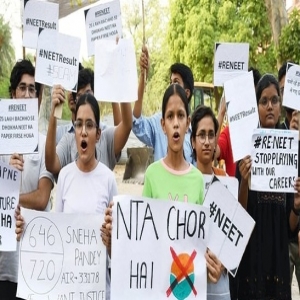
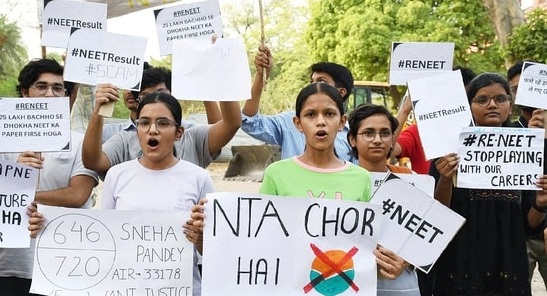
I mention these two incidents to show that few are as scrupulous as we expect them to be. The media has been thick with reports that this year's NEET was compromised. The government, especially the concerned agency, denied it. Then came reports that dozens of students scored enough marks to claim that they were first-rank holders.
In one case, a girl from Gujarat who scored unimaginably low marks in the board examination scored 100% marks in NEET. Anyone who knows anything about NEET says that a student who failed at Plus 2 can never clear the competitive test. What's more, over a thousand students were given grace marks, so much so that some scored more marks than the total.
There are reports that the NEET question paper was available to those willing to pay lakhs of rupees a day in advance. All the while, the agency conducting NEET was denying any hanky-panky in the exam. The arrest of some students and their relatives in Bihar debunks the government's claim that everything was hunky-dory.
The Prime Minister, who speaks on every sundry issue, has not spoken about the NEET scam. Had the media not covered it, the scam would not have even been reported. The girl who scored full marks in NEET but failed at the Plus 2 examination would have managed to get admission to an MBBS course, and so would the hundreds who benefited from the grace marks and those who paid lakhs of rupees to get the question paper in advance.
Elsewhere in the world, the HRD minister would have resigned, and those who caused ill repute to the National Testing Agency would have been arrested and sent to jail. What's worse, the government has cancelled the UGC-NET on the grounds that the test was compromised.
NEET and UGC-NET are not poor-friendly. They are meant for the rich who can afford to send their wards to coaching institutes charging exorbitant fees. They are also meant for those who can buy question papers for up to Rs 35 lakh.
A study of the socio-economic condition of the students who cleared NEET in the past would clearly reveal how the whole system is tilted in favour of the rich. It will also reveal why students are no longer taking a keen interest in regular studies and why the education department allows tutorial institutions to collaborate with schools to coach those who can pay higher fees. Does it not amount to undermining school education?
All this happens because we have a leader who gives lectures on how to appear for examinations but is afraid to reveal his exact educational qualifications. It is foolish to expect the government to clean the Augean stables of NTA when everything is done with a purpose: to keep higher education an exclusive privilege of the elite.
A medical doctor must have certain social commitments, which cannot be tested in a NEET-like system. He should be willing to serve in rural areas and treat the poor and indigent. They may not need medicine, but they need compassion. How many of those who clear NEET have the capacity to be compassionate and considerate to their patients? They all want to serve in metropolitan areas where they can send their own children to elite schools that provide facilities for coaching institutions to flourish. The NEET scandal highlights the fundamental flaws in the education system, under which a B.Sc. nursing student has to pay Rs 6 to 12 lakh as fees for a four-year course.
The NEET scandal and the broader issues in India's education system underscore a significant problem: the current framework favours the wealthy and undermines the integrity and accessibility of education. Despite government denials, reports of compromised exams and systemic biases reveal a deep-rooted disparity. Historical examples and recent incidents alike highlight a shift away from merit-based admissions to a system skewed by financial and political influence.
The government's reluctance to address these flaws, coupled with a focus on maintaining exclusivity in higher education, exacerbates social inequalities. Without comprehensive reforms to restore fairness and accessibility, the education system will continue to fail its most vulnerable students, perpetuating a cycle of privilege and disadvantage. Now is the time to cleanse the system. No tinkering will do.
.jpg)
.png) Cedric Prakash
Cedric Prakash
 ICPA
ICPA
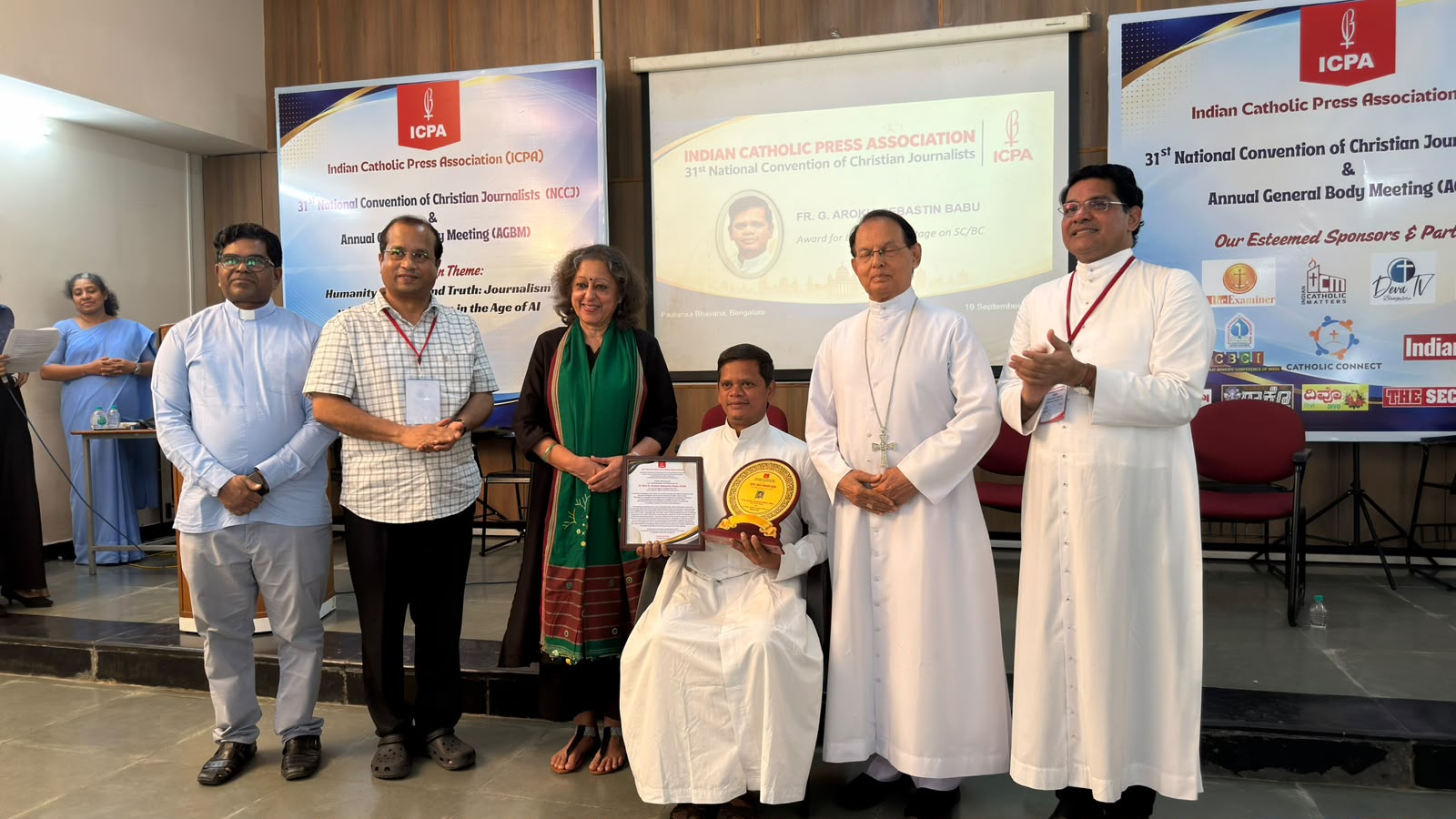 ICPA
ICPA
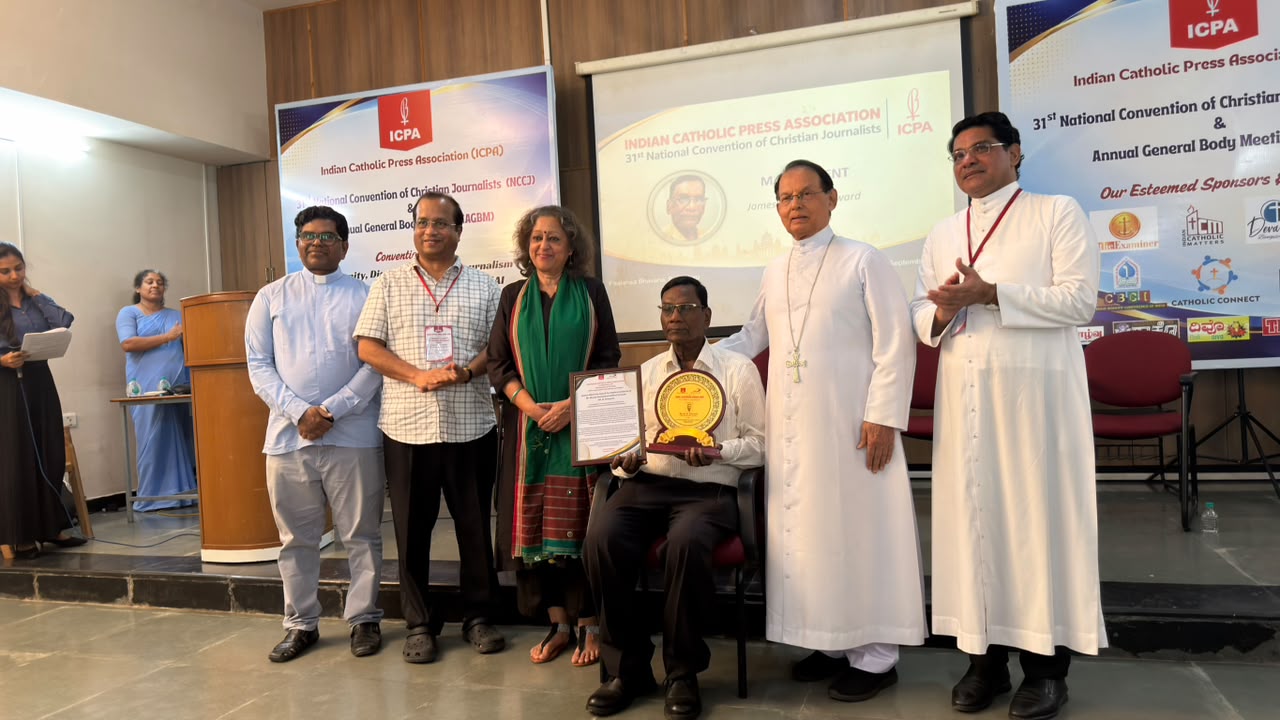 ICPA
ICPA
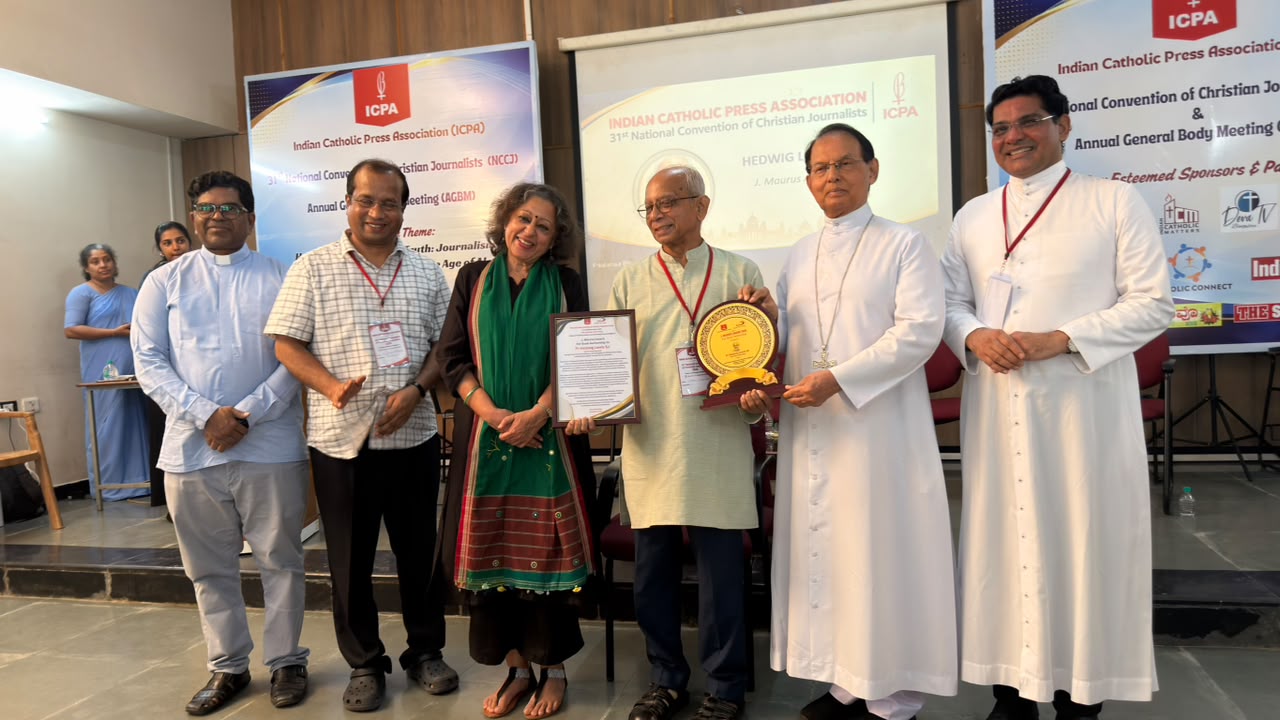 ICPA
ICPA
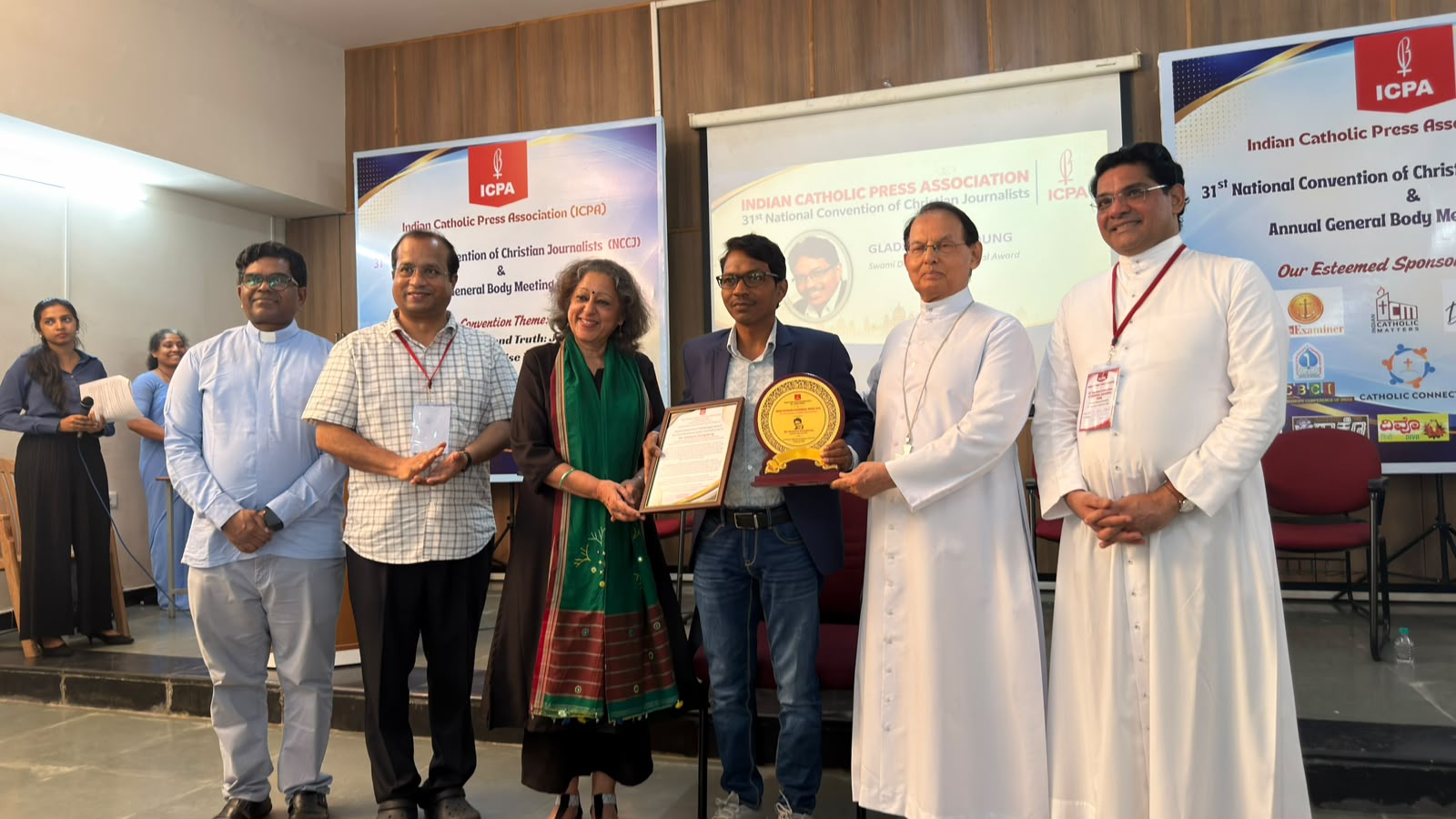 ICPA
ICPA
 ICPA
ICPA
.jpg) A. J. Philip
A. J. Philip
.jpg)
.png) Jacob Peenikaparambil
Jacob Peenikaparambil
.jpg)
.png) John Dayal
John Dayal