.png)

 Fr. Gaurav Nair
.png)
We live in an age when the line between what is real and what is manufactured is becoming increasingly difficult to discern. Artificial Intelligence can generate convincing images, imitate human voices, produce seemingly credible accounts of events, and influence how we perceive the world. Intertwined with social media, it has made manufacturing and disseminating information possible at unprecedented speeds. Truth, meanwhile, continues to be sacrificed at the altar of convenience, profit, and political agenda.
Truth cannot be disjunct from humanity. For a machine, truth and falsehood are merely data; they carry neither moral weight nor human consequences. The human person chooses whether to deceive or speak truth, to manipulate or enlighten. This brings us to conscience and dignity: the moral responsibility of the communicator and the dignity of the recipient.
AI can generate falsehoods, but human beings can use it to deceive others on an unprecedented scale. A fabricated image, a cloned voice, or a convincingly written lie can travel across social media before the truth has a chance to catch up. By the time a correction appears, the damage may already have been done. The technology may be artificial, but the consequences are painfully human.
Journalism finds itself at the centre of this crisis. Its responsibility is not simply to report what is circulating, but to establish what is true. Verification, independent judgement, and accountability cannot be outsourced to an algorithm. Nor can journalists hide behind a machine when fabricated information harms individuals, communities, or democratic institutions. The question is not whether AI can produce content, but whether those who use it are prepared to accept responsibility for what they publish.
This is where conscience becomes indispensable. A machine may identify patterns, process evidence, and generate a plausible account of events, but it cannot assume moral responsibility for deliberate deception. It does not feel the shame of misleading a reader or the pain of destroying another person's reputation. Those responsibilities remain with the human beings who design, deploy, and use it.
Human dignity, too, is at stake. When people become targets for manipulation, or instruments of political propaganda, they are reduced to a means to an end. Journalism must resist this reduction. It must protect the vulnerable, question the powerful, and refuse to compromise its integrity for clicks, speed, or ideological convenience.
AI can be a useful instrument in the hands of responsible journalists. It can assist with research, translation, transcription, and data analysis. But technological capability must never be confused with moral authority. What can be generated is not necessarily what should be published.
The challenge is not to reject technology, but to ensure that it remains accountable to humanity. No algorithm can replace conscience, and no technological advancement can absolve us of our responsibility to tell the truth. In an age when machines can manufacture convincing falsehoods, journalism must reaffirm its most fundamental duty: to defend human dignity and pursue truth without compromise.
.jpg)
.png) Cedric Prakash
Cedric Prakash

 ICPA
ICPA
 ICPA
ICPA
 ICPA
ICPA
 ICPA
ICPA
 ICPA
ICPA
 ICPA
ICPA
.jpg)
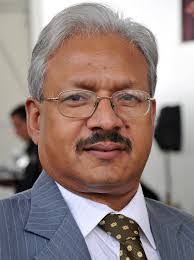 A. J. Philip
.jpg)
.png) Jacob Peenikaparambil
Jacob Peenikaparambil
.jpg)
.png) John Dayal
John Dayal