.jpg)


.png) John Dayal
John Dayal
.jpg)
A couple of centuries ago, Indian tradition decreed that any member of the social elite who crossed the seven seas would instantly lose their caste status. Mohandas Karamchand Gandhi could convince his mother to let him sail to England to study law on the condition that he would not eat meat, drink alcohol, and, so the rumour goes, look at a white woman.
The moustachioed and now trouser-wearing 75-year-old Mohan Bhagwat, a Maharashtrian Chitpawan Brahmin, became the first head of the Rashtriya Swayamsevak Sangh when on August 25 he took flight on a three-nation tour of the United States, Canada and Britain, to dispel "misconceptions" not about the stories of bloodshed and mayhem the groups had generated about itself in the 100 years of its existence, but about India and Hindus, several crores of whom who now inhabit the two western continents.
The Indian Embassies in the three countries would've forewarned him that he might face a more strident protest than his friend, Prime Minister Narendra Modi, faces on his tightly guarded, multiple visits abroad. Still, he faced a much stronger challenge to his public relations and marketing tour than he had imagined.
The 8-year-old Hindus for Human Rights, and the redoubtable journalist and activist Pieter Friedrich, among a motley dozen out anti-fascist formations ensured that The tour's central spectacle, a "Universal Oneness Celebration" before some 5,000 people at Madison Square Garden in New Took city on August 29, produced not what he wanted, but a through expose of the Sangh's violence against Muslims, Christians and others, specially during the premiership of Atal Bihari Vajpayee and in the 13 years of Narendra Modi's government.
The RSS had framed Bhagwat's visit around three stated aims: correcting what it called distorted narratives about India and Hindu society, propagating the idea of the Sanskrit shloka "Ud?racharit?n?? tu vasudhaiva ku?umbakam" (For the generous, the entire earth is their family), and opening dialogue on the interests of Hindus and people of Indian origin settled abroad.
Sunil Ambekar, the Sangh's chief spokesman, presented it as consistent with the organisation's stated ethos of open dialogue, and Bhagwat himself, before the New York crowd, offered his most conciliatory line of the tour, telling the gathering that a Hindu who wants Muslims driven out is not practising Hindutva at all responding to American Indian Muslim groups questions whether the Sangh and BJP's goal of a Hindu Rashtra would expel them or reduce them or disenfranchise them.
Bhagwat has for years defended the concept of "love jihad," backed anti-conversion laws that rights groups link to mob attacks on churches and Christian congregations, supported a citizenship law that offers an expedited path to non-Muslim migrants while excluding Muslims, and described India in terms that make Hindu identity close to coterminous with national identity.
Some 60 faith-based and secular organisations in New York issued a joint statement before the event saying the RSS did not represent their understanding of Hinduism or of India, and activists of the Indian American Muslim Council, Hindus for Human Rights and the Interfaith Centre of New York pressed Madison Square Garden's management to cancel the booking altogether.
Sravya Tadepalli of Hindus for Human Rights said the organisers had pitched the event as an inclusive appeal to Hindu heritage while the RSS, in practice, stood for its opposite.
The US Commission on International Religious Freedom, an official, independent federal body, issued a statement days before Bhagwat's arrival saying that religious freedom conditions in India continue to deteriorate, that violence and incitement are routinely used against minority communities, and that RSS-affiliated groups have been involved in that violence.
USCIRF chairman Asif Mahmood called on the US government to consider targeted sanctions against RSS figures and to review Bhagwat's own visa, and three Washington-based Sikh organisations wrote separately to Secretary of State Marco Rubio — who visited Mother Teresa's grave in Kolkata during his recent India trip — asking that entry be denied outright.
The US government did not cancel the visa, which had possibly been issued to avoid alienating a politically powerful diaspora; the event went ahead as scheduled, and by the weekend buses were ferrying supporters to the Garden even as protesters gathered outside, chanting that Hindutva was not welcome in the city.
A pro-Khalistan group tore up an Indian flag near the venue, handing Sangh-aligned commentary a ready-made grievance that had nothing to do with the substance of the religious-freedom charge.
New York's mayor, Zohran Mamdani, who had once said he would arrest Israel prime minister Benjamin Netanyahu for his genocide of Palestinians in Gaza, however threaded a careful position, evoking his Indian roots, and telling reporters he did not support the rally and found the RSS's vision troubling and exclusionary, but the city government likely had no legal authority to cancel a privately booked event.
Right-wing diaspora groups such as the Hindu American Foundation and the Coalition of Hindus of North America labelled Mamdani's comments outright "Hinduphobic," trying to convert a political objection into a slight against Indian civilisation.
In India, the RSS's own organs and sympathetic outlets described a "historic" outreach met by a digital wave of diaspora support. They cast USCIRF, Mamdani, the Indian American Muslim Council and Hindus for Human Rights collectively as "anti-India forces" running a coordinated "toolkit" against the visit.
Some newspapers did report the USCIRF statement, the Kashmir Centre's submission to the British Home Office, the protests, and the Indian Overseas Congress, which had separately questioned whether the "universal oneness" language was simply cover for a familiar project.
Al Jazeera and Religion News Service coverage that dwelt on Bhagwat's role as RSS general secretary during the 2002 Gujarat violence, for which Human Rights Watch named the organisation among those most directly responsible.
Britain saw a smaller but no less pointed reply, with poetically the more distinctive action coming from the Kashmir Centre in London, which submitted a dossier to the Home Secretary asking that Bhagwat's admission be assessed under immigration rules and referred his planned London programme to the Metropolitan Police for review of possible public-order and religious-hatred concerns.
A decade ago, the British Charity Commission found that the Hindu Swayamsevak Sangh, the RSS's British affiliate, had mismanaged an event at which a speaker made anti-Islamic remarks, though it stopped short of finding the sentiment systemic.
Narendra Modi himself was denied a US visa in 2005 after the Coalition Against Genocide and others generated a powerful movement over the 2002 Gujarat violence. This ban held for nine years until his election as prime minister forced Washington's hand.
Bhagwat, who held the RSS's second-highest post as general secretary in 2002, faced no such bar, though Safa Ahmed of the Indian American Muslim Council argued that the very existence of Indian Muslims has been effectively criminalised at home, through citizenship law, through mob violence over food and dress, and that an evening of "oneness" rhetoric in Manhattan could not paper over that record.
Back in India, Opposition parties treated Bhagwat's western tour with more caution than triumphalism, wary of appearing to side with American commentary on an Indian organisation, however sympathetic they might be to the underlying critique privately.
The Congress's overseas wing questioned the sincerity of the "civilisational dialogue" framing without going so far as to demand the visit be curtailed, a hedge consistent with the party's broader difficulty in criticising Hindutva politics without being cast as anti-Hindu itself, cruel evidence that the RSS has warped domestic debate over the past decade to an extent that even arch critics now have to phrase their opposition in politer terms.
Commentators will be disappointed there was no ban on functions if not on the visit itself, but the coalition that assembled against the tour, spanning USCIRF, Sikh federations, Christian and Muslim advocacy groups, progressive Hindu organisations and an elected mayor willing to state a position from office, was more coordinated and more cross-faith than anything that met Modi's own American receptions a decade ago.
The gains for the BJP and for Modi personally are real but oblique, as nothing here was branded as a BJP event, and it vastly rebuilds and extends the diaspora and donor network that Overseas Friends of BJP built around Modi's own Wembley and Madison Square Garden receptions before the 2014 and 2019 elections, without exposing the party to direct blame for the RSS's record.
For Muslim and Christian, especially Evangelical, advocacy groups in India, the lesson is not in the podium language, which was carefully calibrated for a Western audience and will not survive contact with Bhagwat's next Vijayadashami address at Nagpur, but in noting the networks, the funding trails and the political infrastructure the tour leaves behind, which will outlast the week's headlines.
.jpg)
.png) Cedric Prakash
Cedric Prakash
 ICPA
ICPA
 ICPA
ICPA
 ICPA
ICPA
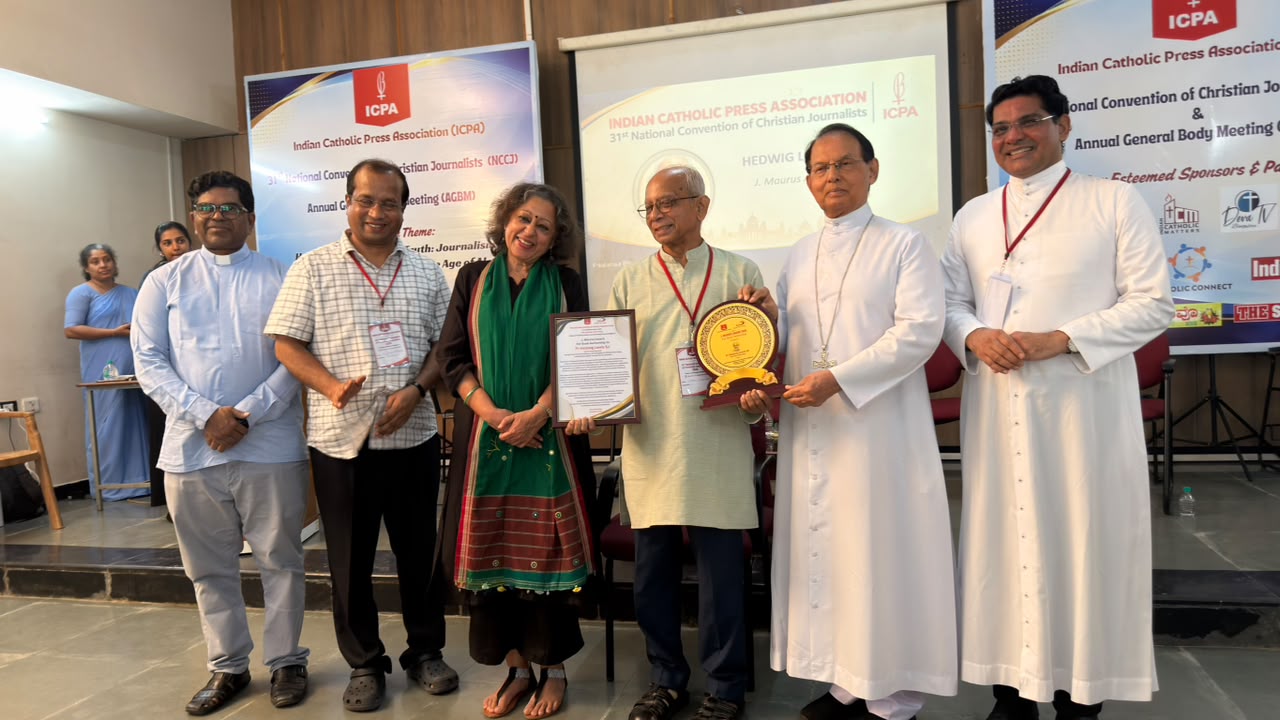 ICPA
ICPA
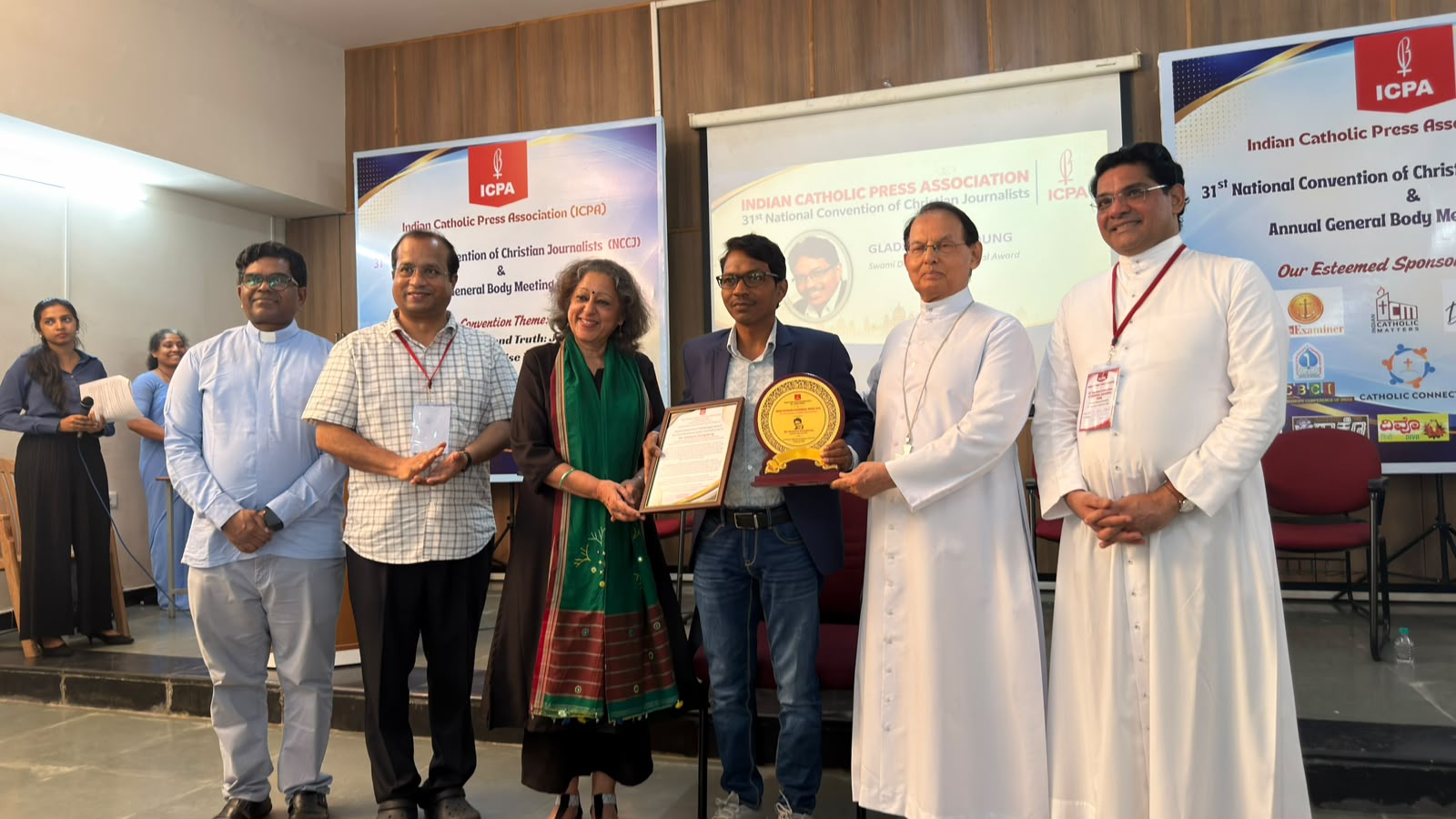 ICPA
ICPA
 ICPA
ICPA
.jpg)
 A. J. Philip
.jpg)
.png) Jacob Peenikaparambil
Jacob Peenikaparambil
.jpg) John Dayal
John Dayal