

 Fr. Gaurav Nair
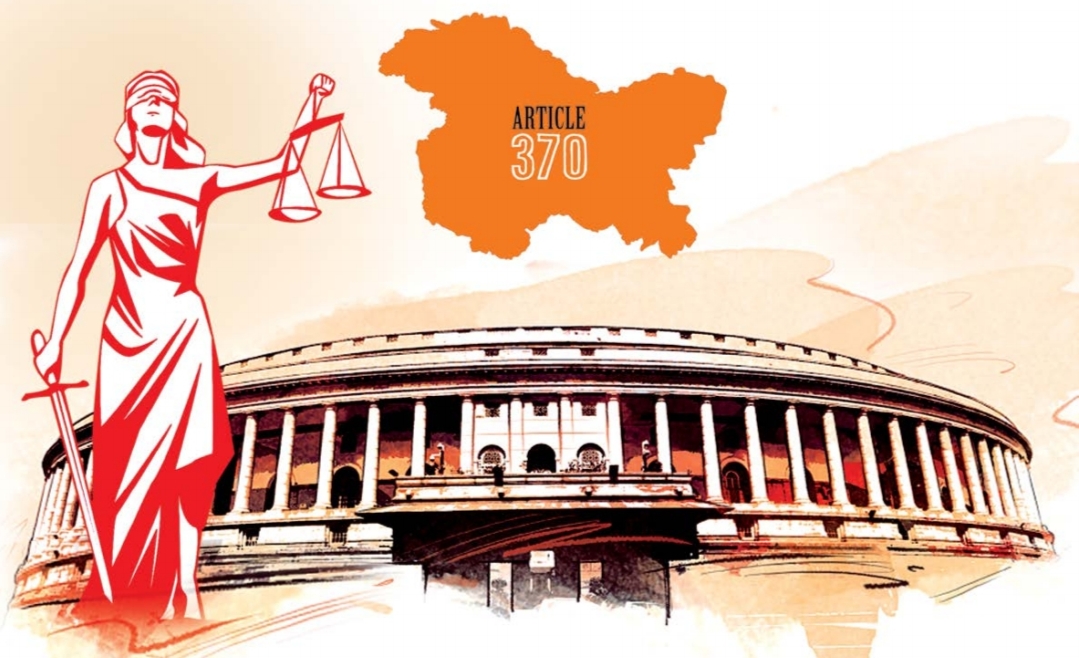
Mr Narendra Modi is set to release a vision document in January, which, by the way, was earlier set to be released in December. The document will outline how India will become a "developed" nation by 2047. However, the abrogation of Article 370 has unfortunately set us back by a few centuries.
The article's title reads: "Temporary provisions with respect to the State of Jammu and Kashmir...". The constituent assembly of Jammu and Kashmir was dissolved in 1957 having completed its task of writing the constitution of the state, which henceforth would decide the relation of the state with the rest of India. This did not mean that Article 370 could be amended or dissolved unilaterally.
Though the writers of the Constitution of India had augured a probability that it would be dissolved, they had stipulated the conditions and the protocols for this course of action. Clause (3) states that "... the President may, by public notification, declare that this article shall cease to be operative ... Provided that the recommendation of the Constituent Assembly of the State referred to in clause (2) shall be necessary before the President issues such a notification."
It was to circumvent this that CO 272 was released, which amended the Article to provide powers to the Legislative Assembly. All hell broke loose at this point. The astute will realize what this means. This order is not only for application in Jammu and Kashmir, whose people have been suffering from the various ailments that assail them both from within and without the country. The consequences that follow will be incredibly detrimental and far-reaching.
Downgrading the status of Jammu and Kashmir upon reorganization is the proverbial cherry, if you will, on top of the cake. For the first time, a state has been lowered to a Union Territory, with only an open-ended promise that the statehood would be restored ... eventually. As with all eventualities in this land, it remains to be seen if it will ever happen.
What is morbidly hilarious is that the Court did at least try to defend the abrogation of Article 370 but had nary a proper word to say on the utter disdain of Article 3. No respectable person would have accepted their excuses, which toe the line as remotely sane, anyway.
What, one must ask, is the use of a custodian that cannot ensure the integrity of what it is entrusted with? The parallels are utterly vulgar, to put it mildly. Who can the citizens approach for justice when they are tormented and their rights and dignity trampled upon? A spate of issues, Manipur being the most recent one, raises the question of whether anything was being remedied.
Nevertheless, a precedent has been set for many more such cases of "constitutional amendments" that target specific sections of society and "judicial blindness", allowing draconian laws to be brought into motion.
Exemplaries of such actions abound across history and even today, postulating the conjecture that there also will be some tomorrow. The lessons from our neighbours of what happens when we allow such happenings have gone unheeded or uncomprehended.
Fear, people of India, for the Constitution, the document that defined the country, has been discarded! Totalitarianism rules!
.jpg)
.png) Cedric Prakash
Cedric Prakash
 ICPA
ICPA
 ICPA
ICPA
 ICPA
ICPA
 ICPA
ICPA
 ICPA
ICPA
 ICPA
ICPA
.jpg)
 A. J. Philip
.jpg)
.png) Jacob Peenikaparambil
Jacob Peenikaparambil
.jpg)
.png) John Dayal
John Dayal