

.png) Joseph Maliakan
Joseph Maliakan
Long after the results of the ongoing election to the 18th Lok Sabha is declared, it will be remembered for the hate speeches, especially against the marginalised Muslim community in the country, delivered during the six-phase campaigning in different parts of the country.
Unfortunately for the country, which has been described by Prime Minister Modi as the 'mother of democracy,' the hate speeches were led by the Prime Minister himself. Delivering a campaign speech at Banswara in Rajasthan in April, Prime Minister Narendra Modi warned the public that the Congress, if voted to power, would seize their assets and distribute them among the "infiltrators" and those who "produce more children," clearly meaning the Muslims.
"My mothers and sisters, they will not even spare your mangal sutra. They can go to any extent. Should your hard-earned money be given to the infiltrators?" he asked. The Prime Minister stressed that Congress wanted to snatch people's hard-earned money through inheritance tax, 'Zindagi ke saath and zindagi ke bad' (during your lifetime and afterwards).
G Niranjan, Senior Vice-President of the Telangana Pradesh Congress Committee, in a complaint to the Election Commission of India, said that Prime Minister Modi, at an election meeting at Alladurg, in Medak district, misled people with lies. "The Prime Minister started a false campaign that the Congress hid the first copy of the Constitution of India in locker," the complaint said. The Prime Minister also falsely claimed that the Congress took away reservations meant for Backward Castes and gave them to Muslims, the complaint added.
"The PM said the Congress does not want to include Lingayats and 24 castes of Maratha community in OBCs, but Muslims are recognised as BCs overnight," the complaint added. The complaint pointed out that if the Election Commission did not end this poisonous campaign, there is a danger of chaos in the country.
At Kalaburagi in Karnataka, Modi accused the Congress of showing disrespect to Ram because it did not participate in the pran-pratishta at Ayodhya on 22 January. He also charged the Congress government in Karnataka for giving reservations to Muslims under the Other Backward Castes (OBC) list. When veteran politician Sharad Pawar, a leader with a massive base and a man who has fought many electoral battles, accused Modi of speaking without fact, Modi derided him as a 'bhatakti atma' (a wandering soul).
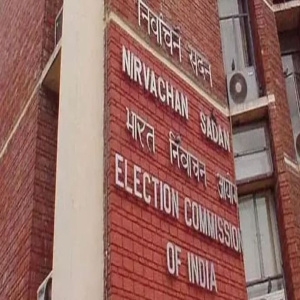
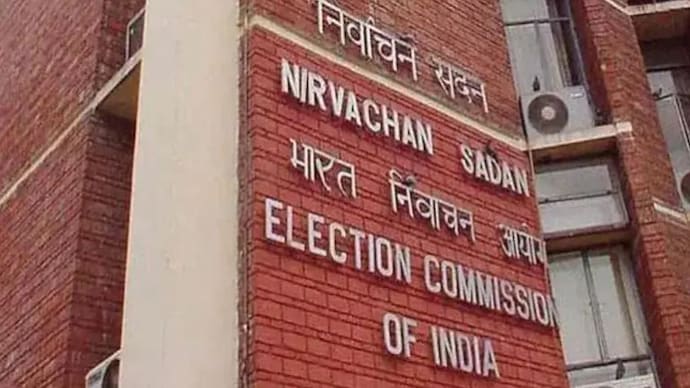
The Election Commission, following numerous complaints against Prime Minister Modi's hate speeches, sent a notice to the ruling Bharatiya Janata Party, not to Modi personally. The Supreme Court on 14 May dismissed a writ petition asking EC action against Prime Minister Modi.
Not to be left behind in the matter of whipping up Islamaphobia, Home Minister Amit Shah said in election speeches that the Congress will bring in Muslim Personal Law, Sharia, if elected to power. Defence Minister Rajnath Singh claimed that Rahul Gandhi wanted to carry out a caste survey in the armed forces and to introduce a minority quota for Muslims in the armed forces.
What is intriguing about the entire episode is the Election Commission of India's 'inaction' against the violations of the Model Code of Conduct (MCC). In this context, the Civil Society organisations in Karnataka demanded that Prime Minister Modi be barred by the EC from campaigning for 96 hours for his hate speeches with the slogan 'grow a spine or resign' directed at the Election Commission.
The ECI has been acting only against MCC violations by opposition parties and letting the ruling Bharatiya Janata Party (BJP) off the hook. Randeep Surjewala of the Congress and K Chandrashekhar Rao of the BRS were banned from campaigning for 48 hours over MCC violations. At the same time, more serious violations by BJP leaders were ignored.
On 21 May, 120 Civil Society organisations came together to raise concerns about potential vote manipulation on counting day. Political economist Parkala Prabhakar said the ECI's repeated failures necessitated such a gathering.
MG Devasahayam, a retired bureaucrat, was quoted in the Deccan Herald this way: "Elections in India never had the current cloud of doubts and suspicions which have raised this time." Comparing the Lok Sabha elections to the one held after the emergency in 1977, Devasahayam said, "The question before the people was almost the same: democracy or dictatorship? In 2024, the atmosphere and the mood of the people is almost the same. The stumbling block is that by and large elections are not free and fair." "As civil society, we are telling the returning officer that we are watching you. We don't doubt your integrity. All we want is that the will of the people prevails," Devasahayam added. May we, the people, remain vigilant.
.jpg)
.png) Cedric Prakash
Cedric Prakash
.jpg) Elsa Lycias Joel
Elsa Lycias Joel
.jpg)
 A. J. Philip
.png) Jacob Peenikaparambil
Jacob Peenikaparambil
.jpg)
.png) John Dayal
John Dayal
.jpg)
.jpg) Joseph Maliakan
Joseph Maliakan
.png)
.png) Robert Clements
Robert Clements
.jpg) Cedric Prakash
Cedric Prakash
 ICPA
ICPA