

.png) Jacob Peenikaparambil
Jacob Peenikaparambil
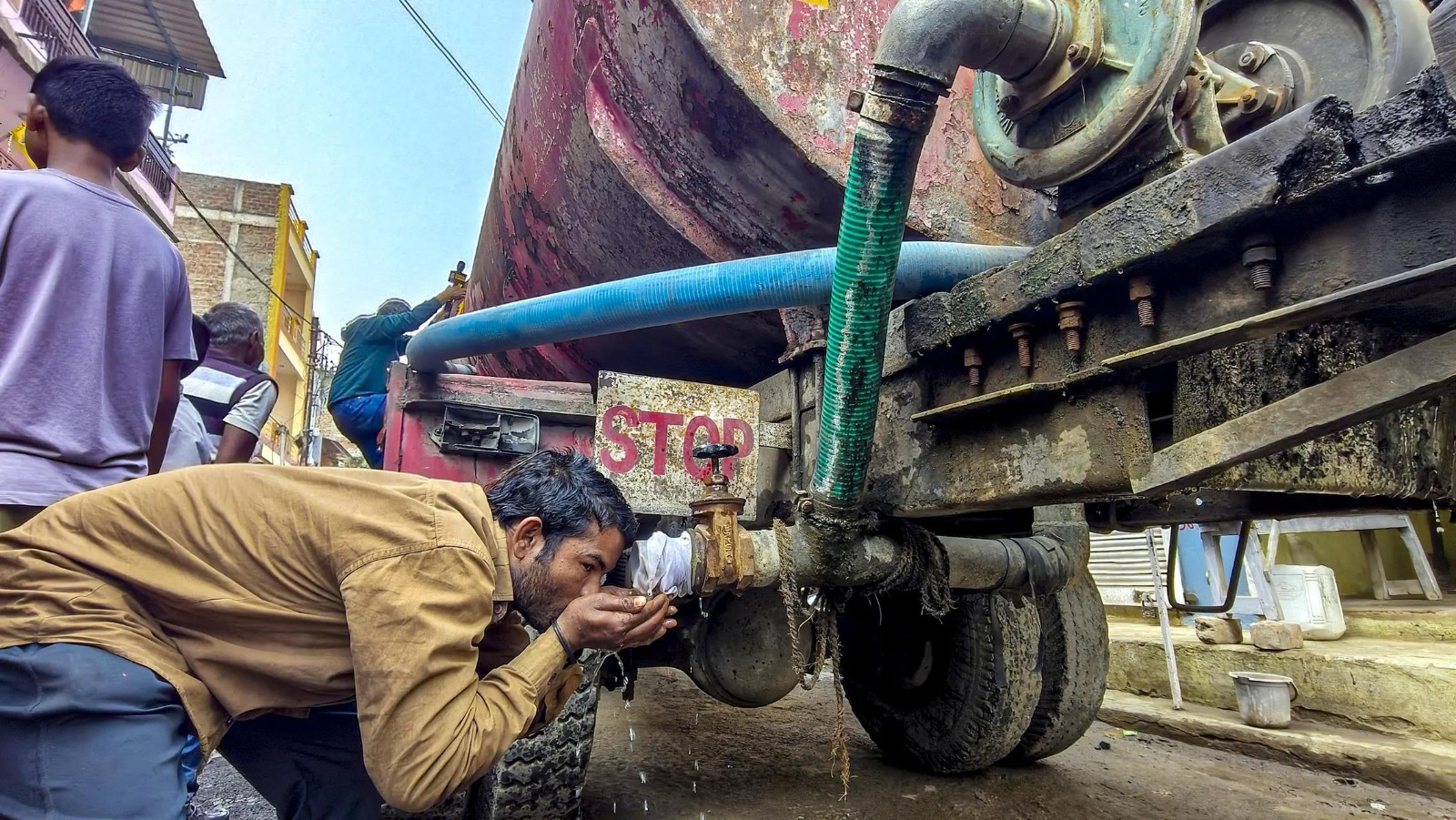
Indore, celebrated as India's cleanest city, was in the news for over two weeks following a major drinking water contamination incident in the Bhagirathpura area. Sewage water reportedly mixed with the municipal water supply, resulting in widespread illness and multiple deaths.
According to a news report of NDTV on January 6, the death toll was 16, as claimed by the locals. A survey conducted by the government health department has found that more than 1,400 residents have fallen ill so far, and several remain hospitalised in serious condition.
However, official death figures varied widely. While some reports put the death toll between 4 and 15, the Madhya Pradesh government informed the High Court that only four deaths were confirmed as per post-mortem reports. NDTV reported on January 6 that 17 people had died. Among the deceased was a five-month-old infant who had been bottle-fed using tap water mixed with milk.
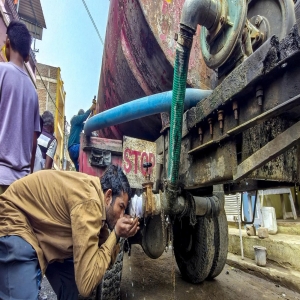
Testing of water from approximately 500 borewells in the area has revealed that the groundwater is also contaminated. Residents are therefore advised not to use borewell water for drinking purposes. At present, water is being supplied by the municipal corporation through tankers.
Evidence from multiple sources makes it clear that this was not an accident, but a grave governance failure—if not criminal negligence—on the part of the authorities. Residents had been complaining for months about foul-smelling tap water, but their concerns were ignored, despite Indore's much-publicised achievements in waste segregation and cleanliness rankings. Laboratory tests later confirmed the presence of abnormal bacteria typically found in sewer water containing human waste.
The Times of India reported on Sunday, January 4, that locals blamed a police outpost toilet constructed without a proper septic tank. According to the report, the waste line drained into a pit directly above a drinking water pipeline, allowing sewage to seep into the water supply. However, Indore municipal corporation officials said on January 5 that they had still not definitively identified the source of contamination in the water.
Kamal Waghela, BJP corporator for Ward 11, which includes Bhagirathpura, claims to have repeatedly demanded the replacement of old, leaking water pipelines since 2023 and throughout 2024. Despite these repeated warnings, an official file for pipeline replacement was opened only on November 12, 2024. Even after this, administrative delays stalled the process for several more months. This inaction ultimately led to the severe contamination crisis that unfolded in late December 2025.
NDTV reported on January 3 that as early as 2004, the Madhya Pradesh government had taken a USD 200 million loan (?906.4 crore at the time) from the Asian Development Bank to overhaul water supply systems and improve water quality in Indore, Bhopal, Jabalpur, and Gwalior. The promise was universal access to safe and clean drinking water.
Fifteen years later, in 2019, a Comptroller and Auditor General (CAG) report exposed the failure of this initiative. The report flagged that contaminated water was being supplied in Indore and Bhopal, that infrastructure was inadequate, that leakages were rampant, that monitoring mechanisms were weak, and that corruption had hollowed out the system.
It is striking that neither the BJP nor its top national leadership expressed condolences for the deaths and suffering caused by this man-made tragedy. One is compelled to ask how the Prime Minister, Home Minister, and other BJP leaders would have reacted had such an incident occurred in West Bengal. In that scenario, there would likely have been swift visits, sharp criticism, and sustained political attacks on the state government. The BJP's IT cell, however, largely remained silent on Indore, focusing instead on highlighting administrative responses.
An exception was senior BJP leader Uma Bharti, who strongly condemned the incident, calling it a "grave sin (maha-paap)" that had "shamed and disgraced" the BJP government in Madhya Pradesh and the Indore administration. She demanded public atonement, apologies to victims' families, and the harshest punishment for those responsible, irrespective of rank. Rejecting the government's focus on compensation, she stated, "The price of a human life is not ?2 lakh. Families will live with grief forever."
Congress leader Rahul Gandhi also criticised the BJP-led government on Friday, January 2. Posting on X, he wrote: "In Indore, there was no water—only poison was distributed, while the administration slept like Kumbhakarna. Mourning has spread from home to home; the poor are helpless, and to top it all, there are arrogant statements from BJP leaders. Those whose hearts had grown cold needed solace, but the government served hubris instead."
Rahul Gandhi further described Madhya Pradesh as an epicentre of misgovernance, citing deaths allegedly linked to contaminated cough syrup, children dying due to rats in government hospitals, and now deaths caused by sewage-mixed drinking water. He alleged that every time the poor die, Prime Minister Narendra Modi "remains silent." The affected population of Bhagirathpura consists of poor and lower-middle-income families. The underbelly of the cleanest city was seen in Bhagirathpura.
Instead of acknowledging a serious governance failure, the local BJP appeared defensive. When a team appointed by the Congress visited Bhagirathpura on January 3 to meet affected residents, BJP workers opposed their entry, branding them "outsiders." A scuffle followed, and around 50 Congress workers were detained by the police. In a democracy, the Opposition has both the right and the duty to investigate tragedies of this magnitude. The BJP's actions in Bhagirathpura reflected arrogance and contempt for democratic norms.
This tragedy raises a fundamental question: Does the "cleanest city" label merely signify clean roads and waste management, or does it also include the provision of safe drinking water? Indore's experience exposes how, behind the façade of cleanliness rankings, a basic civic responsibility was neglected.
Indore operates under a "triple-engine" BJP government. The BJP has controlled the Indore Municipal Corporation for 25 consecutive years, governed Madhya Pradesh since 2003 with a brief 15-month interruption, and led the Union government for the past 11 years. Under these circumstances, the ruling party cannot credibly blame Congress for systemic failures.
The Prime Minister and the BJP continue to promote the vision of 'Viksit Bharat 2047,' often using it to divert attention from pressing present-day issues. The term is attached to multiple schemes and even legislation, while India's rise to become the fourth-largest economy by GDP is widely advertised. Yet basic needs—healthcare, education, infrastructure, clean air, and safe drinking water—remain inadequately addressed.
Proper development requires more than headline GDP numbers. 'Viksit Bharat' demands holistic progress: strong human capital through health and education, robust infrastructure, governance reforms, inclusive policies, social justice, sustained high growth, structural economic transformation, and greater workforce participation by women. Economic growth is essential, but quality of life, equity, and strong institutions are equally critical.
In this context, Pratap Bhanu Mehta's words in the Indian Express ("Let 2026 be about sober realism") are particularly relevant: "'Viksit Bharat,' like 'Swachh Bharat,' risks becoming aspiration without strategy. Above all, there is a refusal to confront everyday evidence of failure: the foulest air, polluted rivers, degraded cities, and precarious work cannot be reconciled with claims of Incredible India or an economic renaissance."
According to Anand Teltumbde (The Vishwaguru Complex: Supremacist Rhetoric and National Decline, The Wire, January 1, 2026), by constantly invoking ancient achievements and future promise, attention is diverted from present failure. The conversation shifts from "why are children starving today?" to "remember our glorious past and imagine our inevitable future greatness." The Indore drinking water tragedy has exposed the hollowness of this dubious mechanism.
The Indore tragedy also highlights the damage caused by prolonged political dominance without effective Opposition. Madhya Pradesh has lacked a robust opposition for over two decades, and Indore's municipal governance has been under uninterrupted BJP control for 25 years. Such extended tenures breed complacency, arrogance, corruption, and lack of accountability. At the same time, the Congress has failed to strengthen itself as an effective opposition—another failure for which ordinary citizens pay the price.
The Madhya Pradesh government has taken punitive action against several officials: Municipal Commissioner Dilip Kumar Yadav and In-charge Superintending Engineer Pradeep Nigam were removed. At the same time, Rohit Sisonia (Additional Commissioner) and Sanjeev Shrivastava (PHE) were suspended. However, accountability stopped at the bureaucratic level. The larger question remains: where is political accountability?
In sum, the Indore drinking water tragedy exposes not only a catastrophic governance failure but also the hollowness of grand slogans such as 'Viksit Bharat' and 'Vishwa Guru' in the absence of accountability, transparency, and concern for basic human needs.
.jpg)
 A. J. Philip
.png) Cedric Prakash
Cedric Prakash
.jpg)
 P. A. Chacko
.jpg)
.jpg)
.jpg) Thomas Menamparampil
Thomas Menamparampil
.png)
.png)
.png) Robert Clements
Robert Clements
.jpg)
.png)
.png) Chhotebhai
Chhotebhai