

.jpg)
Pandit Jawaharlal Nehru, delivering an address to a special convocation of the University of Allahabad, December 13, 1947, said: "A university stands for humanism, the tolerance, for reason, for progress, for the adventure of ideas and for the search for truth. It stands for the onward march of the human race towards even higher objectives. If the universities discharge their duty adequately, then it is well with the nation and the people. But if the temple of learning itself becomes a home of narrow bigotry and petty objectives, how then will the nation prosper or a people grow in stature?" This vision of a university is grossly missing today in our higher education institutions, run by people subservient to the establishment.
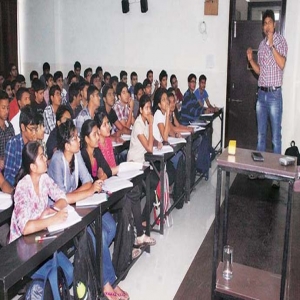
I have been deeply concerned about the predicament of education, particularly higher education, since the introduction of the National Education Policy (NEP) in 2020. The entire education system is turned on its head. I wrote some 25 articles, including letters to the former UGC Chairman Jagadesh Kumar, the JNU Vice Chancellor Santi Shree Pandit, and an open letter to the Leader of the Opposition in the Lok Sabha, Rahul Gandhi, drawing their attention to the challenges facing higher education.
According to the UGC's website, there were 57 central universities, 516 state universities, 547 private universities, and 150 deemed universities in 2023, for a total of 1,270 universities. The Times of India Special Report, January 13, 2026, says the number of universities has almost doubled in the last decade, increasing from 760 in 2014-15 to 1,338 in June 2025; and the total number of colleges increased from 38,498 to 52,081 during the same period. This education explosion has seriously compromised the quality and standard of higher education, making it more complex and incomprehensible, out of tune with the ground reality.
Some of the major challenges facing higher education are: (a) Withdrawal of state funding and decline of public Institutions; (b) Increasing privatisation and commercialisation; (c) Centralisation and communalisation of curriculum; and (d) Loss of academic freedom and stunting intellectual growth.
Withdrawal of State Funding and Decline of Public Institutions
The NEP speaks of the five objectives: Access, Equity, Quality, Affordability and Accountability and of investing 6% of GDP in education as the public funding is 'extremely critical for achieving the high quality and equitable public education system.' However, the expenditure on higher education nosedived from 0.86% of GDP in 2010-11 to around 0.5% in 2019-20. The Centre's expenditure on higher education dropped from 0.33% of GDP to a mere 0.16%, and the allocation for higher education fell from 1.5% to 1% during the same period. In the fiscal year 1924-25, nearly ?7000 crore allocated to higher education in the budget remained unspent.
Due to the withdrawal of state funding, there is a significant backlog of vacant posts. Nearly 50% of regular teaching posts in educational institutions are unfilled. Teachers are appointed on a contract and clock-hour basis. The aided institutions do not receive NOCs to fill vacant posts. Consequently, the aided institutions are turning into unaided institutions. And with no security of service and teachers hired and fired, the teaching and learning are seriously impeded.
If more than 80 core poor people depend on free ration, and three-fourths of the people live on less than ?200 per day. One-third of people earn less than ?100 a day. How can their children get even a good basic education, let alone secondary and higher education, if they do not have access to aided institutions?
There is a huge educational divide – urban-rural, gender, and digital – and higher education has become a privilege of the rich. It is ironic that the people who benefited from the aided institutions of previous governments and are now occupying administrative positions in higher education institutions have become mute spectators and are presiding over the dismantling of those institutions.
It is the State-funded public institutions that produced the Presidents of India- Radhakrishnan, Zakir Hussain, Shankar Dayal Sharma, Abdul Kalam and Pranab Mukherjee- and the Nobel laureate Amartya Sen, all teachers. JNU produced a Nobel Laureate, Abhijit Banerjee. Today, it is nigh impossible to produce such eminent personalities.
Public universities are closed in multiple ways. What happened in the last ten years is unprecedented. It is the first time that a large number of first-generation children are entering the university. This should have been the time to strengthen public universities, allocate more funds to them, appoint more teachers, improve infrastructure, and address issues of inequality and discrimination. It is a historical opportunity. Higher education is the most important pipeline for transforming the inter-gender inequalities. Instead, public higher education is being dismantled, perpetuating social inequalities.
In higher education, the government has introduced the Higher Education Financing Agency (HEFA). The universities are forced to seek loans at market interest rates from the HEFA, which they are then obliged to repay from their own revenues. In the 364th Report on the Demand for Grants, 2025-26, the Parliamentary Standing Committee on Education found that between 78% and 100% of these loans are being repaid by the universities through students' fees.
Increasing Privatisation and Commercialisation
The massive privatisation of education has a devastating effect. The privatisation is the result of the government withdrawing funding from the HEIs. Consequently, education has become too costly due to exorbitant fees charged by private institutions, making education inaccessible and unaffordable to a vast majority of people; the objective of higher education to promote upward social mobility of the people at the bottom of the social pyramid, and transform them into better human beings and empowered and responsible citizens, is defeated.
The industries are unable to generate jobs for the army of unemployed youth. And yet, what we see is industry-oriented education. This is deceptive since the industries have failed to generate jobs; around 83% of the educated youth are unemployed. In 2024, even IIT Bombay had managed to place just 75% of its students through campus recruitment.
It gets worse when one considers the new IITs, NITs, universities, and innumerable other institutions that have mushroomed; only about 30% of students from these institutions are found employable. The massive expansion of private and deemed universities poses new problems, including poor infrastructure and the unavailability of qualified faculty. So much hype and hullabaloo about these institutions where students spend lakhs of rupees, take loans, get into a debt trap, and face a bleak future.
Education is totally commercialised. It is the failure of educational institutions that explains the mushrooming of coaching centres in every nook and corner. All India competitive examinations like NEET, JEE, CAT, CUET, etc., are cracked by rich kids depending on coaching classes, leaving the poor students from rural and semi-urban backgrounds behind in the race.
The parallel educational system heavily favours the monied class. It doesn't ensure a level playing field for the weak and deprived, so far as accessibility and affordability of quality education are concerned. And centralising admissions through centralised entrance tests has forced students into the arms of the coaching industry. What is alarming is that educational institutions are tying up with coaching centres and outsourcing teaching and learning. Like the government, educational institutions too are abdicating their social responsibility and deviating from the very objective of education.
Centralisation and Communalisation of Curriculum
In universities, we have seen large-scale hiring of teachers with a regime-friendly ideological background, no matter how comically poor their teaching and scholarship are. The leadership positions in key institutions – even in the Indian Institutes of Technology and the Indian Institutes of Management that Pandit Nehru so evocatively described as the temples of modern India – have been reserved for pliant ideologues.
The UGC Regulations 2025 remove the cap on contract teacher appointments. This is bound to usher in more intensive contractualisation and casualisation of regular teaching posts, leading to downgrading of service conditions for teachers and the dilution of the teaching-learning process in higher education institutions.
A very disturbing feature of the Regulations is the appointment of Vice Chancellors. All powers are now vested in the Chancellors — Governors of States. The state government has no role in the selection and appointment of Vice Chancellors of universities established by the Acts of the State Legislature. It is an attempt to capture the temples of learning.
The Vice Chancellor is appointed for a term of five years, but they are eligible for reappointment for another term. This will give the VC a stranglehold over the university system, given that VCs are now appointed based on their loyalty to the ruling dispensation, and the governor is the sole authority for selecting and appointing Vice Chancellors.
What is more disturbing is that non-academics from industry, without any teaching or academic administrative experience, are eligible for appointment as Vice Chancellors. This could be used to appoint ruling party loyalists from industry, commerce, and business interests, overriding academic interests.
In opposition-ruled states, the governor acts as 'the Viceroy of the central government.' And now there will be 'two Viceroys, vetted for ideological purity' – the chancellor and the vice chancellor – to administer universities.
Another disturbing trend is the communalisation of the curriculum. The NCERT textbooks – the backbone of the school curriculum – have been revised to sanitise Indian history. The assassination of Mahatma Gandhi and the section on Mughal India, inter alia, have been dropped from the school curriculum.
The Mughal history and other inconvenient chapters of history are deleted from the university curriculum. India has a glorious past, the pride of its history and civilisation. However, the UGC's curriculum presents a history of only northern India. Strangely, ancient history is presented as the history of Bharat. By bringing the terms like 'Aryan Age,' 'Hindu Society,' and 'Muslim Rulers,' the curriculum undoes the work of generations of historians, demonstrating the ideological bias. Further, it treats the 'Hindu Society' and the 'Muslim Society' as discrete entities in the medieval period, and suggests that these communities existed as separate nations.
If we compare the UGC's history curriculum with Pandit Nehru's classic The Discovery of India, we realise that many important periods of Indian history were chopped off, almost neglecting medieval history, the history of the Mughal Empire, and British India. The UGC's Learning Outcome-based Curriculum Framework (LOCF) is determined to project into the past majoritarian and divisive conceptions of contemporary Indian politics.
Indian history is also a history of betrayal by its own rulers when the foreigners invaded India. Jayachandra betrayed Prithviraj Chauhan by joining hands with Muhammad Ghori - a mass murderer of Hindus - who invaded India several times and was defeated, to defeat him finally at the battle of Tarai in 1192, paving the way for a long spell of Rule by Muslim conquerors in India; it was the treachery of Mir Jafar in 1757 that made Robert Clive to defeat the Sultan of Bengal Siraj-ud-Daulah at the battle of Plassey, reducing the mighty India to a British colony, leading to establishment of the British Raj in India for next two hundred years. It was the betrayal of local rulers in 1761 at the third battle of Panipat that led to the Marathas' defeat by the Afghan invader Ahmed Shah Abdali.
Our youth must study an unbiased and objective account of Indian history, from ancient times to the present, so that they learn positive lessons on how to save the country from repeating its past blunders and failures and help march towards higher goals of humanity. To ignore the unpleasant, ignominious, and inconvenient historical periods and to glorify invented and skewed history is to do a disservice not only to the present generation but also to posterity.
Loss of Academic Freedom and Stunting Intellectual Growth
Higher education institutions have lost academic autonomy and are incapable of innovating or discovering new frontiers of knowledge. Teachers do not enjoy academic freedom of thought and ex
In academic seminars and conferences, there is no free exchange of views and ideas and participants are told not to speak on issues that antagonise the political establishment. And conforming to the system and blindly accepting what authorities decide is a sign of serfdom and negation of human evolution. The university system is increasingly devalued in favour of administrative centralisation and political control.
We read how the dissenting opinions were crushed in varsities - public universities such as Central University Hyderabad, Jawaharlal Nehru University, Delhi University, Aligarh Muslim University, Jamia Milia Islamia, Jadavpur University, Visva Bharati, and private universities like Ashoka University, Symbiosis International University and the IITs. The intolerance for academic dissent and the fear of reprisal have made our higher education institutions incapable of fostering a healthy academic culture and intellectual stimulation.
It is unthinkable that while the right-wing students' outfit ABVP resorts to pre-censorship of speakers, wielding enormous power, and exercises' unprecedented veto power' in our colleges and universities, as Pratap Bhanu Mehta says, the academic community surrenders meekly its autonomy.
*This is a shortened version of the keynote address delivered at the plenary session of the 28th National Conference of the Association of Indian College Principals, Ekta Nagar, Gujarat, February 15, 2026.
.jpeg)
 A. J. Philip
.jpg)
.png) Jacob Peenikaparambil
Jacob Peenikaparambil
.jpg)
.png) John Dayal
John Dayal
.jpg)
 Pachu Menon
.jpg)

.png)
.png)
.png) Robert Clements
Robert Clements
.jpg)