

.png) Jacob Peenikaparambil
Jacob Peenikaparambil
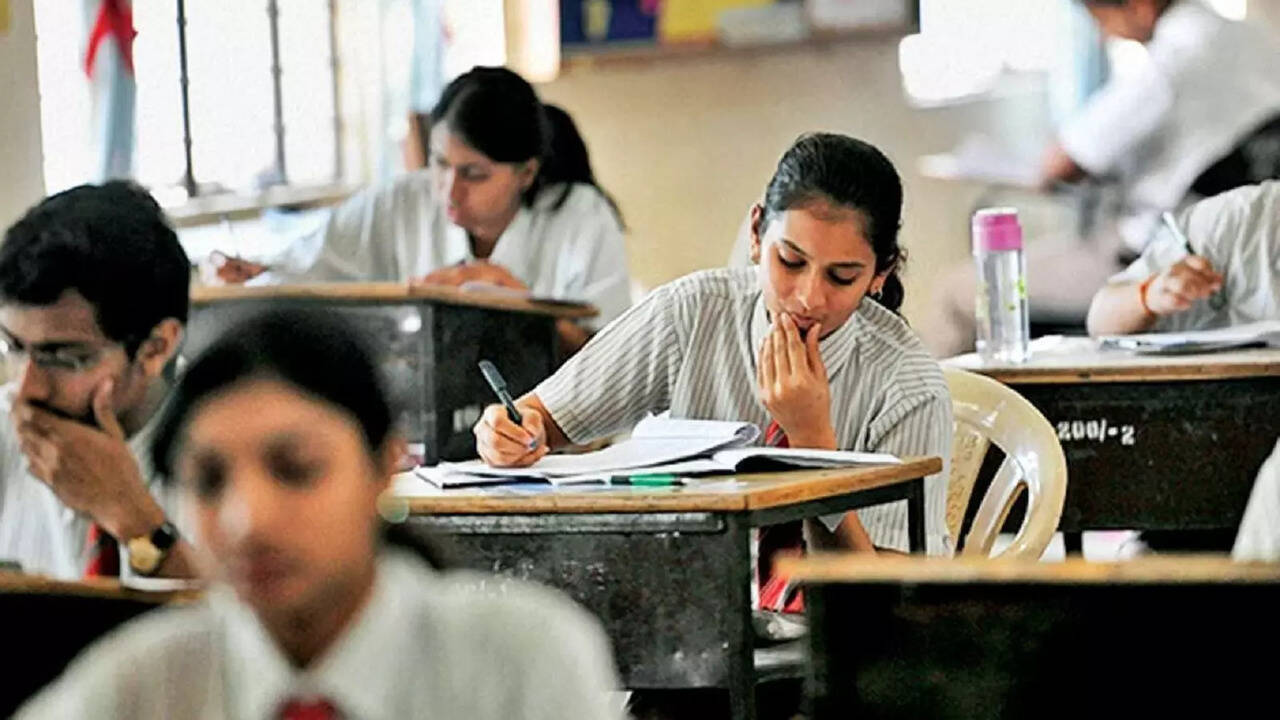
While conducting a leadership session for Class XII students, I asked them to write down three policies they would introduce if they became the Prime Minister of India. One girl stood up and read out her priorities:
"I will make it compulsory for all Ministers, MPs, MLAs, and government employees to send their children to government schools. Similarly, they must use government hospitals and dispensaries for treatment. My third priority will be creating jobs for educated young people."
When asked to explain her first two proposals, she responded thoughtfully. If people's representatives and government officials—especially senior officers—were required to use public schools and hospitals, the quality of these institutions would automatically improve. Those in power would then have a direct stake in strengthening the systems they oversee.
Her views reflected the broader concerns of the students attending the programme. Their top three priorities were clear: quality education for all, affordable and accessible health care for all, and meaningful employment opportunities.
The students were fully aware that in an era where artificial intelligence is transforming industries and displacing millions of jobs, employability depends heavily on skills. However, in present-day India, quality education that truly prepares students for the job market is often accessible only to those who can afford it. In many states, the quality of education in government schools and colleges remains poor to appalling.
Unfortunately, the priorities of political leaders—across party lines—do not seem to align with the concerns of the youth. The foremost priority appears to be winning elections and retaining power. To achieve this, political actors often rely on strategies of communal and caste polarisation, sometimes combining both. Since 2014, the distribution of "freebies," particularly direct cash transfers to selected beneficiaries, has become an increasingly prominent electoral strategy.
While welfare schemes are essential in a developing country, indiscriminate distribution of freebies without clear targeting can strain public finances. When a significant portion of state revenue is allocated to direct cash transfers, fewer resources remain for long-term investments in education, skill development, health care, and infrastructure. This can push states toward fiscal stress.
For example, the total debt of the Madhya Pradesh government crossed ?3.75 lakh crore by March 2024. The annual expenditure for the Ladli Behna Yojana—under which approximately 1.26 crore women receive ?1,500 per month—is projected to reach ?22,680 crore by 2026–27. Several states have resorted to borrowing to sustain such schemes.
Against this backdrop, on February 19, 2025, the Supreme Court of India criticised the growing practice of announcing freebies and direct cash transfers ahead of elections. A three-judge bench headed by Chief Justice Surya Kant, while hearing a petition filed by Tamil Nadu Power Distribution Corporation Ltd. challenging Rule 23 of the Electricity Amendment Rules, 2024, questioned the broader implications of such policies. The Court observed that governments must distinguish between those who genuinely cannot afford basic services and those who can, cautioning against policies that blur this distinction in the name of appeasement.
Education: Promises and Reality
Successive governments at the Centre have not given education and health care the priority they deserve from a human development perspective. The Kothari Commission (1964–66) recommended that India spend 6% of GDP on education. The National Education Policy (NEP) 2020 reiterates this commitment. Yet public expenditure on education has consistently fallen short of this target. While broader estimates (including both central and state spending) range between 4% and 4.6% of GDP, core budgetary allocations at the central level have hovered around 2.7% of GDP in recent years.
There is also a growing perception that the government is gradually retreating from the education sector, allowing greater space for private players. During a recent winter session of Parliament, the government acknowledged in the Rajya Sabha that India lost 18,727 government schools between 2020–21 and 2024–25, while private unaided schools increased significantly. According to data from the National Sample Survey Office (NSSO), 43.8% of primary students in urban areas are enrolled in private schools.
A striking regional disparity further complicates the picture. Data from the Performance Grading Index (PGI) 2.0 (2023–24) and reports from NITI Aayog suggest that southern states such as Kerala, Tamil Nadu, Karnataka, and Telangana consistently perform better in government school education than many northern states. This uneven quality deepens regional inequalities.
In most developed countries, the vast majority of children attend publicly funded schools that provide high-quality, free, and compulsory education. Even several developing countries—including Bolivia, Costa Rica, Brazil, Cuba, Vietnam, and Thailand—spend between 5% and 9% of GDP on education, with a strong emphasis on strengthening public education systems.
One of the root causes of alarming economic inequality in India is the lack of access to quality education for the poor. According to the World Inequality Report 2026, India is among the most unequal countries in the world: the top 10% capture 58% of national income and hold 65% of total wealth, while the bottom 50% receive only 15% of income. Expanding private dominance in education without strengthening public systems is likely to widen this gap further.
India's education system thus reflects a dual structure. Elite private institutions cater to the affluent, while the poor depend on under-resourced government schools or low-fee private schools of uneven quality. This structural divide reinforces social and economic inequalities.
Recent controversies also highlight deeper issues in higher education. Galgotias University, Greater Noida, faced criticism after presenting a Chinese-made robot dog as an indigenous innovation at the India AI Impact Summit in New Delhi. Following public backlash, the university was reportedly asked to vacate its stall. Such episodes expose systemic weaknesses and damage institutional credibility.
India does possess islands of excellence—such as the IITs and NITs—that compete globally. However, many universities struggle with outdated curricula, excessive theoretical focus, limited industry collaboration, and relatively low research output. Only a handful of Indian institutions appear in the top 200 of global rankings. No Indian university ranks among the top 100 globally in the QS World University Rankings 2026 edition.
Health Care: A Growing Burden
Like education, health care has not received adequate public investment. As a result, medical expenses have become a heavy burden not only for the poor but also for the middle class. The private sector operates roughly 63% of India's hospitals and about 60% of its hospital beds. Public health expenditure per capita remains among the lowest in the world, significantly below that of other BRICS nations.
High out-of-pocket health expenditures—often exceeding 40% of household income—remain a major cause of indebtedness and impoverishment. Millions of families fall into poverty each year due to medical expenses.
Employment: The Unfinished Agenda
The promise of creating two crore jobs annually remains largely unfulfilled. Reports over the past few years have highlighted high unemployment rates, particularly among youth and graduates. Much of the employment generated is informal, agricultural, or self-employed rather than stable, formal, and salaried work.
According to the India Employment Report 2024: Youth Employment, Education and Skills, the unemployment rate among graduates stands at 29%. The intensity of the crisis is reflected in stark examples: over 46,000 graduates and postgraduates reportedly applied for sanitation jobs in Haryana in 2024, and around 12,000 professionals applied for just 18 peon posts in Rajasthan. These examples illustrate the depth of frustration among educated youth.
A Call for Accountability
When political discourse is dominated by polarisation and short-term electoral gains, fundamental issues such as quality education, accessible health care, and sustainable employment receive inadequate attention. Yet these are precisely the issues that shape the nation's future.
The youth must therefore raise their voices and hold governments accountable. They should refuse to be reduced to instruments in the hands of power-hungry politicians. The aspirations of Gen-Z are clear: dignity through education, security through health care, and opportunity through meaningful work. These are not unreasonable demands; they are the foundations of a just and developed society.
.jpeg)
 A. J. Philip
.jpg) Jacob Peenikaparambil
Jacob Peenikaparambil
.jpg)
.png) John Dayal
John Dayal
.jpg)
 Pachu Menon
.jpg)

.png)
.png)
.png) Robert Clements
Robert Clements
.jpg)