

.jpg) IC Correspondent
IC Correspondent
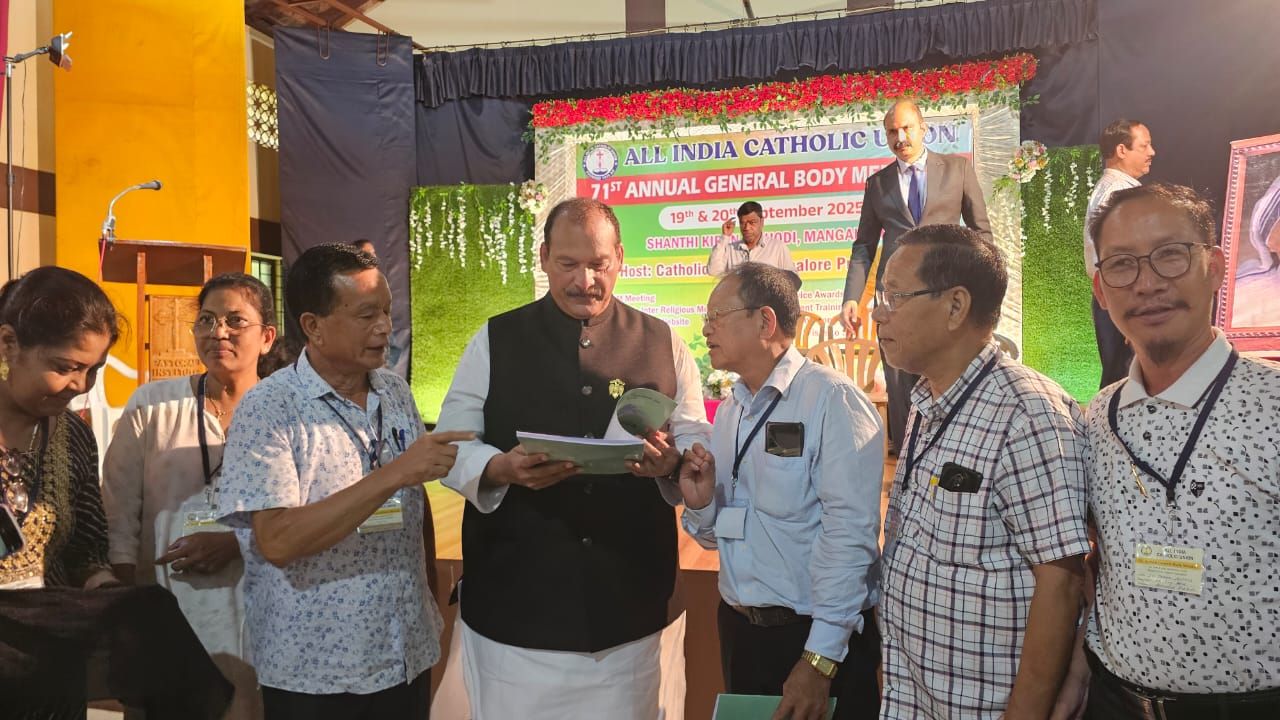
The All India Catholic Union (AICU), the oldest and largest laity group in South Asia, has voiced deep concern over the precarious situation of Christians across India's eight North-Eastern states.
Meeting recently in Itanagar, Arunachal Pradesh, the AICU leadership spotlighted a troubling rise in legislative restrictions, social exclusion, and violent incidents affecting religious minorities, particularly Christians.
As the North East's rich mosaic of faiths and cultures faces mounting pressures, the AICU appealed to the political and administrative machinery, calling on governments at all levels to reaffirm their commitment to secularism, protect minority rights, and promote dialogue to nurture lasting harmony.
The AICU said it was for state governments to ensure security for religious minority communities in their jurisdictions, deliver justice, and foster peace. "It is the duty of the state administrations to assure freedom of religion and belief to all citizens, as enshrined in the Constitution, and not allow vested interests to demonise minorities, specially Christians," AICU National President Elias Vaz said at a press conference in Itanagar at the conclusion of the union's Working Committee meeting being held only the second time in Itanagar.
The North-East hosts diverse ethnic and religious communities. Christians constitute a substantial population in several states and play key roles in education, healthcare, and social services.
The AICU leadership said it is fully aware of recent developments and consequent rising challenges, including legislative restrictions, demands for exclusion from tribal entitlements, and targeted incidents, which undermine religious freedom and communal stability.
Despite ethnic diversity, Arunachal Pradesh, for instance, had largely avoided religious conflicts until efforts to enforce the Arunachal Pradesh Freedom of Religion Act (APFRA) 1978 intensified. Enacted 48 years ago to prohibit conversions by force, inducement, or fraud, the Act includes provisions that could criminalise core Christian practices like baptism.
Successive administrations refrained from implementation, acknowledging its divisive impact. Without enforcement, Arunachal experienced coexistence among indigenous faiths like Donyi-Polo, Christianity, and others. Christians comprise 30.26% of the 13.80 lakh population per the 2011 census, with growth linked to voluntary adoption of the faith.
In recent years, outsiders loyal to the Sangh's exclusionist ideology had been working overtime to sow seeds of division in the state.
The AICU agrees with the ACF's feeling that the law targets Christians and risks misuse against converts.
In several regions, there are signs of escalated intra-tribal tensions, with disturbing reports of social boycotts, resource disputes, and exclusion in remote areas. This is an unfortunate reflection of the communal upsurge, which has brought it to 12th place in international listings.
In October 2025, AICU wrote to Prime Minister Narendra Modi, objecting to the revival as a threat to constitutional rights and urging repeal for harmony. AICU has reiterated its call on the Arunachal government to abandon enforcement, initiate dialogue, and engage the National Human Rights Commission to uphold secularism and avert unrest.
In its review of the region of North East India, AICU said an area of continuing and great concern is Manipur's ethnic violence, ignited in May 2023 over Scheduled Tribe status for Meiteis, which has so far resulted in over 258 deaths, displaced 60,000, destroyed more than 400 churches, and many rapes. The community that suffers the most is the Kuki-Zo, who are Christian. Some Meitei were also victims, as were those of mixed marriage families.
Entering its third year in 2025, hostilities in Manipur continue with killings, abductions, and arson. Armed gangs now exist among the majority Meiti, as also in the Kuki-Zo, their clashes exacerbating displacement.
Survivors endure severe trauma, including sexual violence and abductions. Archbishop Dominic Lumon highlighted disproportionate targeting of the church. UN experts have condemned biases and called for protections. The government's response has come under criticism for insufficient safeguards and divisive policies.
In October 2025, Prime Minister Narendra Modi visited the state, announcing development funds, but ground reports indicate ongoing displacement, assaults, and church attacks into late 2025. Over 11,000 homes and 360 church institutions were destroyed. The AICU urges the Union government to monitor the situation closely to ensure effective mediation, rebuilding, and aid to prevent regional spread.
Mizoram state has over 87% Christians, upholds internal peace, but faces border challenges. Mizoram has sheltered 43,788 Myanmar Chin refugees since the 2021 coup in that country. Chief Minister Lalduhoma has opposed border fencing, calling it a divisive measure that would separate kin and clans.
Cuts in Central assistance in 2025 have strained resources, suspending US-funded health projects and allied work. The AICU endorses refugee support and harmony.
Meghalaya's 75% Christian population is facing growing pressures, according to people. Some groups are pushing for delisting Christian tribals from the Scheduled Tribes, using the Hindutva argument that conversion voids entitlements.
There have been incidents, including church vandalism, that have led to tourism curbs. The AICU has expressed its sympathy in the recent tragedy in which many "rat-hole miners" have died, and has urged the state government to monitor safety measures and provide adequate compensation to the injured and the families of the dead.
In Nagaland, with a 90% Christian population, the people and government have condemned the nationwide attacks on fellow Christians throughout last year, peaking with over 150 incidents of violence, disruptions and desecrations in different parts of the country.
In January 2026, the Baptist church wrote to Prime Minister Modi, highlighting escalating persecution and urging intervention.
But the state has itself seen the Centre delay the visa for internationally well-known preacher Franklin Graham so long that he had to cancel his trip. underscore restrictions. Twenty right-wing groups baselessly allege forced conversions, breeding hostility. As elsewhere in the country, vital interfaith and community dialogues.
Assam is another state of concern with its recent and high-profile incidents of targeted hate and incitement to violence against religious minorities. Christians, too, are under threat, with certain right-wing groups threatening Christian tribals and demanding that they be delisted. The Kutumbha Suraksha Parishad's 2023 ultimatums targeted school symbols and clergy attire.
Similarly, the 2024 Healing Practices Act has been misused to curb prayer services. In December 2025, Hindutva goons vandalised a Christmas crib and decorations at a catholic school.
AICU's Tripura leaders report that religious minorities confront delisting drives, even as non-state actors harass schools in particular, sometimes leading to violence. These incidents disrupt harmony and erode religious freedom.
Sikkim's 10% Christians live peacefully but pursue Scheduled Caste status for lower castes like Kami, Damai, and Sharki, which have been excluded since 1978 despite persistent disadvantages. Over 40,000 persons have been reported affected. The All Sikkim Ishai Kami Damai Sharki Welfare Association advocates inclusion and seeks a 5% increase in reservation. The AICU supports these demands.
On the national level, the All India Catholic Union once again stresses that the government and political leaders of all parties must ensure there is no erosion in conditional guarantees to all citizens, and particularly to religious and ethnic minorities such as Tribals - Adivasis and the Dalits. The AICU has stood firmly with Dalit Christians since the Presidential Order of 1950, demanding restoration of their rights and their inclusion in the Schedule Caste list.
The demand by some extreme right-wing groups that the Tribals-Adivasis be delisted and shorn of their rights over their land, water, and forest resources is a political conspiracy. The challenge demands united action by religious, social and political organisations.
The AICU urges the Union government to increase budgetary allocations for religious minorities and to restore and expand the scope of academic scholarships from junior school to postdoctoral research. The government must urgently nominate members to the National Minority Commission and similar organisations that are lying dormant.
.jpeg)
 A. J. Philip
.jpg)
.png) Jacob Peenikaparambil
Jacob Peenikaparambil
.jpg)
.png) John Dayal
John Dayal
.jpg)
 Pachu Menon
.jpg)

.png)
.png)
.png) Robert Clements
Robert Clements
.jpg)