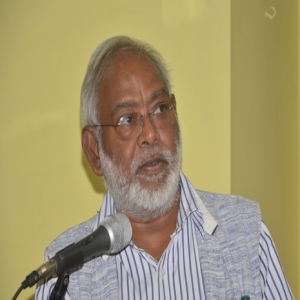

 John Dayal

John Dayal, a veteran journalist-turned-human rights activist, was among three people chosen on March 5 to fight for the cause of civil liberties and religious freedom. The annual Quaide Milleth Award, established in 2015, is given by the Chennai-based Quaide Milleth Educational and Social Trust involved in advancing underprivileged sections of society. Church of South India Bishop V Devasahayam of Thoothukudi-Nazareth was in the four-member jury that chose also Navid Hamid and Vipin Kumar Tripathi for this year's award. Dayal, based in New Delhi, has served as the treasurer of the Editors' Guild of India and a member of the National Integration Council. The 76-yearold Catholic was the secretary general of the All India Christian Council and president of the All India Catholic Association, the largest association of the Catholic laity in the country. Hamid also was a member of the National Integration Council, formed in 1961 as a group of senior politicians and public figures in India to help the federal government address communalism, casteism and regionalism and problems. He is a former president of the All India Majilise Mushawarat, an umbrella body of Indian Muslim organisations, and general secretary of the Movement for Empowerment of Muslim Indians. Tripathi, a leading scientist and former professor of New Delhi's Indian Institute of Technology who will turn 77 on March 11, was instrumental in maintaining peace and harmony. In the aftermath of the Bhagalpur riots in 1990, he launched his Sadbhav Mission to develop a grassroots resistance against communalism and mobilise people on basic issues like education. It is now engaged in the rehabilitation of the victims of sectarian violence. The term "Quaid Milleth" means leader of the (Muslim) community, and the award honours Mohamed Islmail Sahib (1896-1972), a politician and social worker from the southern Indian state of Tamil Nadu. The first recipients of the award were social activist Teesta Setalvad and Communist leader R Nallakannan in 2015. The previous award was given in 2013 to senior journalist N Ram and Abusaleh Shariff, chief scholar and mentor at the US-India Policy Institute, Washington. Dayal was born on October 2, 1948, in New Delhi. He studied physics at Delhi's St. Stephen's College before becoming a journalist. He served as a war correspondent or foreign correspondent in the Middle East, North Africa, South Asia and Europe. He became editor and CEO of the Delhi Mid Day, an afternoon newspaper. Dayal continues to provide commentary and analysis in print and on national TV and radio. He has headed the governing boards of several colleges of Delhi University and has taught as a visiting teacher at several universities in northern India. As an activist, he has worked on such issues as displacement of tribal people, opposition to nuclear weapons, forced disappearances and impunity. During more than forty years, he has investigated a great many cases of human rights abuse aimed at Christians. In 2007, Dayal was in the five-member Fact Finding Team that went to the Phulbani area of Kandhamal district in Orissa to investigate violence against Christians.
 Cedric Prakash
.JPG)
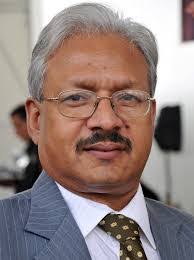 A. J. Philip
 Jacob Peenikaparambil
.jpg) John Dayal
.jpg)
 Pachu Menon
.png)
.png)
 Robert Clements