

 A. J. Philip
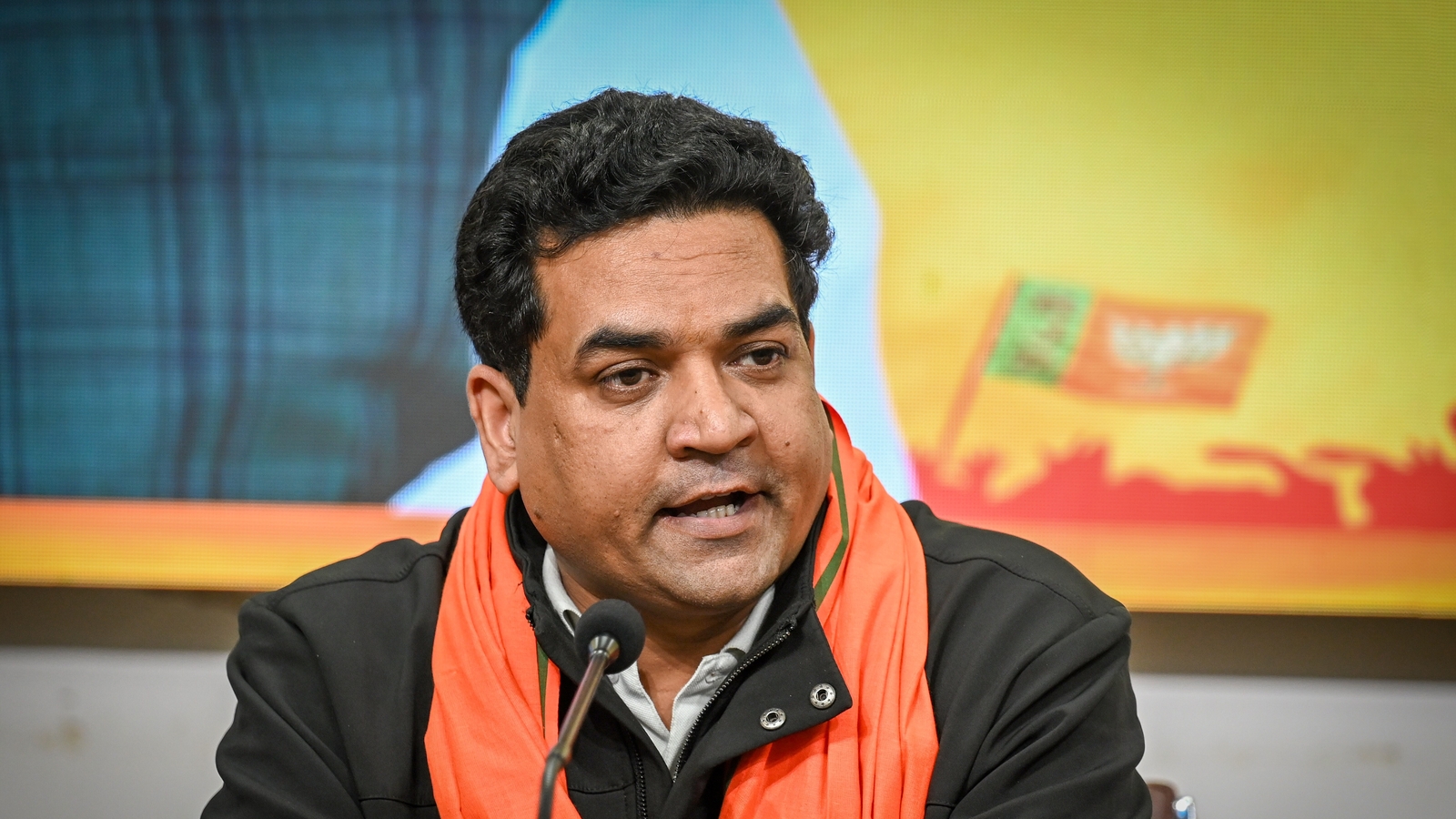
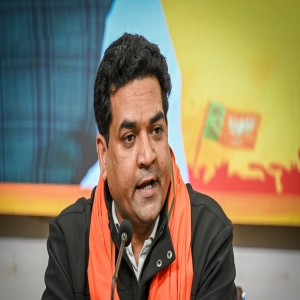
Kapil Mishra is today the Law Minister of the Delhi government. As a local politician, he knows northeast Delhi well. He also knows what happened there in 2000, when communal violence ripped through neighbourhoods, killing 53 people, destroying livelihoods, and leaving thousands roofless. Hundreds of children were orphaned or traumatised for life. That tragedy was not an abstraction for many of us. It was a lived reality.
At the time, I was heading an NGO. We decided that outrage alone was not enough. We started a small facility inside one of the refugee colonies to take care of traumatised children. Our teachers worked with them every day, trying to restore a semblance of normalcy—routine, laughter, learning—to young lives shattered by violence.
We did not ask whether a child was Muslim or non-Muslim. That question never arose. Nor were we alone. Several NGOs, religious and secular, stepped in, each doing what they could. There was no grand design, only a shared human instinct to help the distressed.
That memory returned forcefully when I read Kapil Mishra's statement on the recent outburst over the Supreme Court's refusal to grant bail to Umar Khalid and Sharjeel Imam, even as it granted bail to five other co-accused. Upset that some JNU students protested the decision and raised slogans in support of Khalid and Imam, Mishra chose a metaphor that startled even those accustomed to shrill political language. "Snakes are being crushed, and snakelets are screaming!" he said.
It was a strange choice of imagery, revealing more than perhaps intended. This world, after all, does not belong to human beings alone. It belongs equally to animals, birds, reptiles, insects—to every form of life that has evolved on this planet. A snake has as much right to live here as Kapil Mishra or this writer. Human arrogance has already done enough damage to the ecological balance; it need not be extended into political rhetoric that casually celebrates destruction.
There was a time when even the Indian state recognised this. When Atal Bihari Vajpayee was the Prime Minister and Maneka Gandhi was a minister, all schools across the country were instructed to remove preserved snakes and other creatures kept in bottles of spirit in laboratories. Compassion for life, it was argued, must begin early.
I remember one of my colleagues being arrested because someone pointed out that a couple of specimens were still stored in his school. It was not a deliberate violation—only ignorance compounded by laziness—but it took considerable effort to secure his release.
The law today is unequivocal. No snake can be killed. They may be caught and released into their natural habitats—bushes, fields, forests. And contrary to popular fear, snakes are not vicious creatures lying in wait for humans. They are among the most cowardly of animals, striking only when threatened or cornered. If snakelets scream when crushed, it is not subversion; it is pain.
As a Hindu, Kapil Mishra might also have paused before deploying such imagery. Hindu civilisation has held snakes in reverence for millennia. Lord Shiva wears Vasuki around his neck, symbolising mastery over death and fear. Lord Vishnu rests on the thousand-headed Shesha, the serpent of infinity and cosmic time. It was Vasuki who served as the rope when the gods and demons churned the ocean to produce amrit, the nectar of immortality.
N?gas occupy a central place in our myths as semi-divine guardians of hidden wealth. Manasa Devi is worshipped for fertility and protection from snakebites. Nag Panchami is observed across India. In iconography, snakes recur endlessly. Killing them is traditionally seen as sinful. To speak casually of crushing them is to betray a civilisational amnesia.
I have a suggestion for Kapil Mishra. He should watch the 2012 Malayalam film Bhoomiyude Avakashikal (Inheritors of the Earth), based on Vaikom Muhammad Basheer's short story of the same name. The film is about a Malayali Hindu who loses everything in the Gujarat riots and returns to Kerala to live in an abandoned ancestral house he inherits.
The house is inhabited by spiders, centipedes, scorpions and snakes. He does not disturb them, believing they, too, have a right to live. Basheer's quiet moral insight is that the earth belongs to many inheritors, not humans alone. It stands in sharp contrast to metaphors that glorify crushing, extermination and silencing.
But metaphors aside, let us return to the case proper.
The Supreme Court's decision to deny bail to Umar Khalid and Sharjeel Imam, while granting relief to five other accused in the so-called "larger conspiracy" case linked to the 2020 Northeast Delhi riots, once again exposes the uneasy balance between national security laws and personal liberty.
The court has articulated its reasoning at length, emphasising that each accused must be judged independently and that delay in trial cannot automatically justify bail under the stringent provisions of the Unlawful Activities (Prevention) Act. It has not closed the door entirely. Khalid and Imam have been permitted to reapply after one year or after the examination of protected witnesses. The sad truth is that there is no guarantee they will get bail a year from now.
Even those granted bail face conditions so severe that normal life will be virtually impossible. These are not routine orders. The court has not given due importance to Article 21, which guarantees the right to life and personal liberty, and whose settled interpretation makes liberty the rule and incarceration the exception.
Umar Khalid has been in custody since September 2020—over five years—without the trial even beginning. There is no certainty that it will start soon. Hope that witnesses will be examined within a year cannot substitute for clear timelines when liberty is at stake. What deepens unease is that conduct seems to weigh less than conjecture.
Khalid was recently granted interim bail to attend a family function. He did not misuse it. He returned to jail on time and complied fully with conditions. That behaviour could reasonably have been read as evidence of responsibility rather than risk.
In other words, Khalid and Imam could have been granted bail like the five others. Had they violated conditions, the prosecution could have sought cancellation. Bail is not acquittal; it is a recognition that undertrials are presumed innocent. The heavens would not have fallen if they were also allowed to breathe fresh air outside the jail.
Motive, too, matters in criminal jurisprudence. Let me recall an episode from the mid-1980s. There was a riot in Hazaribagh, Bihar. The local MLA was one Ansari, a Muslim minister in the Jagannath Mishra government. Hazaribagh was a Hindu-majority constituency, yet Ansari had won repeatedly. I visited the area to understand, not merely report, the violence. Muslims were the principal victims. Yet those arrested and kept in the open at the police station for want of space in the lockup room were overwhelmingly Muslim.
A rumour circulated that Ansari himself had engineered the riots. I waited till midnight to meet him at his residence. When he arrived and heard my question, he broke down. How, he asked through tears, could he ever organise a riot that would ensure his political destruction? He was right. In the next election, he was decisively defeated by the BJP. The riots had been engineered to cut him down to size. Few bothered to note that he had been in Patna when the violence erupted.
That memory haunts the present. In northeast Delhi, the riots disproportionately affected Muslims—Umar Khalid's own community. The claim that he orchestrated violence that primarily harmed those he is said to represent strains credulity for many observers, even as the prosecution's theory awaits trial.
The contrast is glaring. Individuals who openly incited violence, even brandishing weapons in public, continue to enjoy power and protection. Religious figures convicted of grave crimes have secured repeated bail. Against this backdrop, the prolonged incarceration of undertrials feeds a perception of selective severity. Perceptions are not verdicts—but in a democracy, they matter. The judiciary's authority rests as much on public confidence as on legal reasoning.
During the height of the anti-CAA protests, when women at Shaheen Bagh were asserting their right to citizenship, I visited the site. As I arrived, Umar Khalid was concluding a speech. From what little I heard, I could tell he was a powerful speaker. Only later did I recognise him. What kind of man is he?
Professor Janaki Nair of JNU, who taught both Khalid and Sharjeel Imam, offers an answer worth reading carefully. As a historian, she reminds us that records produced by the state are often read "against the grain" by later generations. Many who were condemned in their time are celebrated today as defenders of freedom.
The anti-CAA movement, she writes, was among the most creative, sustained, non-violent mass mobilisations of independent India, drawing Muslim women into public politics in unprecedented ways. Is it surprising that young, politically aware scholars were drawn to it?
Nair insists that Khalid and Imam were no bomb-throwing revolutionaries. They were intelligent, diligent, argumentative—sometimes irritatingly irreverent—but passionately committed to ideas. JNU existed precisely to foster such risk-taking, where even harebrained ideas could be tested and abandoned without fear.
Instead, she notes, they have lost over five of the most productive years of their lives for words spoken in public. On the 75th year of the Republic, she argues, we should reflect on why those who openly call for violence roam free while others pay a heavy price for dissent.
This reflection finds resonance in sociologist Nandini Sundar's observation that Muslims, like Adivasis, are constantly told to "integrate" into a supposed mainstream imagined as an upper-caste Hindu river. When Muslims fill jails disproportionately and are denied bail where others are not, the exclusion is never acknowledged. A young, articulate person like Umar Khalid—an atheist, PhD scholar on Adivasis, fluent in the language of constitutionalism—creates panic because he does not fit the stereotype. He must therefore be reduced to a single identity and marked as dangerous.
Lost amid the legal jargon and political name-calling surrounding Umar Khalid is a fact that should trouble anyone who still believes scholarship matters in a democracy. Recently, Ramachandra Guha—hardly a partisan polemicist—wrote about reading Khalid's PhD thesis and described it as rigorous, original, and deeply grounded in historical method. It is worth pausing over what Guha found.
Khalid, he noted, demonstrated an authoritative command over the vast literature on Adivasis, from canonical works to obscure writings on the tribes of Jharkhand and beyond. His research rested on an astonishing range of primary sources—national, state, and district archives, forgotten essays, and books more than a century old. This was not armchair radicalism. Khalid supplemented archival labour with fieldwork, taking seriously Marc Bloch's dictum that historians need thicker boots as well as thicker notebooks.
Equally striking was his use of vivid primary quotations: a 19th-century British official exotically cataloguing a forest hunt; a Non-Cooperation activist in the 1920s confidently proclaiming the imminent end of British rule and the destruction of colonial schools. These voices were not decorative. They animated an argument written in clear, jargon-free prose.
Most important was Khalid's refusal to romanticise. His thesis rejected the lazy assumption that Adivasis constitute timeless, homogeneous communities uniformly resisting the modern state. His research showed something far more complex: resistance, yes—but also negotiation, collaboration, and internal contestation.
That such a scholar now spends years in prison without trial raises a larger question. When the state incarcerates not just a dissenter but a serious historian, it is not merely a person it is punishing. It is the idea that careful thinking, nuance, and evidence still deserve protection.
Elsewhere in the world, such a scholar would be celebrated. Here, he is Prisoner No. 626710. Snakes, then, are not the issue. Nor are slogans shouted in anguish. The real question is whether a republic can afford to crush its own young thinkers and then feign surprise when the snakelets scream.
.jpg) A. J. Philip
A. J. Philip
.png) Cedric Prakash
Cedric Prakash
.jpg)
 P. A. Chacko
.jpg)
.jpg)
.jpg) Thomas Menamparampil
Thomas Menamparampil
.png)
.png)
.png) Robert Clements
Robert Clements
.jpg)
.png)
.png) Chhotebhai
Chhotebhai