

.png) Jacob Peenikaparambil
Jacob Peenikaparambil
.png)
The end of a year offers individuals, institutions, nations, and the global community an opportunity for introspection and learning from the experiences of the past twelve months. Life is a blend of success and failure, joy and sorrow, struggle and achievement. The lessons drawn from reflection may differ across individuals, communities, and countries, depending on perspective. However, insights gained from an unbiased assessment can serve as valuable guidelines for the year ahead.
For the world at large, the experiences of 2025 point to a disturbing decline in empathy and a rise in cruelty and injustice. The intensification of the Russia–Ukraine war despite bombastic claims by US President Donald Trump, armed conflict between India and Pakistan, the killing of innocent women and children in Gaza, and the continuing civil wars in Bangladesh, Sudan, Syria, Yemen, Myanmar, and elsewhere all reaffirm a grim truth: war is not a solution to human problems. In war, both the so-called victor and the defeated ultimately lose.
That said, this reflection is primarily confined to India and does not attempt to comprehensively cover the global scenario.
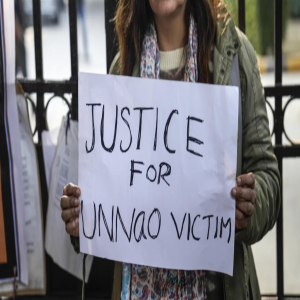
One of the most recent and glaring examples of insensitivity and injustice in India is the Delhi High Court's decision to suspend the life sentence of Kuldeep Singh Sengar, a former BJP MLA convicted in the Unnao rape case. The decision triggered widespread public outrage, with many perceiving it as a blatant denial of justice for the survivor. Protests erupted across the country, questioning how a powerful politician could receive such leniency and reinforcing the belief that the justice system had failed the victim. The most cruel and disturbing aspect of this episode was the forceful removal of the survivor and her mother from the protest site at Jantar Mantar by the Delhi Police.
The Central Bureau of Investigation (CBI) had thoroughly investigated the case and submitted its report to the court. On December 16, 2019, a special CBI trial court in Delhi convicted Sengar of kidnapping and raping a minor. On December 20, 2019, the court sentenced him to rigorous life imprisonment for the remainder of his natural life and imposed a fine of ?25 lakh. The court described the victim's testimony as "unblemished, truthful, and of sterling quality."
However, on an appeal by the CBI, the Supreme Court on December 29 stayed the Delhi High Court order suspending Kuldeep Sengar's life term, blocking his release from jail.
The National Crime Records Bureau, which earlier published annual reports, has data on crimes against women only up to 2022. News reports and independent studies, however, indicate that crimes against women and denial of justice continued—and possibly increased—during 2025.
Another troubling development was the spate of attacks on Christians, Christian institutions, and shops selling Christmas items during the Christmas celebrations of 2025. In her article published in The Indian Express on December 28, 2025, Tavleen Singh vividly described the violence unleashed by Hindutva groups. She wrote:
"Hindutva's fearless foot soldiers had a busy time last week risking life and limb in service of Mother India. Arming themselves with sticks and stones, they set about erasing all signs of Christmas. They smashed the heads of Santa Claus statues they came across and demolished Christmas decorations outside malls and other public places. If they came upon people getting in the Christmas mood by wearing Santa Claus caps, they tore these red and white caps off their heads and warned them that if they wanted to celebrate Christmas, they should do it at home. The more intrepid of these Hindutva warriors stormed into churches and disturbed services with vandalism and violence. Videos of these 'accomplishments' were uploaded on social media."
According to the United Christian Forum, 2025 witnessed a significant rise in violence against Christians in India, affecting families, churches, and educational institutions. Most of these incidents occurred in BJP-ruled states such as Uttar Pradesh, Chhattisgarh, Madhya Pradesh, Odisha, and Rajasthan, reflecting systemic inaction and frequent misuse of anti-conversion laws through wrongful arrests.
A third major injustice was the repeal of the MGNREGA Act and its replacement with the Viksit Bharat–Guarantee for Rozgar and Ajeevika Mission (Gramin) (VB-G-RAM-G) Act. Critics have described this move as the "murder" of a rights-based employment programme and even as the "second assassination of Mahatma Gandhi."
A demand-driven, rights-based employment guarantee scheme that transformed the lives of millions of rural poor has been replaced by a supply-driven welfare programme, implemented at the discretion of the central government. Under the new law, the Centre decides the allocation of funds to states and may provide negligible amounts to opposition-ruled states.
Equally troubling is the change in the funding ratio between the Centre and the states from 90:10 to 60:40. Many states already facing severe financial crises and struggling to pay employee salaries may find it impossible to implement the scheme effectively. In effect, this amounts to dismantling the 100-day employment guarantee.
Congress President Mallikarjun Kharge accused the Narendra Modi government of not merely "kicking the poor in the stomach" but also "stabbing them in the back" by replacing MGNREGA with the VB-GRAM-G Act. The Congress announced a nationwide agitation, "MGNREGA Bachao Andolan," beginning January 5.
Another tragic episode of cruelty in 2025 was the Pahalgam terrorist attack that killed 26 innocent civilians. India's response—Operation Sindoor, involving precision strikes on terrorist camps in Pakistan and Pakistan-occupied Kashmir—lasted approximately 23 to 25 minutes on May 7, 2025. Subsequently, Pakistani shelling killed 13 civilians and injured 59 others. Fortunately, the armed conflict did not escalate into a prolonged war. US President Donald Trump repeatedly claimed credit for playing a decisive role in halting the conflict.
Regrettably, instead of uniting the nation, the terrorist attack became a pretext for spreading hatred against Muslims by communal forces. Kashmiri Muslims were attacked in several BJP-ruled states. The Guardian reported a hate speech by Vishnu Gupta, president of the hardline group of Hindu Sena, in which he allegedly said, "The attack in Kashmir was an attack on Hindus, and we will respond in kind—not only against Kashmiris but against every Muslim in India if the government does not take action." No action was taken against him.
India also witnessed significant communal tensions in 2025, including the Murshidabad violence in West Bengal (April) triggered by protests against the Waqf Act, the Nagpur violence (March) involving protests over Aurangzeb's tomb, and clashes during Durga Puja processions in Cuttack (October).
India's rich diversity and complex socio-political fabric have long allowed competing ideas to clash, coexist, and evolve. However, as the country steps into 2026, there is growing concern that it is moving toward a future marked by deeper divisions, insensitivity, and cruelty—shaped by political, social, economic, religious, and cultural forces.
Political discourse in 2025 was characterised by shouting rather than dialogue, and by vilification rather than understanding. Political empathy—listening to marginalised voices and bridging divides—has been replaced by political cruelty focused on silencing opposition and consolidating control.
As 2026 unfolds, minorities and marginalised communities increasingly feel alienated, unheard, and stripped of their rights. Social indifference, whether through everyday discrimination or administrative apathy toward violence, has fostered a society that is more hostile and less compassionate.
Economic cruelty manifested through persistent unemployment, stagnant wages, underfunded welfare programmes, and inaccessible healthcare. In a country already burdened by stark inequality, the absence of compassionate governance, as reflected in the distortion of MNREGA, has only deepened the crisis.
Cultural cruelty appeared not only in religious violence but also in the suppression of free ex
The result is a fractured political landscape, deepening social divisions, entrenched economic inequality, and growing religious intolerance. Compassion is increasingly perceived as weakness, while cruelty is celebrated as strength.
One root cause of this erosion of empathy is the politicisation and commercialisation of religion, coupled with the decline of critical thinking and scientific temper. Upper-caste and upper-class elites, in alliance with right-wing politics, have appropriated religion to advance vested interests. Spirituality—the essence of religion—has been replaced by heightened religious sentiments around rituals, places of worship, tourism-linked pilgrimages and identity, diverting attention from pressing issues such as unemployment, inadequate healthcare and education, widening inequality, and deteriorating law and order. Religion, in this sense, has become an opiate, as Karl Marx observed.
The most important lesson of 2025 is that India failed to uphold the core values enshrined in its Constitution—secular democracy, justice, liberty, equality, fraternity, and the dignity of individuals. These values foster empathy and compassion. Those who oppose the Constitution have succeeded in sowing division, hatred, and violence. The way forward lies in nurturing constitutional values among the people of India, especially students, to rebuild a society grounded in empathy, justice, and humanity.
.jpg)
 A. J. Philip
.png) Cedric Prakash
Cedric Prakash
.jpg)
 P. A. Chacko
.jpg)
.jpg)
.jpg) Thomas Menamparampil
Thomas Menamparampil
.png)
.png)
.png) Robert Clements
Robert Clements
.jpg)
.png)
.png) Chhotebhai
Chhotebhai