

.png) Robert Clements
Robert Clements
.png)
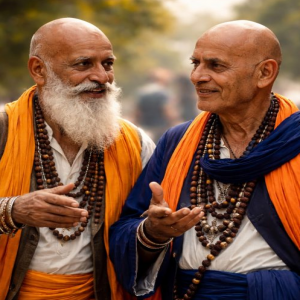
At the farthest edge of a village, where people once lived in harmony, but in the last eleven years had not, a white-bearded chief stood staring into the horizon. His bald deputy stood beside him, polished scalp reflecting both sunlight and loyalty.
"The opposition is shouting that you surrendered to the Great White Chief's tariff pressure," the deputy said cautiously. "They are asking why you agreed so quickly."
The Chief sighed, a sigh that had addressed many rallies. "He threatened to block exports of the instrument I value most. Without it, I am as vulnerable as a rabbit among lions."
The deputy's eyebrows rose. "What instrument? Ventilators?"
The Chief shook his head.
"Cancer radiation machines?"
"No."
"Advanced fighter aircraft? Missile systems? Agricultural drones? Artificial intelligence servers that generate growth statistics on demand?"
The Chief looked mildly offended. "Those are important, yes. But they are not essential."
"Medical scanners? Infrastructure turbines? Even those foreign microphones that make your voice echo like thunder across paddy fields?"
The Chief leaned closer. "The teleprompter."
The bald deputy froze.
"Yes," the Chief continued solemnly. "The glowing oracle. The steady scroll of destiny. Without it, I would have to rely on memory. I might mix up five-year plans with five-minute promises. I might accidentally answer a question directly. You know I am not good at impromptu talks?"
The deputy nodded, swallowed, then stepped forward and placed a firm, reassuring hand on the Chief's shoulder. "You did the right thing. The village cannot risk a silent chief. Tariffs are temporary. Silence is permanent."
The Chief's famous fifty-six-inch chest expanded slightly again.
After a thoughtful pause, the deputy added with a mischievous grin, "If supplies had truly run dry, I could have delivered a few speeches myself."
The Chief spun around as though someone had proposed term limits.
"You?"
"Just as a backup," the deputy smiled. "I can read. I can nod gravely. I can even pause mid-sentence and gaze into the distance as though I am seeing the future. Why I could even handle a press conference? The first in eleven years!"
The Chief looked horrified. "Leadership is about reading words. And reading the correct words, in the correct order, with the correct applause."
The deputy raised both hands quickly. "I am joking, Chief. Purely joking."
The Chief relaxed again.
And so, in the village, the tariffs were accepted. The treasury adjusted. The villagers nodded. Prices rose high with patriotic discipline.
Because in today's world, governance is not merely about policies. It is about performance. The teleprompter screen must glow. The sentences must glide. The applause must arrive on cue.
Nobody wants a silent chief.
For in silence, there are no scrolling answers. And in the absence of scrolling answers, the villagers might begin to notice through scratchy speeches delivered with hesitation, the disaster happening all around them...
.jpeg)
 A. J. Philip
.jpg)
.png) Jacob Peenikaparambil
Jacob Peenikaparambil
.jpg)
.png) John Dayal
John Dayal
.jpg)
 Pachu Menon
.jpg)

.png)
.png) Robert Clements
Robert Clements
.jpg)