

.png) Ram Puniyani
Ram Puniyani
.jpg)
India is a country full of diverse categories. The diversity of religions is astounding. The British used the Hindu and Muslim identities to sow the seeds of 'Divide and Rule.' They abused history to plant the hatred, which became the base on which the communal streams of the Muslim League and the Hindu Mahasabha-RSS introduced their own versions of history and created elements of hatred between the so far mostly cordial relations between Hindus and Muslims.
This hate created exceptional violence in pre-partition times and was the major factor for conceding to the Mountbatten plan for partitioning the country. The apostle of peace, the father of the Nation, Mahatma Gandhi, had to face three bullets on his bare chest on the accusation that he was pro-Muslim.
After partition, Muslim communalism asserted itself in Pakistan, eroding the possibility of a thriving democracy. Social and economic progress was the biggest victim here, diminishing the possibility of its transition into a modern state with progress, peace and amity.
India had a very secular leadership, with Nehru at the helm, and he laid the foundations of a nation that, until a few decades ago, made us a prominent country with reasonably high levels of values and progress.
The communal forces have emerged powerfully over the last couple of decades and are undoing the achievements of the first four or five decades of peace and amity. Hate against Muslims has been their core method to increase their power and hold over society.
During this march of effort to convert the aspiring democracy into a sectarian nationalist state, they devised new languages and newer slogans against Muslims in particular and also against Christians. The situation is pathetic now. Social common sense is full of Hate against Muslims, and this is increasing by the day.
We saw Hindu communalism developing a mechanism to spread far and wide to the extent that Muslim ghettos are the order of the day, vegetarianism is being asserted, love jihad, land jihad, and Corona jihad have been commonplace words. Starting from the top, the leadership and the foot soldiers implement this hate into practical violence, culminating in the polarisation of society.
The top leadership throws up slogans like "batenge to katenge," "ek hain to safe hain," "they can be identified from their clothes," "they proliferate like rabbits," "Hindus will become a minority," "Hindus are in danger", to name just a few. On top of this, the Assam Chief Minister, who jumped ship from Congress to the BJP a few years ago, has made statements against "Miyas" (Bengalis speaking Muslims), which exceed all earlier hate speeches against Muslims.
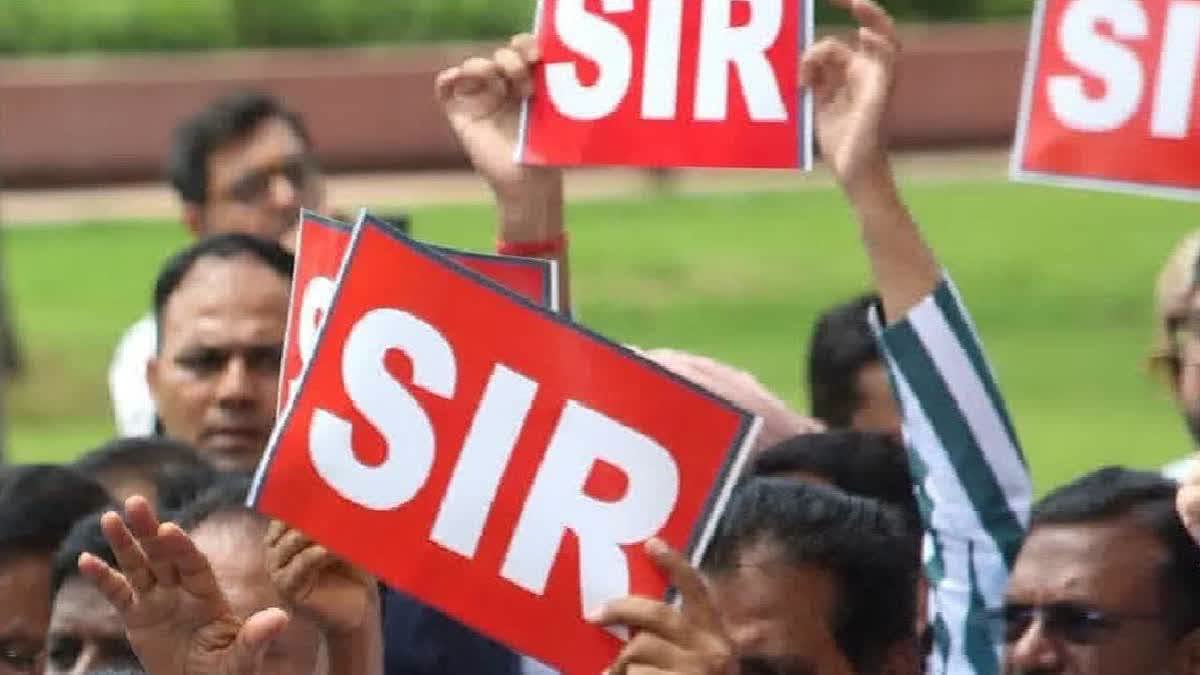
On January 27, he stated that four to five lakh "Miyas" would be removed from the electoral rolls through the SIR. He went on to state, "Vote chori means we are trying to steal some Miya votes. They should ideally not be allowed to vote in Assam, but in Bangladesh."
According to media reports, Sarma also openly instigated the public by saying, "Whoever can give trouble in any way should give, including you. In a rickshaw, if the fare is ?5, give them ?4. Only if they face troubles will they leave Assam."
To cap it all, he posted a video of himself shooting a skull-capped man with a rifle and a boy standing close to him. This post has been deleted now, but not before it was seen by the public.
Renowned human rights activist and eminent author Harsh Mander filed a petition against him for hate speech. He said that he had sought prompt action and the registration of an FIR under relevant provisions of the Bharatiya Nyaya Sanhita, 2023. To this, Sarma responded that he will file multiple FIRs against Mander for helping the Muslims during the NRC process and ensure that he is sent to jail.
So, what happened to the syncretic culture which has been part of our land for centuries, where Azan Pir and Sankardev of Assam preached harmony and lived in Assam itself? So, what happened to the Hindu-Muslim interaction in all areas of life, food, literature, architecture and religious festivals? One can feel hopeless in this scenario and become despondent.
Then came the incident in Kotdwar, Uttarakhand. An old Muslim man had been running a shop called 'Baba school dress' for the last 30 years. Bajrang Dal activists pounced on him, questioning how he could name his shop Baba, which, for them, means a Hindu figure.
Seeing this, Deepak intervened. As he was confronting the Bajrang Dal attackers, the police were mute spectators, and in a complete mockery of justice, the police filed FIRs against Deepak Kumar and his friend. At the same time, another FIR against the Bajrang Dal miscreants points only to "unknown persons."
One gets a lot of hope from this incident. The hope that humanity is not totally wiped out in the flood of hate created by the followers of Hindu nationalism. Deepak is a living example of the strong Hindu-Muslim relations that once prevailed here but are now the exception. This exception shows the prevalence of earlier amity. Deepak Kumar's act of humanity is worth 100 salutes.
Rahul Gandhi, the leader of the opposition, complimented Deepak Kumar and stated, "Deepak is fighting for the Constitution and humanity—for that Constitution which the BJP and the Sangh Parivar conspire every day to trample underfoot. He is a living symbol of a shop of love in the marketplace of hate, and that is what stings those in power the most. The Sangh Parivar is deliberately poisoning the country's economy and society so that India remains divided and a few continue to rule on the crutches of fear."
Deepak Kumar himself had a very endearing answer as to why he called himself Mohammad. It was an act of solidarity, and he said, "Saraswati was sitting on my tongue, and that's why, at that moment, the name 'Mohammad Deepak' came out of my mouth. I thought they would understand that I am Hindu, and that the situation, which was getting heated, would calm down. But instead, an FIR has now been filed against me."
One only hopes we see more of people like Harsh Mander and Deepak Kumar, who represent the true idea of India.
.jpeg)
 A. J. Philip
.jpg)
.png) Jacob Peenikaparambil
Jacob Peenikaparambil
.jpg)
.png) John Dayal
John Dayal
.jpg)
 Pachu Menon
.jpg)

.png)
.png)
.png) Robert Clements
Robert Clements
.jpg)