

.png) John Dayal
John Dayal

Gujarat was once India's laboratory of hate and communal targeted violence. "Pehle Isai, fir Kasai (First, Christians, then Muslims)," a pamphlet discovered in the aftermath of incidents of violence and arson in the state had then declared. The rest, they say, is one of India's most terrible historical chapters.
New labs have emerged, challenging the Indian Constitution's simple yet demanding idea: that citizenship is not conditional upon faith, ethnicity, or political conformity.
Equality before the law, freedom of religion, and secular governance are the foundation of the republic. Today, two states — Uttarakhand and Assam — have emerged as particularly stark examples of how constitutional principles can be subverted without formally suspending the Constitution.
Under the acrid leadership of Chief Ministers Pushkar Singh Dhami and Himanta Biswa Sarma, these states have become testing grounds for policies and narratives that disproportionately target Muslims, normalise discrimination, and weaken the secular character of governance.
As of early 2026, these developments are no longer episodic or incidental. They represent a pattern — deliberate, cumulative, and deeply troubling — that raises urgent questions about constitutional fidelity, federal responsibility, and the future of India's plural democracy.
Uttarakhand's recent interventions in minority education are officially framed as reforms aimed at standardisation, quality control, and social integration. In practice, they amount to a systematic dismantling of Muslim educational autonomy.
On February 4, 2026, the state announced the creation of the Uttarakhand State Minority Education Authority (USMEA), set to replace the existing Madrasa Education Board from July 1, 2026. The outgoing Board has, for decades, overseen a hybrid model of religious and secular education for more than 40,000 students across 452 registered madrasas — institutions that serve some of the state's poorest communities.
Under the new framework, madrasas must affiliate with the general state school board, adopt a uniform curriculum prioritising science and mathematics, and confine religious instruction to tightly regulated after-school hours. While the Chief Minister has justified this shift as necessary to promote equality and prevent radicalisation, civil society experts say the effect is to strip minority institutions of their constitutionally protected autonomy.
Article 30 of the Constitution explicitly guarantees minorities the right to establish and administer educational institutions of their choice. The Supreme Court has repeatedly confirmed this in many celebrated cases, particularly those filed by the Christian community.
That protection does not vanish because the state prefers curricular uniformity. Nor can concerns about "integration" justify placing religious instruction under bureaucratic supervision when similar scrutiny is not applied to majority-run institutions.
The madrasa reforms must also be read in conjunction with Uttarakhand's adoption of a Uniform Civil Code in 2024 — the first state in India to do so. The UCC abolished personal laws across communities and introduced administrative monitoring of interfaith marriages. Coincidentally, Hindu social groups among Tribals and in specified areas were spared this directive. For Muslims in particular, these measures have not felt like instruments of equality but mechanisms of surveillance and exclusion.
The social consequences are already visible. More than 250 unregistered madrasas have reportedly shut down. Families struggling to meet new compliance costs are withdrawing children from school. Drop-out rates among Muslim students are rising.
The state's aggressive branding of itself as Dev-bhoomi, centred almost exclusively on Hindu religious symbolism, reinforces the message that full belonging is reserved for some, not all. To most good-fearing, motherland-loving Indians of all faiths, the entire country is a Dev-bhoomi, a holy land.
More alarming is the parallel rise in informal policing and vigilante activity. A 2025 report by Citizens for Justice and Peace documented increasing instances where police either failed to intervene in communal assaults or acted against those attempting to protect victims.
In January 2026, following an assault on a Muslim elder in Dehradun, charges were filed not against the attackers but against a Hindu bystander who tried to intervene. Mohammad Deepak is how the good Samaritan shopkeeper now describes himself.
This is a new governance culture in which neutrality is quietly abandoned, and discrimination is normalised through administrative process rather than overt decree.
Assam offers a more explicit model. Under Chief Minister Himanta Biswa Sarma, anti-Muslim rhetoric has become not merely frequent but programmatic, particularly against Bengali-origin Muslims, often referred to as the "Miya" community.
In February 2026, Sarma publicly demanded that the Indian National Congress clarify whether it stood with "indigenous Assamese" or with "Miyas," framing an entire community as demographic intruders and cultural threats. India's Home Minister had once called them "deemak" (termites).
This language has been matched by policy.
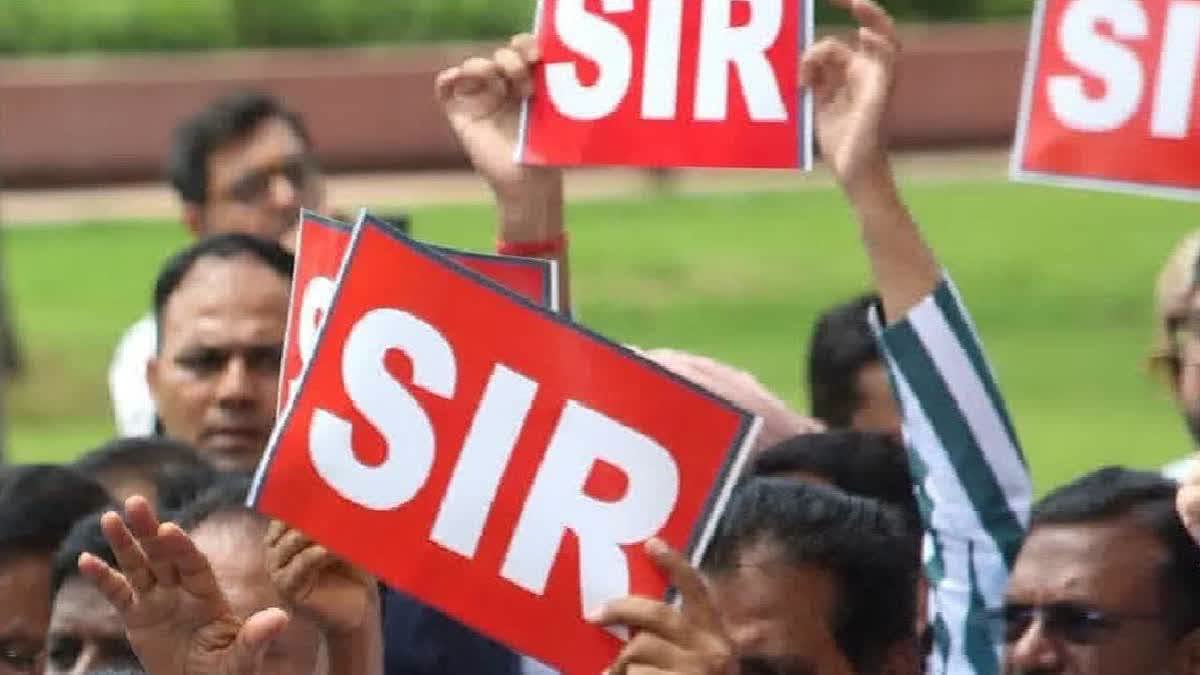
Ahead of the 2026 elections, the state intensified the Special Intensive Revision of the National Register of Citizens, with proposals that could result in up to 500,000 names being deleted from electoral rolls. Civil society groups, among them the Karwan-e-Mohabbat led by former bureaucrat Harsh Mander, have consistently shown that such exercises disproportionately affect Bengali-origin Muslims, many of whom have lived in Assam for generations.
Evictions have followed. In 2025 alone, more than 580 families were removed from the Dahikata Reserve Forest area in Goalpara district. Human Rights Watch documented at least seven major eviction drives during the year, displacing over 5,000 families — overwhelmingly Muslim — often with little notice, inadequate rehabilitation, and heavy police presence. At least one death was reported during these operations, alongside widespread psychological trauma.
Militant groups such as Bir Lachit Sena, founded in 2010, have attacked "Miya" communities in Upper Assam with increasing boldness. Rather than unequivocally condemning such violence, the Chief Minister has amplified conspiracy theories — "flood jihad," "land jihad" — that portray Muslims as organised saboteurs of Assamese ecology and economy. Economic boycotts have been encouraged, including calls to reduce payments to Muslim rickshaw drivers.
A climate of fear and dispossession is inevitable, as this writer has witnessed during several visits to the state. Official claims that these actions target "illegal encroachment" ring hollow when the demographic pattern of displacement is so consistent. The message is unmistakable: citizenship is conditional, revocable, and ethnically graded.
These policies have inevitably attracted international scrutiny. In January 2026, the United Nations Committee on the Elimination of Racial Discrimination questioned India about Assam's NRC process and eviction practices. Yet the state government has shown little inclination to recalibrate its approach.
Experts say these actions of the two states raise serious constitutional concerns. Article 14's promise of equality before the law is undermined by selective targeting. Article 15's prohibition of discrimination is hollowed out by policy designs that consistently harm one community. And Articles 25 and 26, which protect freedom of religion, are weakened when religious institutions are brought under intrusive state control. Article 21's guarantee of dignity is violated when families are rendered homeless through coercive eviction.
Though the Supreme Court has repeatedly affirmed that secularism forms part of the Constitution's basic structure, petitions challenging hate speech, unlawful demolitions, and discriminatory policies remain pending.
What is unfolding in Uttarakhand and Assam cannot be dismissed as local excess. It reflects a broader national pattern. India Hate Lab recorded a 13 per cent increase in hate speech incidents in 2025, with Muslims targeted in the overwhelming majority of cases. Most incidents occurred in states governed by the ruling party.
The United States Commission on International Religious Freedom has again recommended that India be designated a "Country of Particular Concern." Arrests over social media posts, restrictions on prayer meetings, and the normalisation of vigilante enforcement suggest that these trends are structural rather than electoral.
The political logic behind these policies is transparent. The ruling BJP risks nothing in furthering this rhetoric, but hopes to strengthen its constituency. It has repeatedly shown that it can win elections without the vote of the religious minorities, Muslims and the minuscule Christians.
Uttarakhand, with a relatively small Muslim population, offers a low-risk environment to trial uniform civil codes and educational centralisation. Assam blends ethnic nationalism with Hindutva to consolidate a durable electoral base. In both cases, Muslims are positioned as the necessary "other" against which majoritarian unity is forged.
India's constitutional promise cannot survive selective application. Courts have been asked by civil society to act with urgency, and the central government to discharge its responsibility to protect fundamental rights across states. Elements of civil society have come under criticism because some seem to be normalising injustice through fatigue.
.jpeg)
 A. J. Philip
.jpg)
.png) Jacob Peenikaparambil
Jacob Peenikaparambil
.jpg) John Dayal
John Dayal
.jpg)
 Pachu Menon
.jpg)

.png)
.png)
.png) Robert Clements
Robert Clements
.jpg)