

.png) Joseph Maliakan
Joseph Maliakan
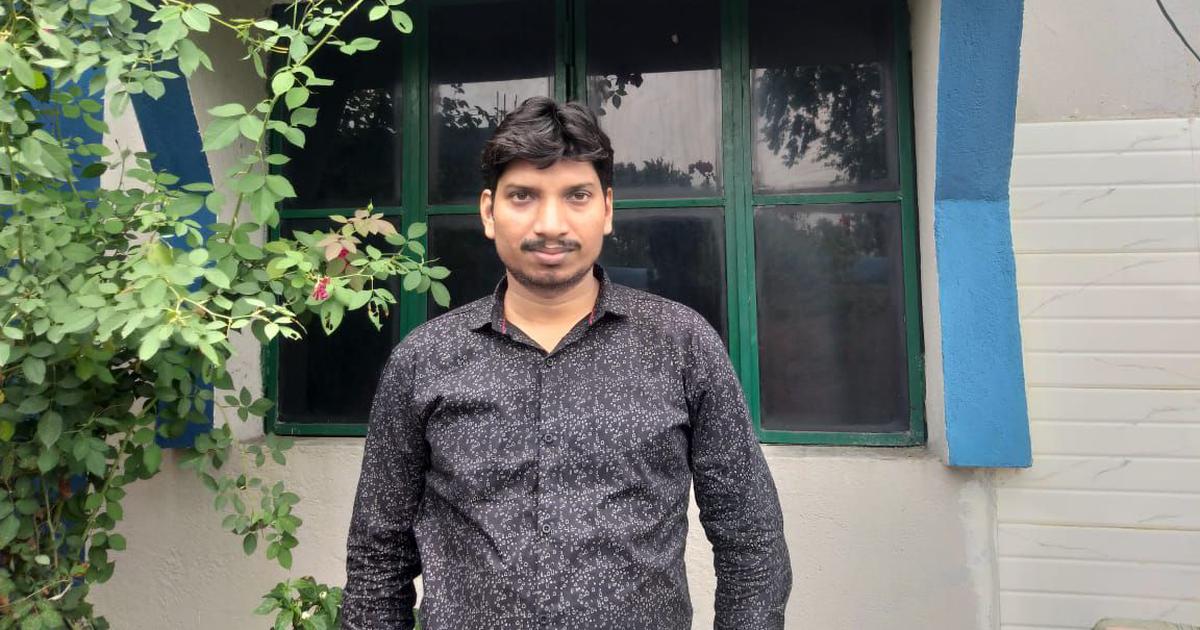
Rupesh Kumar Singh, a Jharkhand-based journalist arrested on July 17, 2022, under the draconian Unlawful Activities (Prevention) Act 1967 (UAPA), completed 1000 days of incarceration on April 11, 2025, in different jails in Jharkhand and Bihar.
Rupesh is currently an inmate of the Shaheed Jubba Sahni Central Jail in Bhagalpur, a district in Bihar infamous for the brutal blinding of 32 young men accused of committing petty crimes. He was transferred to the Bhagalpur Jail from Adarsh Central Jail, Beur, in Patna, on January 22 2023, on the allegation that he was influencing witnesses in the Beur Jail. According to the administrative order, he was to remain in Bhagalpur for six months.
It has now been more than 15 months, but Rupesh has not been brought back to Patna, where he is being tried by the National Investigation (NIA) court, where he has so far physically appeared three times.
There are altogether four cases registered against Rupesh, three by the Jharkhand police and one by the NIA in Patna, Bihar. Out of the three cases registered in Jharkhand, he has got bail in two cases, and in the third, bail has been rejected by the Jharkhand High Court, which order was upheld by the Supreme Court on January 27, 2025.
While rejecting the bail application of the journalist, the Jharkhand High Court said, "accused Rupesh Kumar Singh has taken the garb (cover) of a journalist for his stay in Jharkhand, but the main purpose of stay in Jharkhand is to strenghen the CPI Maoist which is clear from the letter exchanged between him and other members of the party."
However, neither the High Court nor the Supreme Court thought it proper to analyse the numerous articles Rupesh Kumar Singh wrote for various publications, including the Wire. In fact, he was arrested just a few days after he wrote a piece describing the hardships caused to people by environmental pollution caused by polluting factories.
The story described in detail how environmental pollution caused by effluents from factories had rendered agricultural land infertile, adversely affecting the livelihood of lakhs of Adivasis. Factories started working in the Giridih district after the 1991 liberalisation.
Gradually, the entire area became infertile, and following protests, the factory owners diverted the effluents to the nearby river, polluting the hitherto pristine river water. The article concluded that the uncontrolled establishment of polluting factories had made life unbearable for the villagers.
The article was published on July 15 2022, and Rupesh was arrested on July 17 2022. Are the High Court judges so dumb as not to see any relationship between the article and the arrest? As a reporter who has covered crime and riots in North India, the writer is aware that the police and our investigating agencies can fix anyone in false cases. Overnight, they will produce false witnesses and manufactured evidence. Ironically, the witnesses in the case against Rupesh are all policemen. The prosecution opposing bail to the arrested pleaded that they are such terror that no civilian will dare depose against them, and the Jharkhand High Court very willingly accepted the argument!
During these 1000 days, Rupesh enrolled in two courses at the Indira Gandhi National Open University (IGNOU). He has completed his master's in History. And though he has taken the written test for a journalism course, the court has rejected an application for the use of a gadget required for practical work. The gadget could have been used only under the supervision of the prison administration, according to the prison manual.
Rupesh will now have to move to the Patna High Court for permission to complete his course, which will require four practicals. With bail rejected in one case registered in Jharkhand and a trial going on in the Bihar case, Rupesh is facing a very uncertain future.
In this context, on April 11, more than 125 people from various walks of life wrote an open letter to the Chief Justice of India pointing out that Rupesh has been falsely implicated in multiple cases because he exposed the wrongdoings of influential private businessmen and the bureaucracy and the police.
Rupesh Kumar has been doing ground-level reporting to expose the human rights violations, illegal arrests and extrajudicial killings in Jharkhand. We believe that Rupesh's work to expose human rights violations caused by large-scale pollution by industries is the real reason for the state targeting him for persecution, the letter said.
Despite being a petitioner in the Supreme Court against the use of Pegasus spyware, the bail application of Rupesh Kumar Singh was rejected on January 27, 2025. This is a matter of grave concern. Though the Supreme Court has repeatedly reiterated, 'Bail is the Rule and Jail is the Exception,' the letter pointed out that when cases of activists and pro-people journalists come before the courts, they conveniently forget the basic principle of criminal jurisprudence. The letter demanded the immediate, unconditional release of Rupesh Kumar.
Some five months after the arrest of Rupesh Kumar, his wife, Ipsa Shatakshi, a teacher in a private school in Jharkhand, was sacked unceremoniously. When the state wants to suppress freedom of speech and ex

.jpg) Stanislaus Alla
Stanislaus Alla
.jpg)
.png) Cedric Prakash
Cedric Prakash
.jpg) Elsa Lycias Joel
Elsa Lycias Joel
.jpg)
 A. J. Philip
.png) Jacob Peenikaparambil
Jacob Peenikaparambil
.jpg)
.png) John Dayal
John Dayal
.jpg)
.jpg) Joseph Maliakan
Joseph Maliakan
.png)
.png) Robert Clements
Robert Clements
.jpg) Cedric Prakash
Cedric Prakash