

.png) Jaswant Kaur
Jaswant Kaur
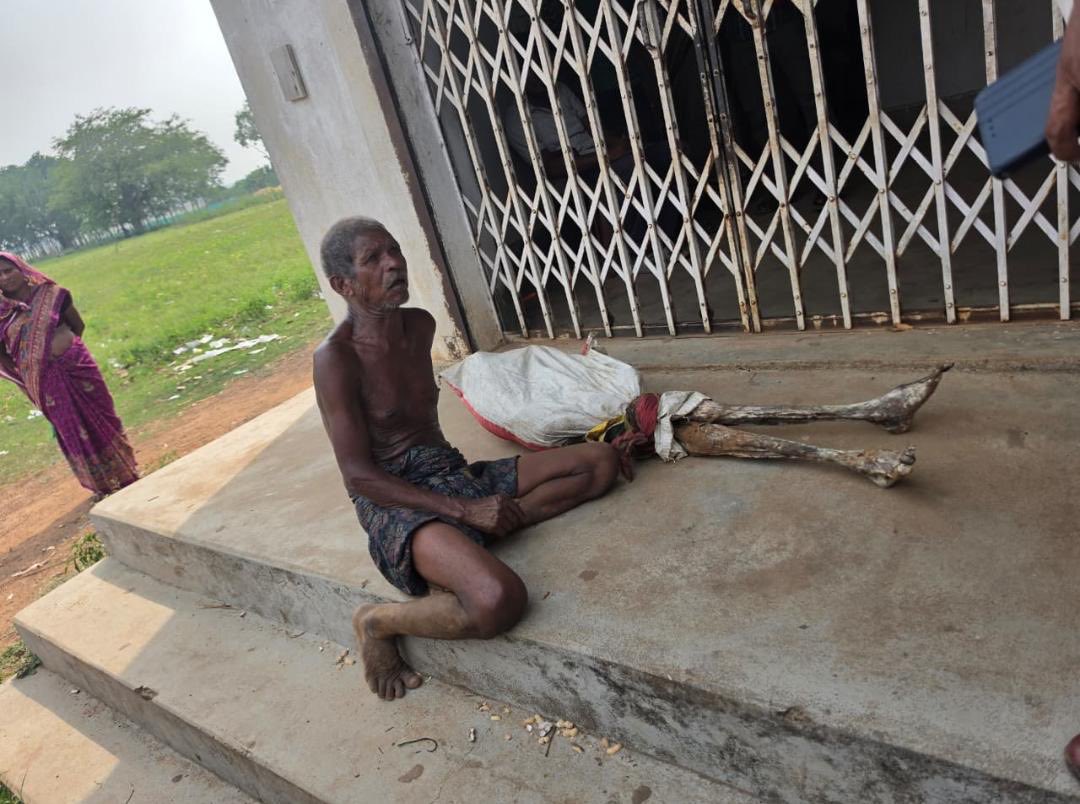
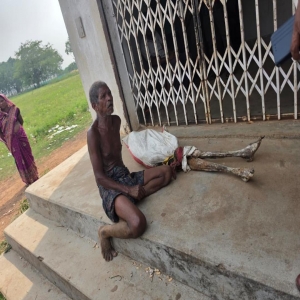
He did not bring documents. Instead, he brought a corpse.
Data, documentation, verification and authentication have become the defining grammar of modern governance. Whether it's your profile on Facebook or LinkedIn, or a bank transaction, you'll need your Aadhaar card or an OTP to authenticate your identity. Of course, it ensures our safety and reduces the risk of impersonation and fraud.
But who would have imagined that the process to prove the identity could even force someone to dig someone's grave and produce the mortal remains? Shocking, isn't it?
Well, this is exactly what happened in Odisha, the state from which our President hails. A 52-year-old tribal man, Jitu Munda, walked with the corpse of his sister on his shoulder and kept the body outside Odisha Grameen Bank's Mallipasi branch, albeit to withdraw around ?20,000 from the bank.
His sister, Kalara Munda, died around two months ago and had a savings account in the bank. Without a nominee, Jitu was the only surviving relative. For the last few days, he had been visiting the bank to withdraw the money. But, as required, the bank officials asked him to produce a few documents, which he could barely understand.
As reported in a few newspapers, one of the bank officials asked him to produce the account holder. Jitu was left with no choice but to produce his sister's mummified remains. The matter quickly gained a lot of attention, and the police were called.
After prolonged persuasion, Jitu finally agreed to take the body back, on the condition that the necessary documentation would be arranged and that he would be given the money.
The incident became viral. So much so that an intriguing cartoon was published in one of the leading dailies, with the tagline "Know Your Corpse," mocking a system that is blind to ground realities.
It is certainly a mirror for those who sit in AC offices, develop policies, often using the word "inclusion" as their benchmark. The fact remains that it is difficult to imagine what inclusion would mean for people at the bottom of the pyramid. For many, the term would perhaps mean the disabled or maybe the marginalised. In other words, it has different meanings for everyone and is coloured by the lens they wear day to day.
But for the likes of Jitu, perhaps, the systems and processes developed are no longer inclusive. In fact, if we look at government data on government schemes, it will reveal that, in the name of inclusion, compliance, and control, we may be unknowingly moving towards exclusion.
Consider the architecture of welfare today. The Public Distribution System covers roughly two-thirds of India's population, making it one of the largest food security programmes in the world. Yet the very system meant to guarantee the right to food has repeatedly denied it, often for reasons that have little to do with eligibility and everything to do with process.
Back in 2013, when the National Food Security Act (NFSA) was promulgated, the aim was to ensure that everyone had access to adequate food at affordable prices. The NFSA subsumed all previous schemes. Then came the Aadhaar-linked PDS system to block leakages, reduce ghost beneficiaries, and so on. However, the more we tried to plug loopholes, the more we excluded those who needed food the most.
Government data suggests that 5.8 crore duplicate, fake/non-existent ration cards have been deleted. Unfortunately, the response to an RTI application reveals that PDS databases that lacked an Aadhaar number were identified as ghosts or duplicates and subsequently removed from the database! This kind of volume should have actually forced us to pause and ask, "Who are we actually removing?"
Stories of Aadhaar authentication failures due to fingerprint mismatches, iris mismatches, connectivity issues, etc., are not new. They have been there since 2016, when it became mandatory to avail of these benefits. Studies reveal a failure rate of around 12 per cent among manual labourers. In some regions, the failure rate has been as high as 20 per cent. These cannot be termed as technical glitches. They are systemic failures. And with every failure, we are pushing someone back to poverty and malnutrition.
A middle-class citizen facing such issues may have the wherewithal to challenge the system, comply with guidelines and restore access to such services, but a daily wage labourer may not have the knowledge or the time to visit Aadhaar centres; for them, every hour matters. A wage lost brings more pain than anything else.
Now let's look at pensions. At the state or centre, pension schemes are arguably the most basic form of social security. Yet studies reveal that only 29 per cent of the elderly people had access to a pension! Unfortunately, 95 per cent of the respondents knew about these schemes; however, they found the process to be the major hurdle.
Even those inside the system are not secure. There are documented cases of elderly citizens being declared "dead" due to data or authentication errors, leading to the abrupt stoppage of pensions. Imagine the absurdity: a living person must prove they are alive to reclaim a benefit meant for survival! And often, that proof requires documents, travel, and persistence that the elderly simply cannot muster.
Recent audits of pension schemes have uncovered ineligible beneficiaries and even payments continuing to the deceased, prompting calls for stricter checks and more frequent life certification. Unfortunately, every additional layer of verification may reduce fraud, but it simultaneously adds to the barrier for genuine beneficiaries. The system becomes cleaner on paper and harsher in reality.
The same pattern is seen in labour welfare schemes. Informal workers, who constitute the majority of our workforce, are, in theory, covered by labour cards and social security schemes. In practice, enrolment itself becomes a hurdle. Documentation mismatches, Aadhaar linkage errors, and lack of guidance mean that many applications are either rejected or remain stuck without explanation. A worker may be eligible under every substantive criterion and yet remain excluded because his/her name is spelt differently across documents, or because their date of birth or address differs.
And when it comes to education, the story is no different. The Right to Education Act certainly mandates the reservation of 25 per cent of the seats in private schools for children coming from economically weaker sections. But how many such children can avail of these seats?
On paper, this is one of the most progressive inclusion policies. In practice, its implementation is uneven and often inaccessible. Families struggle with documentation requirements, digital application processes, and verification procedures. Vacancies under the quota persist in several states, not because children are not eligible, but because the pathway is too complex for those it seeks to serve.
Be it food, pension, education or labour, the pattern is consistent. The system is designed for those who are educated, well-versed in administrative processes or have the resources to access these services. Unfortunately, people for whom these policies are made have none of these.
The man in Odisha exposed this logic. If the system demands proof of existence, he will produce it, even if that proof is a corpse. When rules are followed without interpretation and compliance is imposed without comprehension, such incidents are meant to wake up a system that has evolved red tape far faster than it needed to.
This incident will also be buried in history, just like hundreds of other stories of exclusion published on different platforms. Real inclusion demands more than the expansion of schemes. It requires a fundamental shift in how we operate and view failures. It would mean designing systems that assume failure and provide alternatives. Until then, we will continue to celebrate inclusion in policy documents while practising exclusion in everyday governance.
.jpg)
.png) Cedric Prakash
Cedric Prakash
 ICPA
ICPA
 ICPA
ICPA
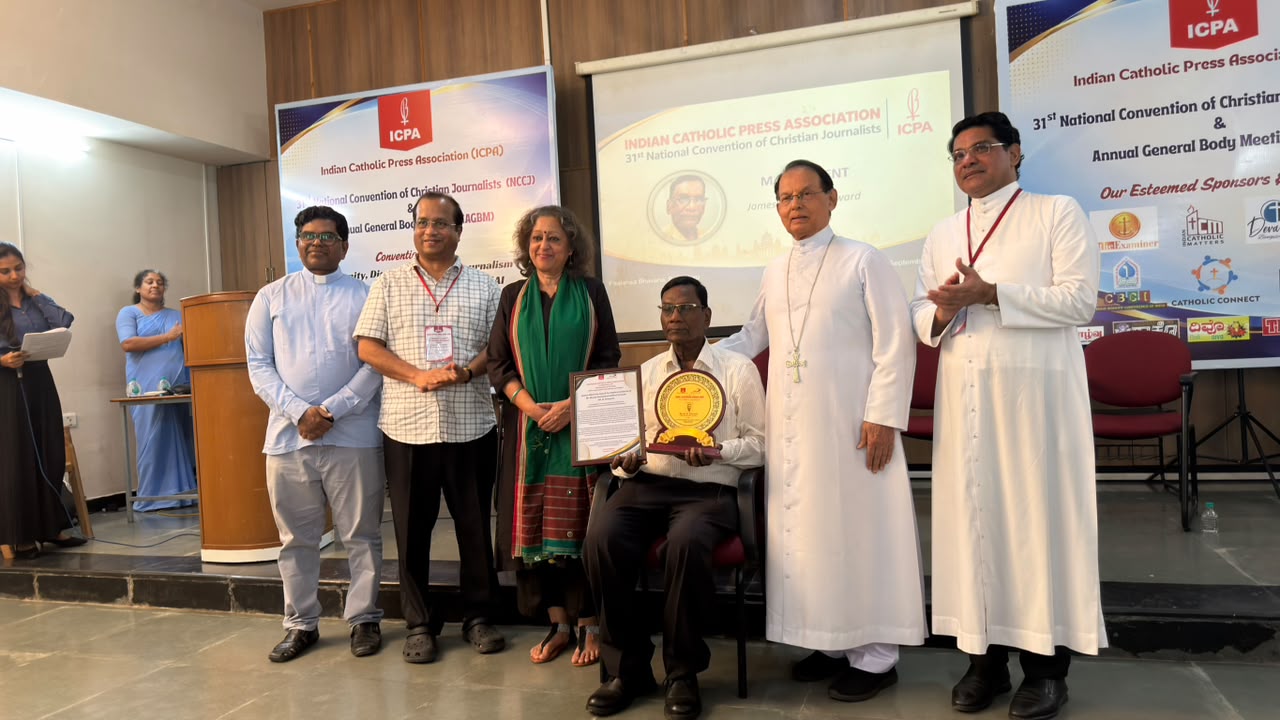 ICPA
ICPA
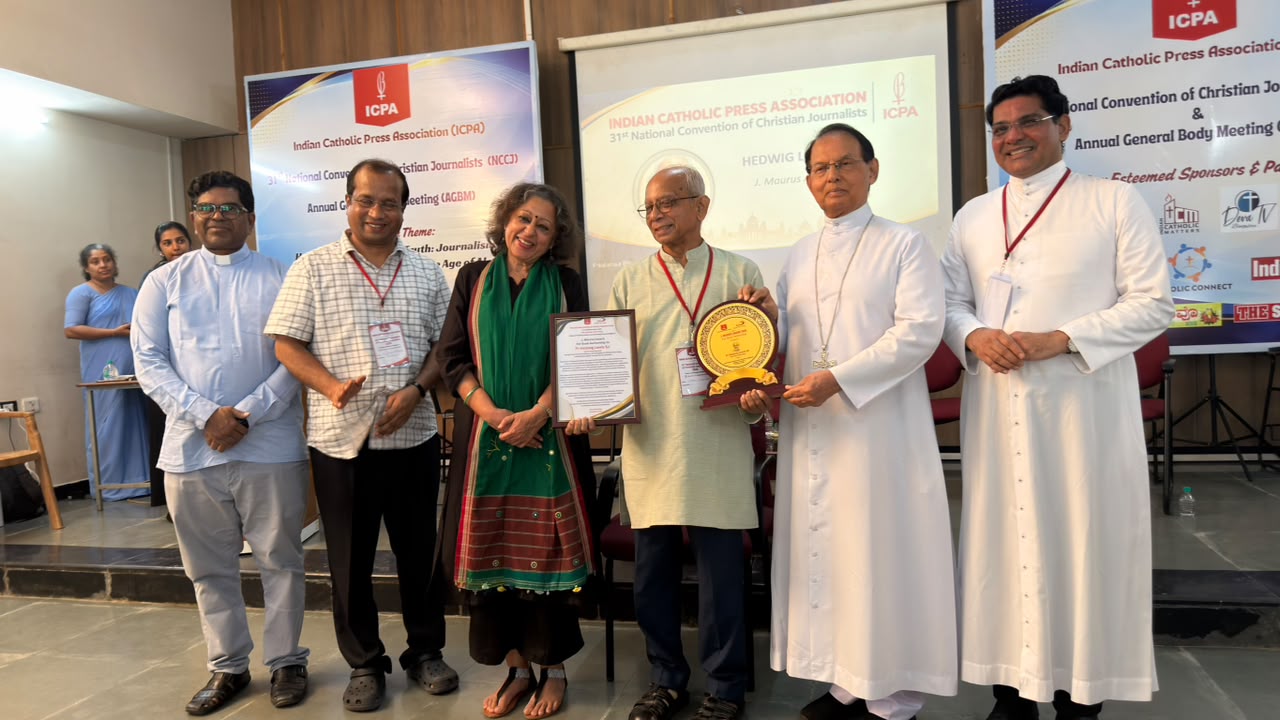 ICPA
ICPA
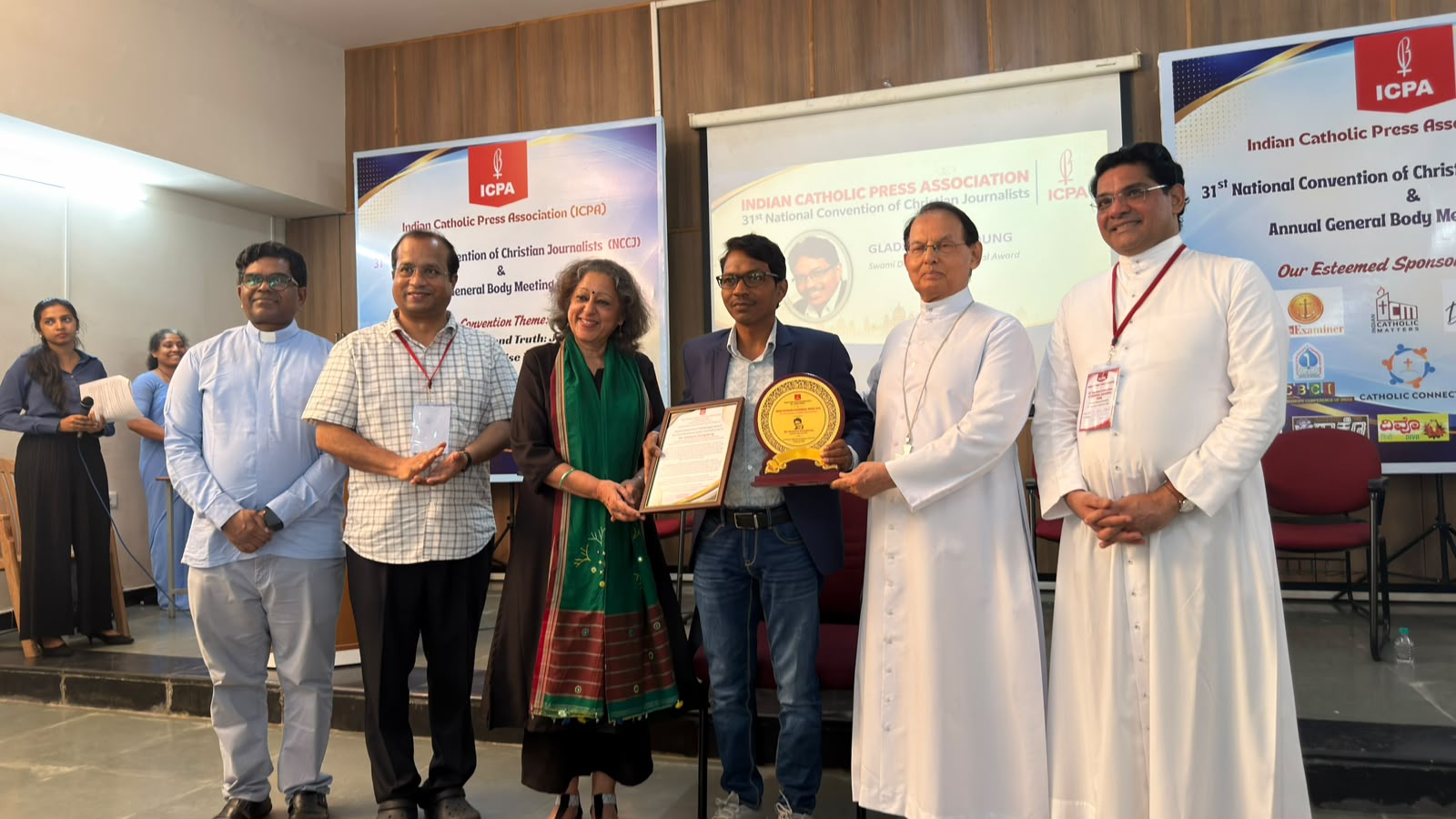 ICPA
ICPA
 ICPA
ICPA
.jpg)
 A. J. Philip
.jpg)
.png) Jacob Peenikaparambil
Jacob Peenikaparambil
.jpg)
.png) John Dayal
John Dayal