

.jpg) Peter Fernandes
Peter Fernandes
Hinduism echoes the eternal desire to know the truth; therefore, it is on a "relentless search for truth." While deciphering the human quest, Aristotle said, "Humans by nature desire to know, and the object of their desire is truth." What is truth? From the beginning, humanity is confronted with clearing the confusion to be at peace with oneself and nature. At the trial of Jesus, Pontius Pilate epitomises the primordial confusion when he asks Jesus, "And what is truth?"
It is paramount for humanity to pursue its proper goal and find meaning in its existence. Truth cannot be multiple and parallel; it has to be one, eternal, immutable, and perfect. Therefore, truth cannot emanate from matter; it has to be immaterial from the metaphysical realm. Consequently, the desire for truth is a desire for God. For God's existence is of supreme importance to have truth, objectivity, justice, and the common good.
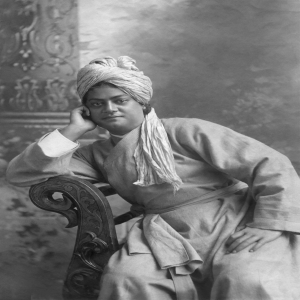
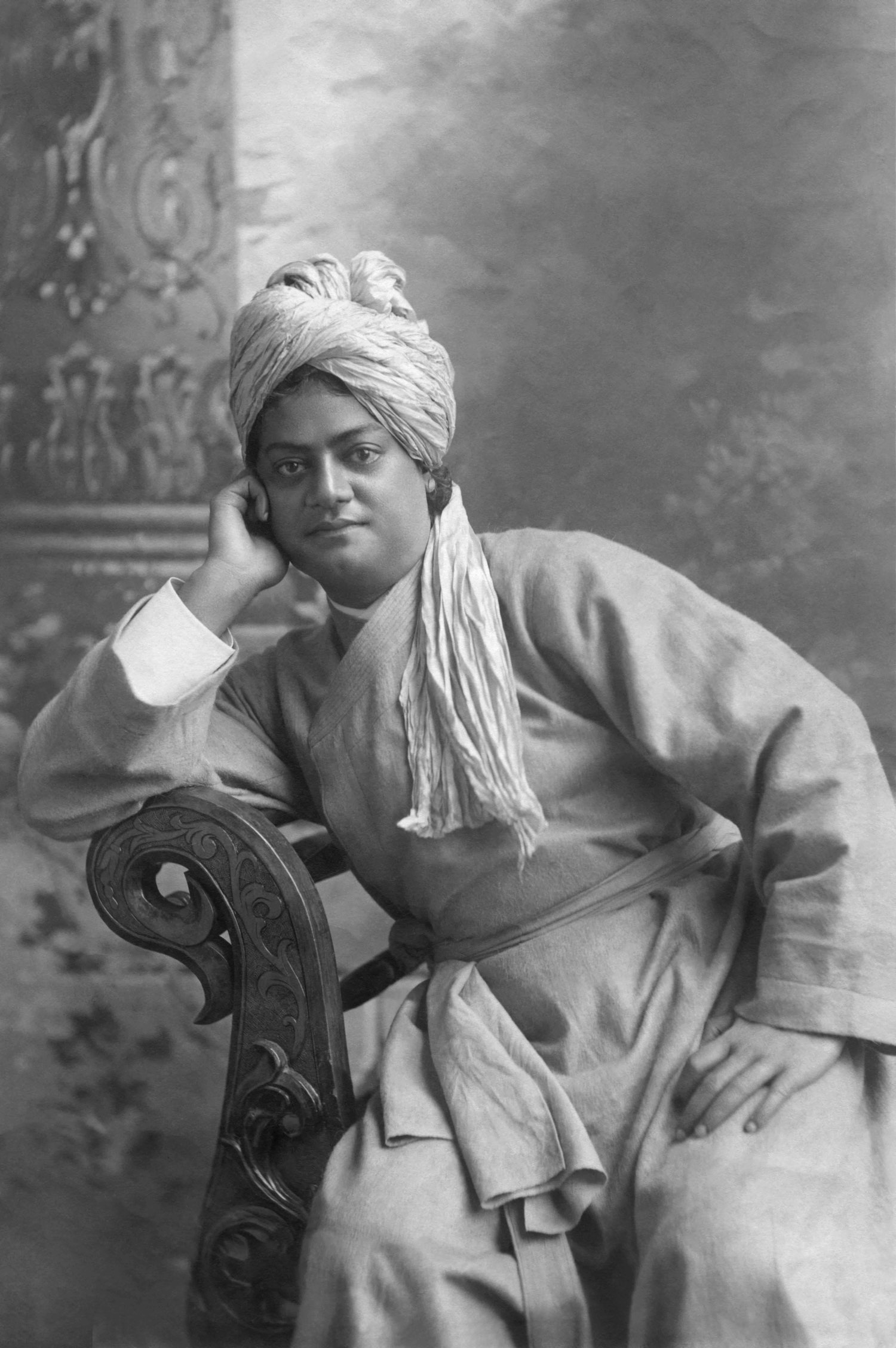
Swami Vivekananda provides the meaning of Christmas when asked about the difference between Christianity and Hinduism in Chicago during the first international interreligious meet. He said that in Christianity, "God comes to visit the people," and in Hinduism, "the people go in search of God." Christmas is that truth personified in the person of Jesus Christ, born on Christmas Day in Bethlehem some two thousand years ago.
St. John the Evangelist puts it beautifully in his prologue, "In the beginning was the word, the word was with God, and the word was God, … and the word became flesh and dwelt among us." The truth that existed for all eternity, which was once beyond the unapproachable light, finally descended among us for all to behold and be blessed. Therefore, the choirs of angels sang, "Peace and joy to men of goodwill, for unto you is born the prince of peace!" It is the answer for the restless heart and mind that seeks truth.
The relentless search has often led to "neti, neti", which is the driving force for the relentless search. It is a Sanskrit phrase that means "neither this, nor that" or "not this, not that". It is a key concept in Hindu spiritual practices, particularly Advaita Vedanta and Jnana Yoga. The classic philosophers, while trying to understand the material world, accidentally made a leap into the metaphysical realm to discover the existence of God as the "Uncaused Cause—the first mover," but could not decipher the nature of God.
The nature of God is beyond the comprehension of the human mind. Yet, the purpose of "neti, neti" is to help a person understand the nature of Brahman through human efforts by negating everything that is not Brahman. This is done by gradually negating the mind, body, name, form, intellect, and senses and limiting adjuncts. The goal is to attain union with the Absolute and discover the true "I." Christmas is that reality that the human mind seeks to know, and it is freely offered to humans so that we do not have to negate or negotiate with the divine, for the divine enters the human realm. St. Paul answers this query, "It is no longer I who live but Christ who lives in me."
The story of the wise men in the gospel of Matthew represents "the relentless search for truth." The men of whom Mathew speaks were not just astronomers. They were wise. They represent the inner dynamic of religion towards self-transcendence, which involves a search for truth, a search for the true God, and hence philosophy in the original sense of the word. The lover of wisdom.
We could well say that they represent the religion moving toward Christ, as well as the self-transcendence of science toward him. Wisdom, then, serves to purify the message of science: the rationality of that message does not remain at the level of intellectual knowledge but seeks understanding in its fullness, and so raises reason to its loftiest possibilities. In a way, they are the successors of Abraham, who set off on a journey in response to God's call. In another way, they are the successors of Socrates and his habit of questioning above and beyond the conventional religion toward the higher truth. In this sense, these figures are forerunners, preparers of the way, and seekers of truth, such as we find in every age.
In unison, Jesus voiced out for the sake of the whole of humanity, "Know the truth, and the truth shall set you free." History recalls great religious figures and thinkers, who, through their discovery of certain aspects of truth, were able to influence the minds of many and establish a great number of followers, but none could explain or assert truth in its fullness. They only pointed out the truth and showed a way to help the followers; if they had walked that path, they might have found it.
Only Jesus in human history asserted of himself, saying, "I am the way, the truth, and the life." Natural revelation has limits, as we see in the story of the wise men. The star leads the wise men as far as Judea. It is quite natural that their search for the new-born king of the Jews should take them to Israel's royal city and to the king's palace. That, surely, is where the future king must have been born. Then they need the direction provided by Israel's sacred scriptures—the words of the living God: the historical revelation—in order to find the way once and for all to David's true heir.
The four noble truths in Buddhism emanate from a desire to escape from the empirical reality of sorrow and death, while Christianity embraces the cross and death to rise to a new life of resurrection. Yes, there is no denying that pain, sorrow, and death are part of human nature, and therefore, to live without pain and sorrow on earth would amount to not being human. The wise men understood this aspect even as they saw the child Jesus lying in a manger and offered gifts, and one of their gifts was myrrh, which represents the mystery of Jesus' passion.
When the Magi adored Jesus, astrology came to an end, as the stars from then on traced the orbit determined by Christ. It is also an anthropological revolution, for it is not the star that determines the child's destiny but the child that directs the star. Human nature assumed by God—as revealed in God's only begotten Son—is greater than all the powers of the material world, greater than the entire universe. Therefore, the truth about our existence and everlasting happiness is in Jesus alone. In awe, the apostle cried out, "Who is this, even the sea and the wind obey him?"
The sad part of contemporary society is that it has divorced itself from metaphysical reality and embraced materialism and relativism. In our world today, truth and objectivity have no value or place and God is driven out of our society. Consequently, humans are stripped of their true nature, which desires to know, and the object of its desire is truth: "A relentless search for truth." If these wise men, led by the star to search for the king of the Jews, represent the movement of the Gentiles toward Christ, this implies that the cosmos speaks of Christ, even though its language is not yet fully intelligible to man in his present state.
Therefore, Christmas is a reminder of our true nature, the fulfilment of our deepest desires, and the answer to our existence. Christmas is a reminder that Jesus comes, He comes, and He ever comes... to meet all those who sincerely desire to know the truth. Let us be humans and allow the true light to shine even in the deepest and darkest corners of our existence. Contemporary society should allow the metaphysical to flourish, truth to reign, and objective morality to govern. In describing the wise men's reaction, Matthew reaches for superlatives: when they saw the star, they rejoiced exceedingly with great joy.
.jpg)
.jpg) Stanislaus Alla
Stanislaus Alla

 Adv. Rev. Dr George Thekkekara
.jpg)
 A. J. Philip

.jpg)
.png) John Dayal
John Dayal
.jpg)
.png) Jacob Peenikaparambil
Jacob Peenikaparambil
.jpg)
 P. A. Chacko
.png)
.png) Robert Clements
Robert Clements