

 Pachu Menon
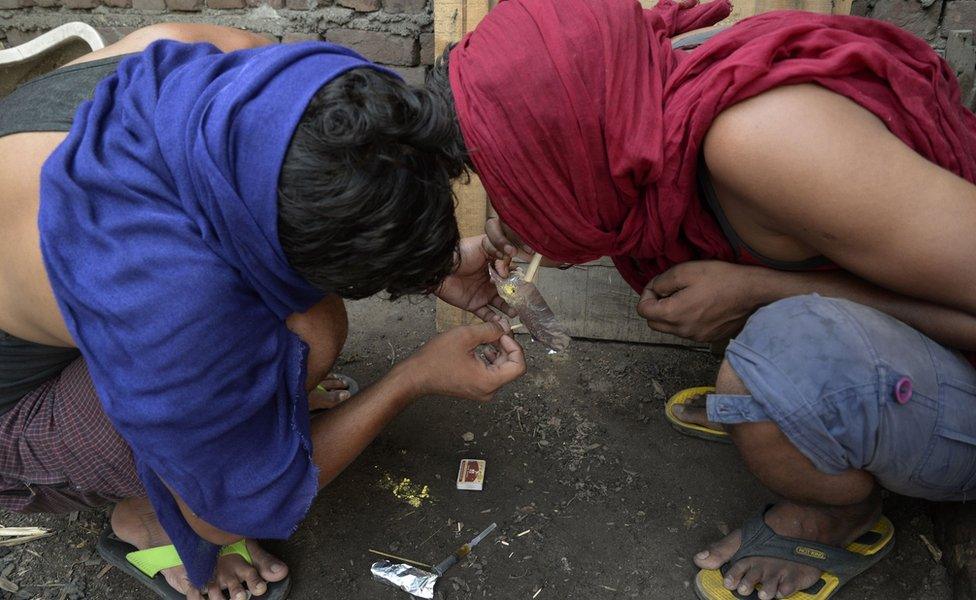
If the affluent northern state of Punjab was infamously branded as 'Udta Punjab' due to its severe struggle with substance abuse, the southern and western corridors of the country have rapidly become hotbeds for an equally severe, albeit structurally different, synthetic narcotics emergency.
The growing discourse surrounding an 'Udta Kerala' phenomenon in God's Own Country stems from a staggering spike in drug-related cases over the past few years, with the state logging high numbers of Narcotic Drugs and Psychotropic Substances (NDPS) cases.
The crisis marks a dramatic shift toward highly potent synthetic narcotics flooding local student and youth demographics. Interestingly, migrants in the state have been accused of very methodically peddling narcotic substances with consummate ease.
Meanwhile, Rajasthan, due to its long, porous border and proximity to smuggling routes, has been increasingly labelled as the new transit point for drugs.
While Punjab's opioid crisis was heavily spotlighted, states like Kerala, Karnataka, Maharashtra and Goa now face even more severe, escalating narco-crises driven by modern synthetic drugs and massive trafficking networks.
The drug scare in Goa has intensified following RTI forensic data that revealed 49 narcotics-linked deaths in just 90 days.
The persistent drug menace that has come to haunt Goa time and again has seemingly evolved from a localised coastal issue into a full-blown crisis. It now affects villages, schools, and colleges across the state.
The spate of student deaths at the BITS Pilani-Goa campus recently brought a severe narcotics angle to the forefront, sparking intense investigation into the entry and availability of banned substances in premier institutes.
The extensive use of drugs on campuses of reputed educational institutions in the state speaks of a trend where drugs have been seen as a source of solace for students combating stress and depression. When stress and depression go unaddressed, students may turn to substances for relief.
Students at premier colleges and universities face extreme academic pressure and high-performance expectations. This environment makes them susceptible to using drugs as coping mechanisms, recreational escapes, and performance enhancers.
This growing menace turns educational institutions into high-risk zones, pointing to a failure in enforcement, breakdown of protective family barriers, and the need for robust campus mental health interventions.
Presumably, it is the vulnerable transition to young adulthood which is seen as a major contributory factor to drug abuse in educational campuses.
As students leave the structured environments of home and high school for educational campuses for professional studies, they face a convergence of psychological, environmental, and developmental factors that significantly increase their risk of drug experimentation and substance use disorder.
The majority of adolescent experimentation is limited and transient, rather than a permanent path to substance use disorders. The biological trait, paired with innate curiosity and peer influence, creates a period when youth are highly vulnerable to taking risks and seeking instant gratification.
The transition from recreational misuse of over-the-counter cough syrups to hard drug abuse highlights a growing crisis among the state's youth.
We are now increasingly staring at a scenario where Goa will soon replicate Punjab's severe drug crisis. The alarming penetration of synthetic narcotics deep into local villages and student demographics paints the coastal state in a completely different picture.
Goa's status as a premier tourist destination has long been shadowed by a dark underbelly of international narcotics. Foreign cartels have historically carved out territories, occasionally resulting in brazen turf wars and deadly scares that have deeply challenged local authorities and state police.
Reportedly, the state's illicit drug landscape is characterised by shifting dynamics and persistent struggles with enforcement.
The 'established' narco-cartels in Goa are transnational criminal organisations that collude to monopolise the illicit supply chain, fix prices, and control the distribution of illegal substances.
The arrival of independent syndicates and local operators has fragmented the illicit market, making the drug scenario significantly more volatile, hard to monitor, and far more dangerous.
The fragmentation of the drug trade has amplified the crisis in several distinct ways. But more relevantly, it has been the easier, localised access which dramatically increases the conversion rate from occasional use to severe, physical dependency, especially among young adults, which has been worrisome.
With reports indicating alarming spikes in drug-related fatalities, a surge in commercial cases, and mounting concerns over local youth getting trapped in consumption and peddling, it is difficult to counter the claim that Goa risks becoming an epicentre of rampant drug abuse. The drug crisis in Goa is destroying the future of the state's youth.
"Drug syndicates constantly adapt their tactics to target youth, shifting from traditional pushers to covert digital marketing. Peddlers now disguise substances as candy, exploit social media algorithms, and use encrypted messaging to arrange stealth deliveries resembling legitimate e-commerce packages." (The Hindu)
Organised crime networks also target youth for roles as couriers, using the allure of quick financial gain to draw individuals into illegal activities.
Reports suggest that the method and organisation of the illicit drug trade in states like Goa and Karnataka, specifically involving various migrant groups and foreign nationals, has garnered significant attention.
The alarming wave of unnatural deaths and suspected overdose cases in Goa should have alerted the authorities to the menace of drugs spreading its tentacles into the very vitals of society.
Goa's war against drugs involves a zero-tolerance policy implemented by the Goa Police to curb trafficking and substance abuse across the state. The implementation of recent legislative and enforcement measures, too, has been noteworthy.
It is not that the state police force's efforts have been inadequate in this regard. But it is the logistics of drug trafficking with its evolving 'innovations' that have baffled the Goa Police as much as they have the best of investigating agencies across the globe.
Authorities report that trafficking syndicates continuously adapt their logistics and supply lines. Allegations of failure to disrupt deeply entrenched supply chains continue to haunt a harried police force that is yet to come to terms with the enormity of the situation.
It is argued that drug cartels and organised crime networks consistently outpace enforcement agencies by aggressively leveraging advanced technology and global supply chain automation while capitalising on the creativity inherent in black-market economics.
The rising crime graphs demand that the criminal detection methods keep pace with the evolving times. However, it is well known that police forces worldwide are hindered by outdated technology. So also the fight against drugs, which faces significant roadblocks!
The International Day Against Drug Abuse and Illicit Trafficking is observed globally on June 26. The day raises awareness about the physical and societal harms of substance abuse, the illegal drug trade and community-driven prevention methods.
However, drug awareness campaigns have failed to yield the sort of results desired, with the entire exercise turning out to be mere essays in formality, without much coming of the 'war against drugs.'
.jpg)
.png) Cedric Prakash
Cedric Prakash

 ICPA
ICPA
 ICPA
ICPA
 ICPA
ICPA
 ICPA
ICPA
 ICPA
ICPA
 ICPA
ICPA
.jpg)
 A. J. Philip
.jpg)
.png) Jacob Peenikaparambil
Jacob Peenikaparambil
.jpg)
.png) John Dayal
John Dayal