

.png) Jacob Peenikaparambil
Jacob Peenikaparambil
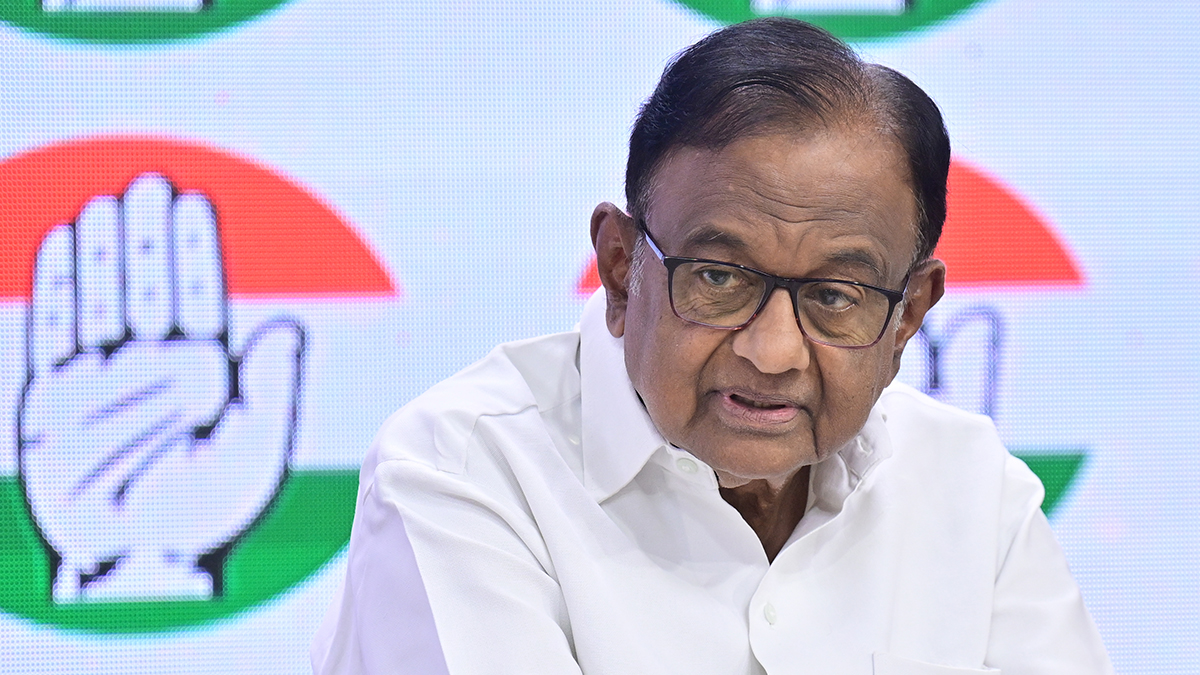
Former Union Finance Minister P Chidambaram, in an article published in The Indian Express (June 28, 2026), wrote, "Five trends will determine the future of India." Reading his article prompts an important question: Is India drifting towards a regressive society?
India's freedom fighters, especially Jawaharlal Nehru, envisioned building a modern, progressive, democratic, and self-reliant nation. His vision was anchored in democratic socialism, secularism, scientific temper, industrial development, and non-alignment. The objective was to lift millions out of poverty while preserving India's pluralistic character. In such a society, there would be no place for discrimination based on caste, religion, creed, gender, or class.
Under the leadership of Jawaharlal Nehru and the successive Congress Prime Ministers, India made remarkable progress in many areas. The Constitution abolished untouchability, and several progressive laws were enacted to eliminate age-old customs and practices that oppressed women and the lower castes. Nehru laid the foundation for India's economic development, which gained further momentum after the economic liberalisation, privatisation, and globalisation initiated in 1991 under the leadership of PV Narasimha Rao and Dr Manmohan Singh.
Nehru, a committed democrat, strengthened India's democratic institutions, enabling the country to emerge as one of the world's most vibrant democracies. Except for the two-year Emergency (1975–77), democracy functioned far more effectively in India than in many neighbouring countries. To Indira Gandhi's credit, she lifted the Emergency after two years, accepted the verdict of the people, and did not permanently undermine the country's democratic institutions, as is being done today.
The Manmohan Singh government enacted several landmark legislations, including the Right to Information Act (RTI), 2005; the Mahatma Gandhi National Rural Employment Guarantee Act (MGNREGA), 2005; the Forest Rights Act, 2006; the Right of Children to Free and Compulsory Education (RTE) Act, 2009; the National Food Security Act (NFSA), 2013; and the Right to Fair Compensation and Transparency in Land Acquisition, Rehabilitation and Resettlement (LARR) Act, 2013. These legislations were intended to advance the constitutional vision of a just, inclusive, socialist, secular, pluralistic, and democratic society.
According to critics of the BJP government, India has witnessed, since 2014, a gradual reversal of the progress made towards realising the ideals enshrined in the Constitution. It is undeniable that since 2014, India has made significant advances in digital public infrastructure, telecommunications, technology, and overall economic growth, as measured by Gross Domestic Product (GDP). However, this growth has not been reflected proportionately in higher per capita income. Although India is now the world's fourth-largest economy, it continues to rank among the world's lower-income countries. With a per capita GDP of approximately US$2,813, India ranks around 147th globally in nominal terms.
The issues highlighted by Chidambaram point to several trends that appear to be regressive. A regressive society moves backwards socially, politically, or economically instead of progressing. Such societies often seek to reverse modern and liberal reforms in an attempt to restore an idealised vision of the past.
Erosion of Rights and Freedoms
In a regressive society, the rights and freedoms of marginalised communities, including women and minorities, tend to be curtailed.
Religious minorities, particularly Muslims and Christians in India, have experienced growing sociopolitical hostility. Incidents of hate speech, mob vigilantism—including cow-protection lynchings—and state-level anti-conversion laws have contributed to an atmosphere of insecurity for the minorities, Muslims and Christians.
According to the United Christian Forum (UCF), 4,959 incidents of violence against Christians were documented in India during the past decade. The number of reported attacks increased dramatically from 139 incidents in 2014 to 834 in 2024.
Similarly, the Washington-based India Hate Lab (IHL) documented 1,318 hate speech events targeting religious minorities in 2025, of which approximately 97–98 per cent were directed against Muslims—an average of nearly four incidents every day.
The disappearance of the words "Secular" and "Socialist" from the primary text of the revised Class IX Social Science textbook prepared by the NCERT has also raised concerns regarding the government's commitment to these constitutional values.
According to critics, the recent promulgation of stringent regulations governing organisations that receive foreign contributions is intended to curtail the autonomy of civil society organisations that promote constitutional values and human rights.
Data maintained by the National Crime Records Bureau (NCRB) indicate an increase in crimes against Dalits and Adivasis since 2014. Many civil rights organisations and opposition groups argue that the prevailing political climate has emboldened dominant caste groups, resulting in more frequent attacks on Dalits asserting their constitutional rights.
Since 2014, journalists, writers, and human rights organisations have repeatedly expressed concern that personal freedoms, freedom of ex
Growing Economic Inequality
Economic inequality in India has widened significantly since 2014, with wealth and income becoming increasingly concentrated among the richest sections of society. According to the World Inequality Report, the richest 1 per cent own nearly 40 per cent of the country's total wealth, while the bottom 50 per cent own only a small fraction. Likewise, the top 10 per cent of income earners receive approximately 58 per cent of the national income, whereas the bottom half of the population receives only about 15 per cent.
Critics argue that several government policies have contributed to this growing inequality. These include reductions in corporate tax rates, inadequate support for the manufacturing sector—particularly Micro, Small and Medium Enterprises (MSMEs)—the concentration of major government contracts among a few large corporate conglomerates, and insufficient investment in education and healthcare. Together, these factors have accelerated the concentration of wealth and widened economic disparities.
Increasing Influence of Religion (Hindutva) on Politics, Government, and Education
Regressive societies often impose conformity to traditional values while discouraging diversity of thought. Scientific temper, critical inquiry, and evidence-based reasoning are frequently undermined in favour of ideological narratives and emotional appeals.
The BJP government has undertaken extensive revisions of school textbooks at both the national and state levels. These revisions have often presented Indian history through the lens of Hindu nationalism by emphasising ancient Hindu civilisation while reducing the prominence accorded to the Mughal period and the Delhi Sultanate.
Critics argue that the government is promoting blind faith under the banner of the Indian Knowledge System (IKS). Science advocacy groups and progressive intellectuals contend that certain curricular changes may weaken critical thinking and encourage obscurantism rather than scientific inquiry. They further argue that the IKS framework is being used to project a narrowly Vedic interpretation of Indian civilisation that excludes the contributions of many other traditions and communities.
Similarly, BJP governments have increasingly incorporated Hindu religious rituals into official state functions. Critics contend that state-sponsored bhoomi pujas, temple inaugurations attended by senior government officials, and the use of public funds to promote religious events and institutions blur the constitutional distinction between religion and the state and weaken India's secular and pluralistic foundations.
Democratic Decline
A regressive state is often characterised by the weakening of democratic institutions, declining judicial independence, and an increasing concentration of political power. As institutional checks and balances erode, corruption, favouritism, and abuse of power become more likely.
The recent allegations of financial irregularities involving donations to the Ram Temple in Ayodhya, according to critics, have highlighted the possibility of corruption within religious institutions.
More broadly, the shrinking space for dissent and the weakening of institutional autonomy have become matters of growing concern. Critics argue that institutions such as the judiciary and the Election Commission are increasingly perceived as less independent of executive influence. Parliament, they contend, has increasingly functioned as a rubber stamp, with several important pieces of legislation being passed with limited or no substantive debate.
Similarly, the Special Intensive Revision (SIR) of electoral rolls conducted by the Election Commission of India (ECI), which reportedly resulted in the deletion of a large number of names from electoral rolls and raised questions regarding the citizenship status of many individuals, has generated widespread public concern regarding the Commission's impartiality.
At a time when the political opposition appears fragmented, partly due to the defection of several Members of Parliament from opposition parties, the responsibility of preventing India's democratic and social regression increasingly rests with civil society organisations and conscientious citizens.
Ultimately, the responsibility lies with "We, the People of India." Citizens must actively safeguard the Constitution, uphold democratic institutions, and preserve India's civilisational ideal of "Vasudhaiva Kutumbakam"—the belief that the whole world is one family. Only by reaffirming these constitutional and civilisational values can India continue its journey towards becoming a truly progressive, inclusive, and democratic nation.
.jpg)
.png) Cedric Prakash
Cedric Prakash
 ICPA
ICPA
 ICPA
ICPA
 ICPA
ICPA
 ICPA
ICPA
 ICPA
ICPA
 ICPA
ICPA
.jpg)
 A. J. Philip
.jpg) Jacob Peenikaparambil
Jacob Peenikaparambil
.jpg)
.png) John Dayal
John Dayal