

.png) Joseph Maliakan
Joseph Maliakan
.jpg)
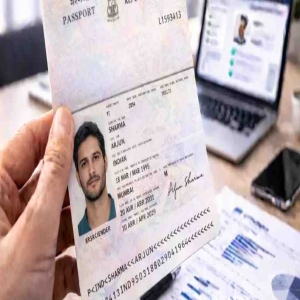
Whoever thought of coming out with the statement that the Indian passport is only a mere document for travel and is not proof of Indian citizenship is a great genius! It has led the whole nation to discuss the criteria for acquiring Indian citizenship. It has also compelled me, a veteran journalist aged 78, to wonder whether I am an Indian citizen, even though, using the Indian passport, which boldly declares that I am a Citizen of India, I have travelled to many countries.
I first acquired a passport in 1979. At that time, I was working for The Indian Express in Delhi as a reporter. I was assigned to embark on an Indian Naval cruise on the training ship INS Brahmaputra, bound for Thailand and Indonesia. I approached the Regional Passport Officer at his Shastri Bhavan office with the invitation from the Defence Ministry. I was issued an Indian passport in five minutes.
There was no police verification, nor did the RPO ask for any documents, such as a birth certificate, school-leaving certificate, or appointment letter. The passport was issued as if it were a citizen's right, and the State's duty was to issue a passport to any citizen who asked for one. The State, unlike now, had full trust in the citizen back then. The Passport Office accepted whatever I wrote in the application form as gospel truth!
Unlike today, my first passport, issued on September 29, 1979, was stamped "CITIZEN OF INDIA" in capital letters. The first page of the passport, first in Hindi and then in English, stated: "These are to request and require, in the Name of the President of the Republic of India, all those whom it may concern to allow the bearer to pass freely without let or hindrance, and to afford him or her every assistance and protection of which he or she may stand in need."
In fact, people need not be anxious about their citizenship on any count. Indian citizenship is clearly governed by the Citizenship Act, 1955, and can be acquired through four primary pathways: birth, descent, registration, and naturalisation. India does not allow dual citizenship.
If you were born between January 26, 1950 and June 30, 1987, you are a citizen by birth regardless of your parents' nationality. If you were born between July 1, 1987 and December 2, 2004, you are a citizen of India if at least one parent was a citizen of India at the time of your birth. And if you were born after December 3, 2004, you are an Indian citizen if both parents are Indian citizens, or if one parent is an Indian citizen and the other is not an illegal immigrant.
Indian citizens born at the time of the Constitution's commencement on January 26, 1950, acquired citizenship under Article 5. At the commencement of the Constitution, every person who had his domicile in the territory of India, or either of whose parents was born in the territory of India, or who had been ordinarily resident in the territory of India for not less than five years immediately preceding such commencement, became a citizen of India.
Then how did the present confusion arise? To justify the unnamed Ministry of External Affairs official's false statement that the passport is not proof of citizenship, the bureaucracy deliberately misquoted a 2013 Bombay High Court judgment. The High Court, in its order dated July 26, 2013, did not even consider whether a passport was proof of one's citizenship.
All that the Court said was that, in the case of Anwar Hussain Abdul Kadar Shaikh and Others vs State of Maharashtra, the passport produced was a "terminated" one. Therefore, it did not take it into consideration while deciding the petitioner's claim regarding citizenship. The relevant portion of the judgment stated: "However, the passport to which the learned counsel gave reference is already terminated passport. Therefore, no legal basis can be achieved for its reliance." The Bombay High Court did not examine the merit of the passport as a document to prove the applicant's citizenship.
However, there is no denying that anyone who holds an Indian passport is an Indian citizen, though citizens do not need a passport to prove their citizenship. And in a country like India, where millions do not have documents to prove their citizenship, it would be a travesty of justice to deny citizenship, or even to doubt the citizenship, of those who hold Indian passports.
.jpg)
.png) Cedric Prakash
Cedric Prakash
 ICPA
ICPA
 ICPA
ICPA
 ICPA
ICPA
 ICPA
ICPA
 ICPA
ICPA
 ICPA
ICPA
.jpg)
 A. J. Philip
.jpg)
.png) Jacob Peenikaparambil
Jacob Peenikaparambil
.jpg)
.png) John Dayal
John Dayal